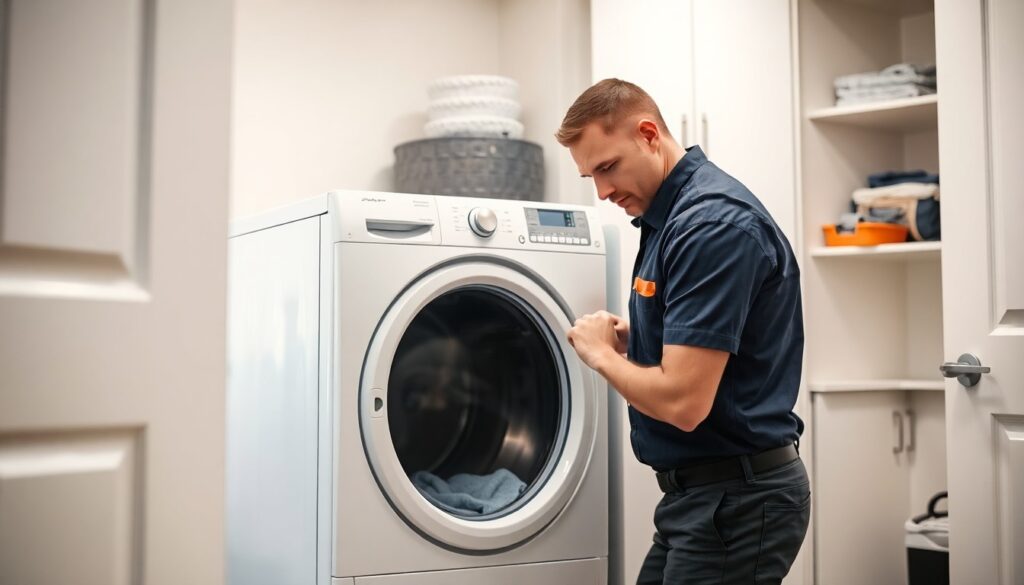
A noisy dryer isn’t just an annoyance — it’s a warning sign. Different sounds point to different failing components, and learning to identify these sounds can help you understand the urgency of the situation, communicate more effectively with a repair technician, or even fix the problem yourself.
This guide serves as a comprehensive reference for diagnosing dryer noises. We’ll cover every common sound your dryer might make, what causes it, how urgent the repair is, and whether it’s a DIY fix or one that needs professional attention.
How to Listen Effectively
Before diagnosing specific sounds, here are some tips for effective listening:
- Run the dryer empty. This eliminates noise from clothes, zippers, buttons, and other load-related sounds, letting you hear the machine itself clearly.
- Note when the noise occurs. Does it happen at startup, during tumbling, during heating, or only at high speed? The timing narrows down which components are involved.
- Identify the location. Is the sound coming from the front, back, top, or bottom of the dryer? Front noises usually involve drum glides or the door, rear noises point to the bearing, and bottom noises suggest the motor or blower.
- Check if heat affects the noise. Some sounds appear or worsen only when the dryer is warm, which points to metal components expanding as they heat up.
Sound-by-Sound Diagnosis Guide
Squealing or Screeching
Likely cause: Worn drive belt, failing idler pulley bearing, or worn drum bearing.
Details: A high-pitched squeal typically indicates friction between components that should be gliding smoothly. The drive belt develops a glazed surface over time that causes it to slip and squeal. The idler pulley bearing can dry out and produce a chirping squeal. The rear drum bearing creates a deeper squeal that worsens with heat.
Urgency: Moderate to high. A squealing belt will eventually break, leaving the drum stationary. A failing bearing left too long can damage the drum shaft.
DIY potential: Belt and pulley replacement are moderate DIY. Bearing replacement is more involved but possible.
Thumping or Rhythmic Banging
Likely cause: Worn drum rollers, flat spots on rollers, or heavy items in the load.
Details: Drum rollers develop flat spots from wear, creating a thump with each drum rotation. The thumping tends to be rhythmic and consistent. If the sound is irregular, check the load for shoes, belt buckles, or heavy items.
Urgency: Moderate. Worn rollers put additional stress on the motor and belt.
DIY potential: Requires front or rear panel removal. Moderate DIY difficulty.
Metal-on-Metal Scraping
Likely cause: Worn drum glides, foreign objects, or drum seal issues.
Details: When drum glides wear completely through, the metal drum edge grinds against the metal support. This can also leave metallic marks or scratches visible inside the drum or on the front panel.
Urgency: High. Metal-on-metal contact causes progressive damage. Address this promptly to prevent secondary damage.
DIY potential: Moderate. Drum glides are inexpensive and usually replaced alongside drum rollers.
Rumbling or Low Grinding
Likely cause: Worn drum bearing or motor bearings.
Details: A deep rumbling that resonates through the machine usually indicates bearing wear. The drum bearing produces this sound from the rear of the machine. Motor bearings create a similar sound from the bottom.
Urgency: High. Bearing failure is progressive and will eventually seize, potentially stalling the motor or causing overheating.
DIY potential: Drum bearing replacement is an advanced DIY project. Motor bearing replacement is generally best left to professionals.
Clicking or Tapping
Likely cause: Objects caught in the blower wheel, loose blower wheel, or gas valve cycling (normal on gas dryers).
Details: Small items like coins, lint clumps, or broken button fragments can get drawn into the blower housing and create a tapping sound as they contact the spinning blower. A loose blower wheel wobbles on its shaft and taps against the housing. On gas dryers, periodic clicking from the gas valve igniter is normal operation.
Urgency: Low to moderate. Remove foreign objects promptly to prevent blower damage. A loose blower wheel should be tightened or replaced before it damages the housing.
DIY potential: Blower access is usually straightforward — it’s located near the motor at the bottom of the dryer.
Loud Vibrating or Shaking
Likely cause: Dryer not level, unbalanced load, or worn shock absorbers/supports.
Details: Vibration is usually related to how the dryer sits rather than an internal component failure. Check that all four feet are making solid contact with the floor and that the machine is level. An extremely unbalanced load (one heavy item like a comforter) can also cause violent shaking.
Urgency: Low, but persistent vibration accelerates wear on internal components.
DIY potential: High. Levelling requires only a level and wrench. Load balance is self-correcting.
Loud Buzz at Startup
Likely cause: Motor starting under load, or a failing motor capacitor.
Details: Some dryers produce a brief buzzing sound at startup as the motor starts and gets the drum moving. This is normal. If the buzzing persists, gets louder, or the drum struggles to start turning, the motor’s start capacitor may be failing.
Urgency: Low if brief and normal. Moderate if getting worse — a failed capacitor means the motor can’t start.
DIY potential: Capacitor replacement is straightforward but involves handling a component that stores electrical charge. Safety precautions are essential.
Maintenance That Prevents Noisy Dryers
Most dryer noises result from components wearing out over time. While you can’t prevent all wear, these maintenance habits significantly extend the life of noise-prone components:
- Clean the lint trap before every load. Restricted airflow makes the blower work harder and accelerates motor wear.
- Clean the dryer vent annually. A blocked vent forces the motor and blower to work against back pressure, increasing wear. See our guide on dryer maintenance and fire prevention.
- Don’t overload the dryer. Heavy loads stress drum rollers, bearings, the drive belt, and the motor.
- Keep the dryer level. Vibration from an unlevel machine loosens components and causes uneven wear on rollers and bearings.
- Check pockets before drying. Coins, keys, and small objects can damage the drum, blower, and lint trap.
When to Call Tech Angels
If your dryer is making noises that you can’t resolve with the basic checks described above, or if the repair involves opening up the machine and working with internal components, our team is here to help. Tech Angels Appliance Repair provides expert dryer repair across Vancouver, Burnaby, Coquitlam, and the entire Lower Mainland.
Call us at (604) 265-3565 — we’ll diagnose the noise, explain what’s causing it, and fix it right the first time. Our technicians arrive prepared with the most commonly needed parts so we can often complete the repair in a single visit.
Final Thoughts
Every dryer noise tells a story. A squeal says the belt or bearing is wearing thin. A thump says the drum rollers need attention. A scrape says metal is meeting metal where it shouldn’t. Learning to read these signals gives you a head start on repairs — whether you’re tackling them yourself or providing your technician with valuable diagnostic information.
The most important thing is not to ignore dryer noises. They almost never go away on their own, and they almost always get worse — and more expensive — over time. A prompt response to an unusual sound is one of the best ways to protect your dryer investment and keep your laundry routine running smoothly.