Behind every appliance that heats, cools, or regulates temperature — your refrigerator, oven, dryer, and dishwasher — there’s a small but critical component called a thermistor. This unassuming sensor is responsible for telling your appliance’s control board exactly how hot or cold things are, and when its readings drift, everything from your food’s safety to your dryer’s efficiency is affected.
In this article, we’ll explain what thermistors are, how they work, why their resistance values matter so much, and how to test them when you suspect a temperature-related appliance problem.
What Is a Thermistor?
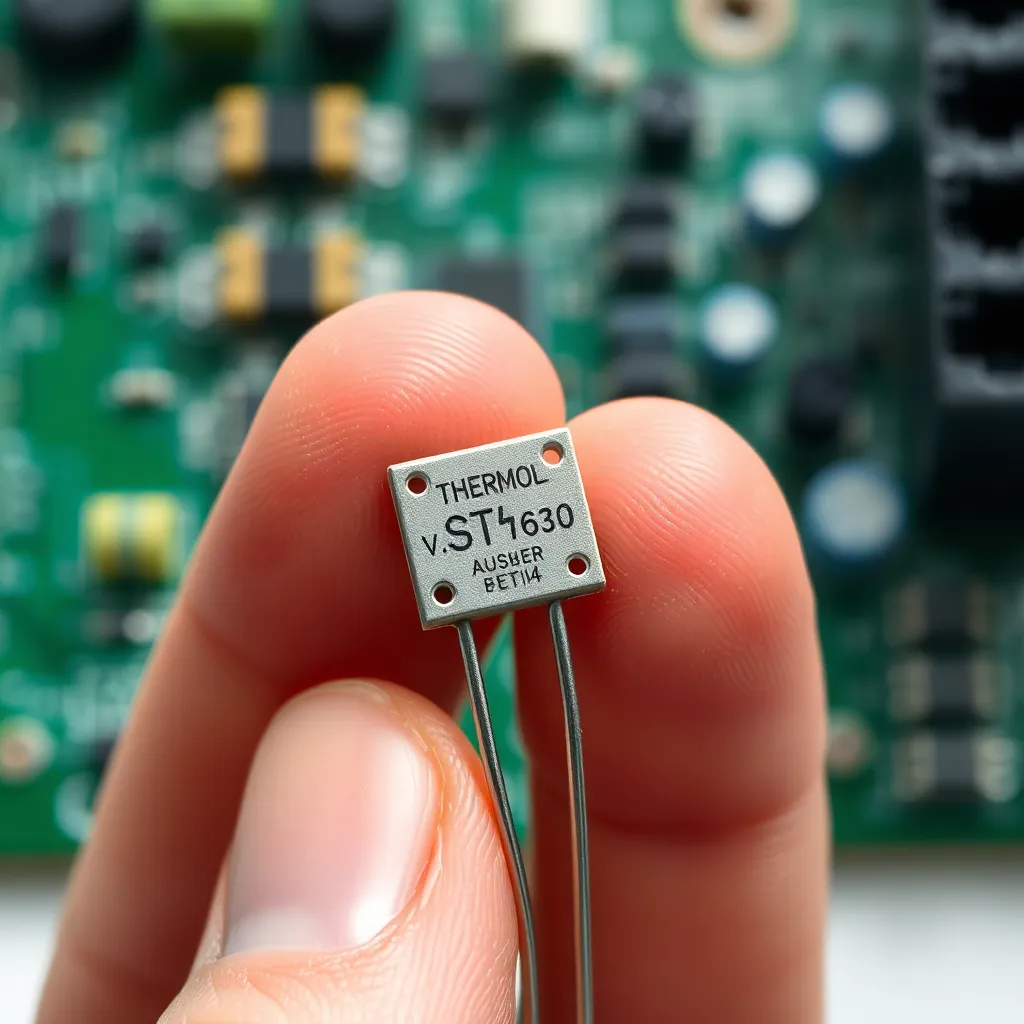
A thermistor is a type of resistor whose electrical resistance changes with temperature. The name comes from “thermal” and “resistor.” In home appliances, thermistors serve as temperature sensors — they report the current temperature to the electronic control board, which uses that information to make decisions about heating, cooling, and cycle timing.
Most appliance thermistors are NTC (Negative Temperature Coefficient) types, meaning their resistance decreases as temperature increases. At cold temperatures, the thermistor has high resistance. As it warms up, resistance drops in a predictable, measurable way. The control board reads this resistance value and translates it into a temperature reading.
Where Thermistors Are Used in Your Appliances
Refrigerators
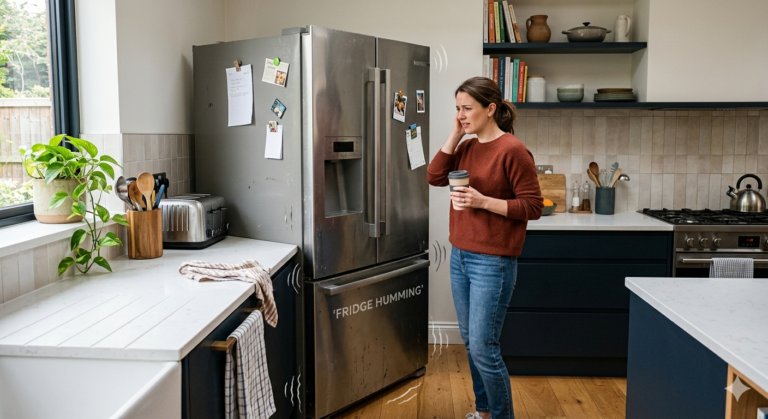
Your refrigerator typically has 2-3 thermistors: one in the fresh food compartment, one in the freezer, and sometimes one on the evaporator coils. These sensors tell the control board whether the compressor needs to run, when to initiate a defrost cycle, and whether temperatures are in the safe range.
Ovens
The oven temperature sensor is a thermistor (or RTD — resistance temperature detector) mounted inside the oven cavity. It provides continuous temperature feedback to the control board, which cycles the heating elements on and off to maintain the set temperature. A drifting oven thermistor means inaccurate temperature control — your 175°C setting might actually be 190°C or 160°C.
Dryers
Your dryer uses thermistors to monitor exhaust temperature and drum temperature. These readings determine when the heating element cycles on and off, prevent overheating, and inform the auto-dry cycle about drying progress.
Dishwashers
The dishwasher thermistor monitors water temperature to ensure it reaches the optimal cleaning temperature during wash cycles and the appropriate temperature during heated drying.
Washing Machines
The washing machine thermistor monitors water temperature to ensure the selected wash temperature is achieved.
Why Resistance Values Matter
The control board doesn’t read temperature directly — it reads resistance. The board has a lookup table that maps specific resistance values to specific temperatures. If the thermistor’s resistance-to-temperature relationship has shifted (due to age, damage, or manufacturing defect), the board receives an incorrect reading and makes wrong decisions.
For example, if an oven thermistor reads 1100 ohms when it should read 1080 ohms at 175°C, the control board thinks the oven is slightly cooler than it actually is and keeps the element on longer, pushing the actual temperature higher. Over time, this drift worsens, and cooking results become increasingly unpredictable.
How to Test a Thermistor
Testing a thermistor is straightforward with a multimeter. Here’s the process:
- Unplug the appliance.
- Locate the thermistor (consult your model’s wiring diagram or manual).
- Disconnect the thermistor’s wire connectors.
- Set your multimeter to resistance (ohms) mode.
- Place the multimeter probes on the thermistor terminals.
- Record the reading and compare it to the expected value for the current temperature (found in the service manual or manufacturer’s specifications).
For a rough check, an oven thermistor should read approximately 1080-1100 ohms at room temperature (25°C). A refrigerator thermistor might read 10,000-15,000 ohms at room temperature. If the reading is significantly off, open circuit (infinite resistance), or short circuit (zero resistance), the thermistor is faulty.
Signs of a Faulty Thermistor
- Oven that runs too hot or too cold despite correct settings
- Refrigerator that doesn’t maintain consistent temperature
- Dryer that overheats or doesn’t heat enough
- Dishwasher that doesn’t heat water properly
- Temperature-related error codes on the display
Replacing a Thermistor
Thermistors are inexpensive parts (typically $15-$40) and are usually straightforward to replace — they’re typically held by one or two screws and connected by a wire harness plug. The key is ordering the exact replacement for your model, as different thermistors have different resistance curves.
When to Call a Professional
If you’re not comfortable using a multimeter, interpreting resistance readings, or accessing the thermistor location inside your appliance, Tech Angels Appliance Repair can handle the diagnosis and replacement quickly. Call (604) 265-3565 for service in the Greater Vancouver area.
Final Thoughts
Thermistors may be small, but they play an enormous role in your appliances’ performance and accuracy. When temperature problems arise, the thermistor should be one of the first components you check — it’s often the simplest and most affordable fix for issues that seem much more complex.