Is your dishwasher leaving spots on glasses, food stuck on plates, or a funky smell after every cycle? Before you blame the machine, there’s a good chance the issue is something you can fix with a few simple adjustments. Most dishwasher performance problems aren’t caused by a broken appliance — they’re caused by how we use (and maintain) it.
Here are five proven ways to get noticeably better results from your dishwasher, starting today. These tips work for every major brand — Samsung, Bosch, LG, Whirlpool, Maytag, KitchenAid, and more.
1. Clean the Filter Regularly
This is the single most impactful thing you can do for your dishwasher’s performance, and most people don’t do it nearly often enough — or at all.
Modern dishwashers have a removable filter at the bottom of the tub (usually near the base of the lower spray arm) that catches food particles during the wash cycle. When this filter gets clogged with grease, food debris, and mineral buildup, several things happen: water can’t circulate properly, food particles get recirculated onto your clean dishes, and the machine starts to smell.
How to Clean Your Dishwasher Filter
- Remove the bottom rack to access the filter assembly.
- Twist or pull the filter out according to your model’s instructions (check your owner’s manual if you’re unsure).
- Rinse the filter under warm running water, using an old toothbrush to scrub away stuck-on debris.
- For heavy buildup, soak the filter in warm water with a tablespoon of baking soda for 15 minutes before scrubbing.
- Replace the filter and make sure it’s seated properly.
How often should you do this? For households that run the dishwasher daily, once a week is ideal. At minimum, clean the filter every two weeks. You’ll be amazed at the difference it makes — cleaner dishes, no more film, and a fresher-smelling machine.
2. Load Your Dishwasher Properly
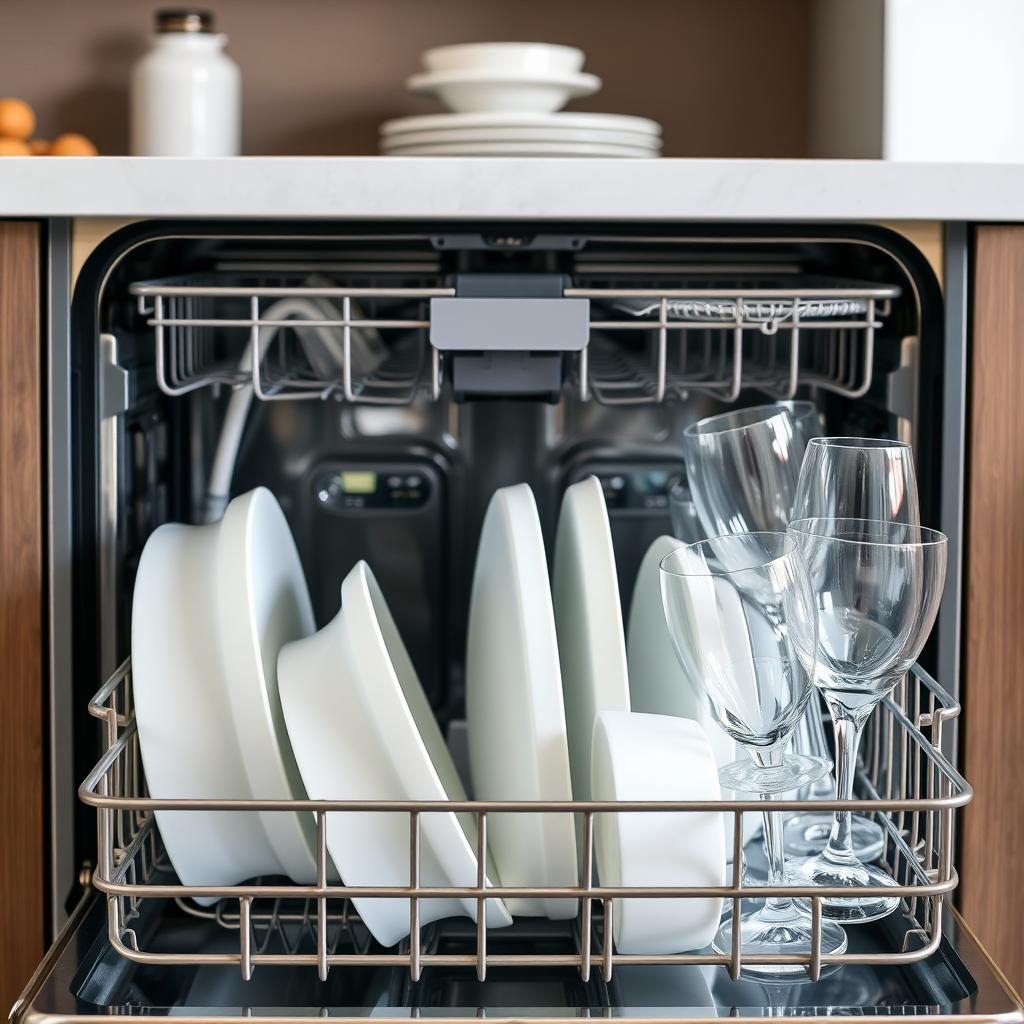
Loading a dishwasher might seem straightforward, but how you arrange dishes has a huge impact on cleaning results. The goal is to maximize water and detergent contact with every surface while allowing water to drain freely.
Bottom Rack Best Practices
- Plates go here, facing the centre of the machine where the spray arm is most effective.
- Pots and pans should be angled face-down and tilted to prevent pooling.
- Don’t nest items — overlapping dishes block water and prevent cleaning.
- Large items go on the sides and back, where they won’t block the spray arm or detergent dispenser.
Top Rack Best Practices
- Cups, glasses, and bowls go here, angled downward so water can reach inside and drain out.
- Plastic containers belong on the top rack, away from the heating element.
- Don’t overcrowd — leave space between items for water jets to reach every surface.
- Place wine glasses securely so they don’t knock against each other during the cycle.
Cutlery Basket Tips
- Mix utensils up — don’t group all spoons together or they’ll nest and won’t get clean.
- Alternate handles up and handles down for best water access.
- Place sharp knives with handles up for safety.
One crucial rule: never block the spray arms. Before starting a cycle, spin the spray arms by hand to make sure no tall items or handles are in the way. A blocked spray arm means an entire section of your dishwasher isn’t getting any water coverage.
3. Use the Right Detergent — And the Right Amount
Not all dishwasher detergents are created equal, and using the wrong one (or too much of it) is a surprisingly common cause of poor performance.
Types of Dishwasher Detergent
- Pods/tablets: The most convenient option and generally the most effective. They contain pre-measured amounts of detergent, rinse aid, and sometimes a degreaser. Just pop one in the detergent dispenser and you’re done.
- Powder: The most affordable option and allows you to control the exact amount used. Works well but can clump if it gets damp during storage.
- Gel/liquid: Easy to use but tends to be the least effective at cutting grease and removing baked-on food. Some gel detergents also contribute to cloudy glassware over time.
How Much to Use
More detergent does not mean cleaner dishes. In fact, too much detergent leaves a residue on dishes and inside the machine, contributing to film on glassware, a white powdery coating on surfaces, and buildup in the spray arms and filter. Follow the manufacturer’s recommended amount — for most loads with a standard water hardness level, one pod or two tablespoons of powder is sufficient.
Don’t Forget Rinse Aid
Rinse aid is not a gimmick — it’s essential for spot-free drying and optimal performance. Rinse aid reduces the surface tension of water, helping it sheet off dishes instead of forming droplets that leave spots and streaks. Fill your dishwasher’s rinse aid reservoir (usually next to the detergent dispenser) and adjust the dispensing level if your machine allows it. If you have hard water, you may need a higher rinse aid setting.
4. Run Hot Water Before Starting a Cycle
Here’s a tip that many people overlook: before you start your dishwasher, run the hot water faucet at your kitchen sink until the water is hot. This simple step ensures that your dishwasher starts its cycle with hot water from the very first fill.
Why does this matter? Your dishwasher fills from the same hot water line as your kitchen sink. If the hot water heater is far from the kitchen (like in the basement or the other end of the house), the water sitting in the pipes is cold. When the dishwasher starts, it fills with that cold water first. The machine’s internal heater will eventually bring the water up to temperature, but the initial wash may be less effective, and the overall cycle takes longer.
By running the sink until you feel hot water, you’re purging the cold water from the pipes so the dishwasher starts with the hottest water available. This improves cleaning performance, helps dissolve detergent more effectively, and can even shorten cycle times slightly.
For best results, your hot water heater should be set to at least 49°C (120°F). If your water isn’t getting hot enough, that’s a plumbing issue worth addressing — it affects your dishwasher, your showers, and your overall home comfort.
5. Run a Monthly Deep Clean
Even with regular filter cleaning and proper loading, your dishwasher accumulates grease, mineral deposits, soap scum, and food residue in places you can’t easily see — inside the spray arms, along the door gasket, in the drain hose, and around the detergent dispenser.
Monthly Cleaning Routine
- Step 1: Clean the spray arms. Remove the upper and lower spray arms (they usually twist off or unclip). Rinse them under water and use a toothpick or thin wire to clear any clogged spray holes. Mineral deposits and food particles frequently block these small openings, reducing water pressure and coverage.
- Step 2: Wipe the door gasket and edges. The rubber seal around the dishwasher door collects grime, mold, and food debris — especially along the bottom edge where water sits. Wipe it down with a cloth dampened with warm water and white vinegar.
- Step 3: Clean the door edges and hinges. The area around the door that doesn’t get reached by the spray arms during a normal cycle can build up grime over time. Wipe it with a damp cloth and mild cleaner.
- Step 4: Run a vinegar cycle. Place a cup of white vinegar in a dishwasher-safe container on the top rack and run a hot cycle with an empty machine. The vinegar dissolves mineral deposits, grease, and soap buildup throughout the machine’s interior and plumbing.
- Step 5: Follow with a baking soda rinse. After the vinegar cycle completes, sprinkle a cup of baking soda across the bottom of the dishwasher and run a short hot cycle. This deodorizes and brightens the interior.
This routine takes about 10 minutes of hands-on time (plus the machine cycles) and makes a remarkable difference in both cleaning performance and odor control.
Bonus Tips for Even Better Results
Beyond the five main strategies, these additional tips can squeeze even more performance out of your dishwasher:
- Scrape, don’t pre-rinse. Modern dishwashers are designed to handle food residue — in fact, most detergents work better when there’s some food soil for the enzymes to work on. Scrape off large food particles, but skip the pre-rinse. You’ll save water and get better cleaning results.
- Use the right cycle. Don’t default to the same cycle for every load. Heavy-duty for pots and pans. Normal for everyday dishes. Quick wash for lightly soiled items. Using the appropriate cycle optimizes water temperature, cycle length, and detergent effectiveness.
- Check the water temperature. Place a thermometer in a glass and fill it from your kitchen hot water tap. If the temperature is below 49°C (120°F), your dishwasher may struggle to clean effectively.
- Inspect the spray arms periodically. Beyond monthly cleaning, watch for cracks or damage to the spray arms that could reduce water pressure.
When Performance Problems Point to a Bigger Issue
If you’ve implemented all five of these tips and your dishwasher still isn’t performing well, the problem may be mechanical. Common issues that require professional attention include:
- A failing wash pump that can’t generate adequate water pressure.
- A malfunctioning heating element that doesn’t get water hot enough.
- A broken detergent dispenser that doesn’t release detergent at the right time.
- A faulty water inlet valve that restricts water flow into the machine.
- Control board issues that prevent the machine from completing cycles properly.
If you suspect a mechanical problem, Tech Angels Appliance Repair can diagnose and fix it quickly. Our technicians are experienced with all major dishwasher brands and can usually identify the issue on the first visit.
Final Thoughts
A dishwasher that delivers spotless, sparkling results isn’t magic — it’s maintenance. By cleaning the filter regularly, loading dishes correctly, using the right detergent, starting with hot water, and running a monthly deep clean, you can transform your dishwasher’s performance without spending a dime on repairs.
These aren’t just theoretical tips — they’re the same advice our technicians give to customers every day. Try them and see the difference for yourself. And if your dishwasher needs a little more help than a good cleaning can provide, give Tech Angels a call at (604) 265-3565 or book online.