If your dishwasher has been leaving food particles on supposedly clean dishes, producing a musty odor, or just not cleaning as well as it used to, the culprit is likely hiding in plain sight — your dishwasher filter. It’s one of those maintenance tasks that most people never think about, but cleaning your dishwasher filter regularly can make a dramatic difference in performance.
In this comprehensive guide, we’ll cover what your dishwasher filter does, how to find it, how to clean it properly, how often you should do it, and what happens if you neglect it. Consider this your complete dishwasher filter care manual.
What Does the Dishwasher Filter Do?
Your dishwasher filter serves a critical purpose: it catches food particles, debris, and other solids during the wash cycle to prevent them from recirculating onto your clean dishes or clogging the drain pump. Without a properly functioning filter, your dishwasher would essentially be washing dishes in dirty water.
There are two types of dishwasher filters:
Manual Filters (Most Modern Dishwashers)
These are removable, cylindrical mesh filters that you need to clean by hand. They’re quiet, energy-efficient, and effective — but they require regular maintenance. If your dishwasher was manufactured after about 2010, it almost certainly has a manual filter.
Self-Cleaning Filters (Older Models)
These use a built-in grinder (similar to a garburator) to pulverize food particles so they wash away with the drain water. They’re louder but require no manual cleaning. If your dishwasher is noticeably louder during operation, it may have a self-cleaning filter. These are becoming less common as manufacturers prioritize quieter operation.
If you have a self-cleaning filter, this guide mostly doesn’t apply to you — your filter maintains itself. But if you have a manual filter (and you very likely do), read on.
How to Find Your Dishwasher Filter
The filter is located inside the dishwasher, at the bottom of the tub. Here’s how to find it:
- Remove the bottom dish rack to expose the floor of the dishwasher.
- Look near the base of the lower spray arm — the filter is typically a cylindrical component in the center or back-center of the tub floor.
- Most filters consist of two parts: an upper filter (a cylinder with a mesh screen) and a lower flat filter plate that sits underneath it.
Consult your owner’s manual if you’re having trouble locating the filter — the exact position varies by brand and model.
Step-by-Step: How to Clean Your Dishwasher Filter
Cleaning the filter is a simple process that takes about five minutes. Here’s the complete procedure:
Step 1: Remove the Bottom Rack
Pull the bottom dish rack out completely to give yourself clear access to the filter assembly.
Step 2: Remove the Filter
Most dishwasher filters twist out counterclockwise (about a quarter turn) and then lift straight up. Some models have a handle or grip on top. If the filter doesn’t twist, it may simply pull straight up — check your manual for model-specific instructions.
Many dishwashers have a two-part filter system: the upper cylindrical filter and a flat, coarser mesh filter underneath. Remove both pieces.
Step 3: Rinse Under Running Water
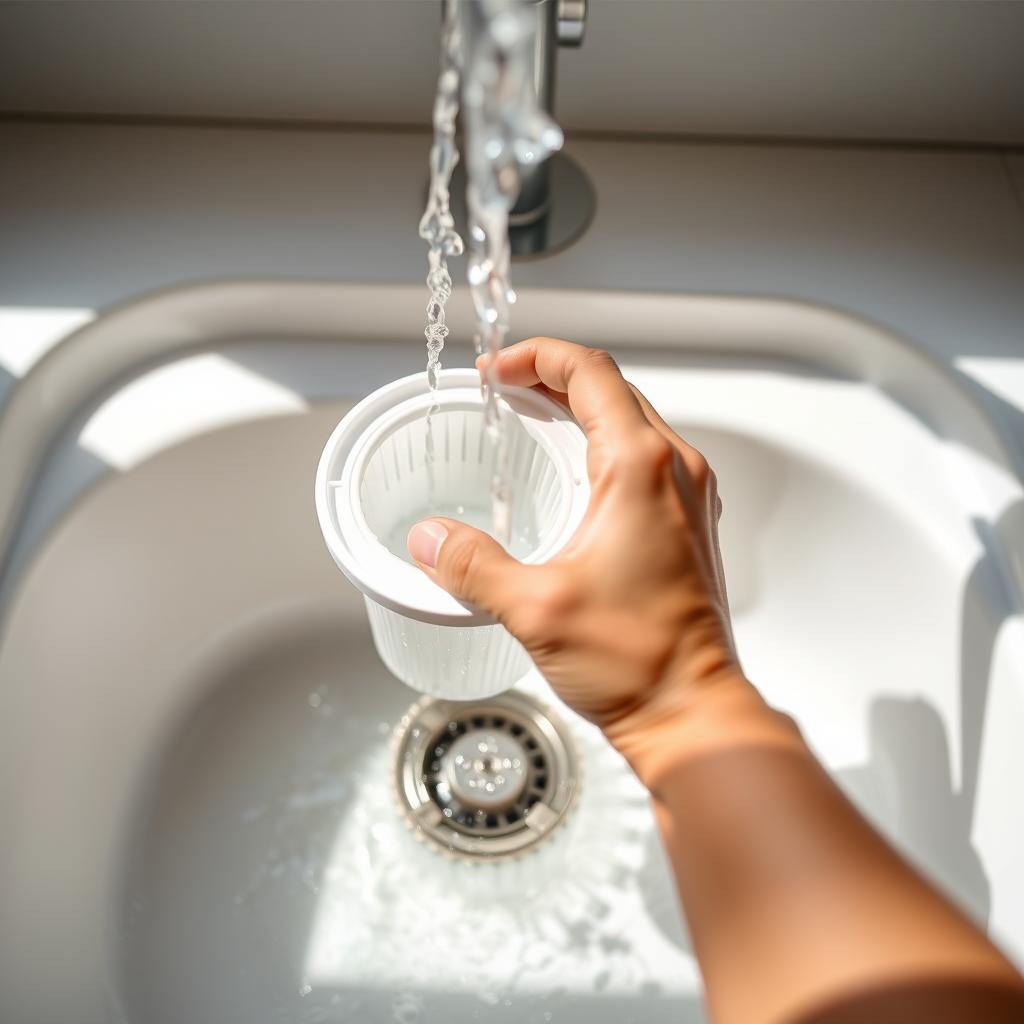
Hold the filter under warm running water from your kitchen faucet. The running water alone will wash away most loose debris and food particles. Rotate the filter as you rinse to clean all surfaces.
Step 4: Scrub Gently
For stuck-on food and greasy residue, use a soft brush — an old toothbrush is perfect for this. Gently scrub the mesh, paying attention to any areas where food has dried on or where grease has accumulated. Avoid using wire brushes or abrasive pads, as they can damage the fine mesh and reduce the filter’s effectiveness.
Step 5: Tackle Stubborn Buildup
If the filter is heavily clogged or has mineral deposits (common in hard water areas), try one of these methods:
- Baking soda paste: Mix baking soda with a small amount of water to create a paste. Apply it to the filter, let it sit for 15 minutes, then scrub gently and rinse.
- Vinegar soak: Submerge the filter in a bowl of warm white vinegar for 15-20 minutes. The acidity dissolves mineral deposits and cuts through grease. Rinse thoroughly afterward.
- Dish soap and warm water: For heavy grease buildup, soak the filter in warm water with a few drops of dish soap for 10 minutes, then scrub and rinse.
Step 6: Clean the Filter Housing
While the filter is out, take a moment to clean the area where it sits inside the dishwasher. Wipe around the drain opening and the filter housing with a damp cloth or sponge. You may find food debris, broken glass, or small objects that have collected in this area.
Step 7: Reinstall the Filter
Place the flat lower filter back in position first (if applicable), then insert the upper cylindrical filter and twist clockwise to lock it in place. Make sure it’s properly seated — an improperly installed filter can allow debris to bypass the filter and damage the drain pump.
Step 8: Replace the Bottom Rack
Slide the bottom rack back in, and you’re done. Run a normal wash cycle to make sure everything is working properly.
How Often Should You Clean the Filter?
The right cleaning frequency depends on how often you use your dishwasher and how much food residue goes in with each load:
- Heavy use (daily or more, lots of heavy cooking): Clean the filter once a week.
- Moderate use (4-5 loads per week): Clean every two weeks.
- Light use (2-3 loads per week): Clean once a month.
If you’re diligent about scraping plates before loading (you should be — scraping is good, pre-rinsing is unnecessary), you can stretch the intervals slightly. But if you notice any of the warning signs below, clean the filter immediately regardless of when you last did it.
Signs Your Dishwasher Filter Needs Cleaning
Don’t wait for your scheduled cleaning day if you notice any of these signs:
- Food particles on “clean” dishes. This is the most obvious sign — the filter is clogged and food is being recirculated.
- A bad smell when you open the dishwasher. Trapped food debris in the filter decomposes and creates odors.
- Standing water in the bottom of the tub after a cycle. A severely clogged filter restricts drainage.
- Cloudy or gritty residue on glassware. Debris in the wash water settles on dishes as a film.
- The dishwasher seems to take longer than usual. Some machines extend cycle times when they detect poor drainage caused by a clogged filter.
What Happens If You Never Clean the Filter?
If you completely neglect filter maintenance, the consequences escalate over time:
- Short term: Reduced cleaning performance, food redepositing on dishes, unpleasant odors.
- Medium term: Increased strain on the drain pump as it works harder to push water through a restricted filter. Higher energy consumption. Potential for the machine to not drain completely.
- Long term: Premature drain pump failure (an expensive repair), potential water backup and leaks, mold and bacteria growth inside the machine. In severe cases, the machine may stop working entirely and display drainage error codes.
A five-minute cleaning every week or two can prevent hundreds of dollars in repairs down the line. It’s one of the simplest and most cost-effective maintenance habits you can develop.
Beyond the Filter: Complete Dishwasher Hygiene
While you’re in maintenance mode, consider these additional cleaning steps that complement filter care:
- Clean the spray arms: Remove them and clear any clogged spray holes with a toothpick. Mineral deposits and food particles frequently block these tiny openings.
- Wipe the door gasket: The rubber seal around the door collects grime and mold, especially along the bottom edge. Wipe it with a vinegar-dampened cloth.
- Run a monthly vinegar cycle: Place a cup of white vinegar on the top rack and run an empty hot cycle. This cleans the interior plumbing, spray arms, and drain system.
- Clean the detergent dispenser: Residue builds up in and around the dispenser over time. Wipe it with a damp cloth and make sure it opens and closes freely.
When Filter Issues Signal a Bigger Problem
Sometimes, what seems like a filter problem is actually a symptom of something else:
- If the dishwasher still doesn’t drain properly after cleaning the filter, the drain pump, drain hose, or air gap may be the issue.
- If food particles continue appearing on dishes despite a clean filter, the spray arms may be clogged or the wash pump may be losing pressure.
- If unusual noises accompany poor performance, a foreign object may have gotten past the filter and into the pump.
For persistent issues that go beyond basic filter cleaning, Tech Angels Appliance Repair can help. Our technicians are experienced with all major dishwasher brands and can diagnose problems that simple maintenance can’t fix. Call us at (604) 265-3565 to schedule a visit in the Greater Vancouver area.
Final Thoughts
Your dishwasher filter is a small component that has an outsized impact on your machine’s performance. Five minutes of regular cleaning is all it takes to keep your dishes sparkling, your dishwasher smelling fresh, and your drain pump running smoothly for years to come.
Make it part of your kitchen routine — every time you clean the kitchen sink or take out the garbage, give the filter a quick check. It’s one of those tiny habits that pays off far beyond the effort involved. And if your dishwasher needs more than just a filter cleaning, Tech Angels is here to help with fast, professional service across Vancouver and the Lower Mainland.