Few appliance problems are as quietly frustrating as a dryer that just won’t finish the job. Your clothes come out damp after a full cycle, so you run it again — doubling your energy costs and wear on the machine. A dryer that takes too long to dry isn’t just an inconvenience; it’s usually a symptom of a specific, fixable problem.
In this guide, we’ll cover the most common reasons your dryer takes too long and what you can do about each one.
The #1 Cause: Restricted Airflow
The vast majority of slow-drying problems come down to one thing: the dryer can’t push moist air out fast enough. Your dryer works by heating air, tumbling it through wet clothes, and exhausting the moisture-laden air outside. If any part of this airflow path is blocked, drying slows dramatically.
Check the Lint Filter
This is the simplest fix. A clogged lint filter restricts airflow through the dryer and should be cleaned before every load. But even if you clean it regularly, dryer sheet residue can coat the mesh over time, reducing airflow even when it looks clean. Test this: hold the filter under running water. If water pools on the mesh instead of flowing through, scrub it with a soft brush and dish soap, rinse, and let it dry completely.
Clean the Dryer Vent
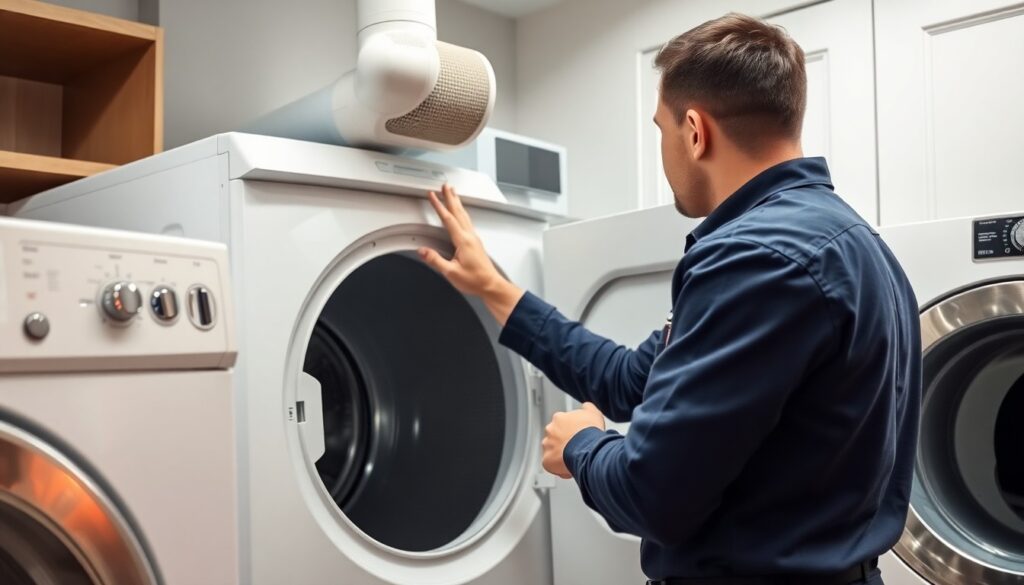
The exhaust vent — the duct running from the back of the dryer to the outside wall — is the most common cause of extended drying times. Lint accumulates in this duct over months and years, gradually restricting airflow. A vent that’s 50% blocked can double your drying time.
Disconnect the duct from the dryer, use a dryer vent brush or vacuum to clean the entire length, and check that the exterior vent flap opens freely. This single maintenance step solves the majority of slow-drying complaints.
Check the Duct Material and Length
Flexible foil or plastic ducts create more airflow resistance than rigid metal ducts. Long duct runs (more than 7.5 metres) and multiple elbows also restrict airflow. If your dryer vent is excessively long, made of flexible material, or has several turns, upgrading to shorter rigid metal duct can dramatically improve drying performance.
Overloading
Stuffing too many items into the dryer prevents clothes from tumbling freely. Without tumbling, hot air can’t circulate between items and moisture can’t escape. The drum should be about two-thirds full — enough to tumble loosely. Heavy items like towels and bedding need even more room.
Washing Machine Issues
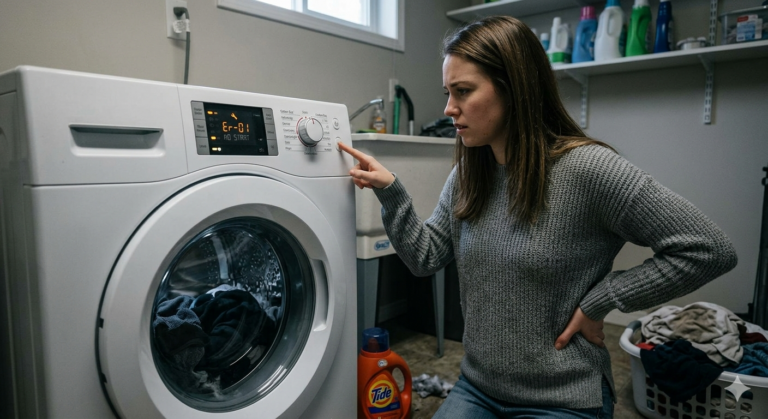
Sometimes the problem starts before clothes reach the dryer. If your washing machine isn’t spinning fast enough, clothes enter the dryer much wetter than they should be. Check your washer’s spin cycle — if clothes come out dripping rather than just damp, the washer may need attention. Common causes include a worn drive belt, a failing motor coupling, or a load that was unbalanced during the spin cycle.
Heating Element or Gas Igniter Failure
If your dryer tumbles but produces no heat (or weak heat), the heating element (electric) or gas igniter (gas) may have failed. An electric dryer with a burned-out heating element will tumble clothes endlessly without drying them. You might notice the drum feels room-temperature when you open the door mid-cycle.
For electric dryers, the heating element can be tested with a multimeter for continuity. A broken element shows infinite resistance and must be replaced. For gas dryers, the igniter and gas valve coils are the most common failure points.
Thermostat and Sensor Issues
Your dryer uses thermostats and moisture sensors to control temperature and determine when clothes are dry. A faulty cycling thermostat may cause the heater to cycle off too frequently, keeping the temperature too low. Failed moisture sensors (the metal strips inside the drum) can cause the auto-dry cycle to end prematurely or run too long.
Clean the moisture sensor strips with rubbing alcohol and a soft cloth — dryer sheet residue coats them over time, reducing their accuracy.
Drum Seal Issues
Worn drum seals allow hot air to escape around the drum instead of passing through the clothes. The dryer still heats, but much of that heat is wasted. Drum seals wear gradually, so you may not notice the decline until drying times have increased significantly.
Exhaust Hood Problems
The vent hood on the exterior of your home has a flap that should open when the dryer runs and close when it stops (to keep out animals and weather). If this flap is stuck, blocked by lint, or damaged, it restricts airflow and slows drying. Check it from outside while the dryer is running — you should feel strong, warm airflow.
How to Diagnose the Problem
Work through these checks in order:
- Clean the lint filter and test for residue buildup.
- Check the exterior vent while the dryer runs — strong airflow means the vent is clear.
- If airflow is weak, clean the entire vent duct.
- Verify the dryer is producing heat — open the door mid-cycle and feel for warmth.
- Check for overloading — reduce load size and test.
- If none of these help, the issue is likely internal (thermostat, element, sensor, or seal).
When to Call a Professional
If you’ve cleaned the vent, checked the lint filter, confirmed heat is present, and reduced load sizes without improvement, the problem is likely an internal component. Tech Angels Appliance Repair diagnoses and repairs dryer issues across the Greater Vancouver area. Call (604) 265-3565 for fast service.
The Cost of Ignoring a Slow Dryer
A dryer that takes twice as long uses roughly twice the energy per load. Over a year, this can add $150-$300 to your energy bill. More importantly, a restricted vent is the leading cause of dryer fires. Addressing slow drying isn’t just about convenience — it’s about safety and savings.
Final Thoughts
A dryer that takes too long almost always has a fixable cause. Start with airflow — clean the lint filter, clean the vent, and check the exhaust hood. These three steps resolve the majority of slow-drying problems. For anything beyond basic maintenance, professional diagnosis ensures the right fix the first time.