If your washing machine has developed a musty, mildew, or sour smell, you’re not alone — it’s one of the most common complaints among homeowners, especially those with front-load washers. The irony of a machine designed to clean things making your laundry smell worse isn’t lost on anyone, but the good news is that washer odor has well-understood causes and effective solutions.
In this guide, we’ll explain exactly why your washing machine smells, how to eliminate the odor, and how to prevent it from coming back.
Why Does Your Washing Machine Smell?
The smell is almost always caused by mold, mildew, and bacteria growth inside the machine. These organisms thrive in the warm, dark, damp environment that a washing machine provides — especially between loads when the door is closed and moisture is trapped inside.
The Door Seal (Front-Load Washers)
The rubber door gasket on front-load washers has deep folds that trap water, detergent residue, hair, lint, and small items after every wash. This standing water becomes a breeding ground for mold and bacteria. If you’ve ever peeled back the door seal and found black mold, slimy residue, or a strong mildew smell, you’ve found the primary culprit.
Excess Detergent Residue
Using too much detergent — or using non-HE detergent in an HE machine — leaves behind a soapy residue inside the drum, door seal, pump, and drainage system. This residue provides food for bacteria and mold, accelerating odor development. More detergent does not equal cleaner clothes — in front-loaders, it equals smellier machines.
Standing Water in the Pump and Hoses
A small amount of water always remains in the drain pump, internal hoses, and the bottom of the drum after each cycle. If the machine isn’t used for a few days, this stagnant water develops a sour smell.
Clogged Drain Filter
The drain pump filter catches debris to protect the pump. When it’s full of lint, coins, hair, and decomposing fabric fibers, it becomes a concentrated source of bad odor.
How to Deep Clean Your Washing Machine
Step 1: Clean the Door Seal
Pull back the rubber gasket folds and wipe out any visible mold, debris, and residue with a cloth dampened with a 50/50 mixture of white vinegar and water. For heavy mold, use a paste of baking soda and water, apply it to the affected areas, let it sit for 15 minutes, then scrub with an old toothbrush and wipe clean.
Step 2: Clean the Detergent Dispenser
Remove the detergent dispenser drawer (most pull out completely after pressing a release tab). Wash it in warm, soapy water, scrubbing all compartments with a brush. Clean the cavity where the drawer sits — this area often develops mold and soap buildup.
Step 3: Clean the Drain Pump Filter
Locate the drain pump filter (usually behind a small panel at the bottom front of the machine). Place towels and a shallow container underneath to catch water. Slowly open the filter — water will drain out. Remove the filter, clean off all debris, and rinse it under running water. Clean inside the filter housing as well.
Step 4: Run a Hot Cleaning Cycle
Add two cups of white vinegar directly into the drum (not the dispenser). Run the hottest, longest cycle available with an empty machine. The vinegar’s acidity kills bacteria and mold and dissolves soap residue throughout the drum, pump, hoses, and drainage system.
Step 5: Follow with Baking Soda
After the vinegar cycle, sprinkle half a cup of baking soda into the drum and run another short hot cycle. Baking soda neutralizes any remaining odors and provides a gentle abrasive cleaning action.
Step 6: Wipe Down the Exterior
Wipe the door, handle, control panel, and exterior surfaces with a damp cloth. These areas can harbor bacteria and odors too.
How to Prevent Washer Odor from Returning
Eliminating the smell once is great, but keeping it away requires a few simple habit changes:
Leave the Door Open After Every Load
This is the single most important habit for front-load washer owners. Leaving the door ajar allows air to circulate inside the drum and around the door seal, drying out the moisture that mold needs to grow. Even leaving it open just a few inches makes a significant difference.
Wipe the Door Seal Dry After Every Load
Take 30 seconds after each load to wipe the inside folds of the door gasket with a dry towel. This removes the standing water where mold starts.
Use the Right Detergent Amount
For HE machines, use HE detergent and measure carefully. Most loads need just 1-2 tablespoons of liquid or one pod. More is not better — it’s just more residue.
Run a Monthly Cleaning Cycle
Once a month, run an empty hot cycle with two cups of vinegar or a commercial washing machine cleaner. This prevents residue and odor from building up between deep cleans.
Clean the Drain Filter Monthly
Make drain filter cleaning part of your monthly routine. A clean filter means better drainage, less standing water, and less odor.
Remove Wet Laundry Promptly
Don’t leave wet laundry sitting in the drum for hours. The combination of damp clothes and a closed door creates ideal conditions for mold and mildew growth — both in the machine and on your clothes.
When the Smell Won’t Go Away
If you’ve done a thorough deep clean and the odor persists, the problem may be more entrenched:
- Mold inside the outer drum: The outer tub (behind the visible drum) can harbor mold that standard cleaning can’t reach.
- Clogged drain hose: The drain hose between the washer and the wall connection can accumulate sludge and mold.
- Damaged door seal: If mold has penetrated deep into the rubber, cleaning may not be enough — the seal may need replacing.
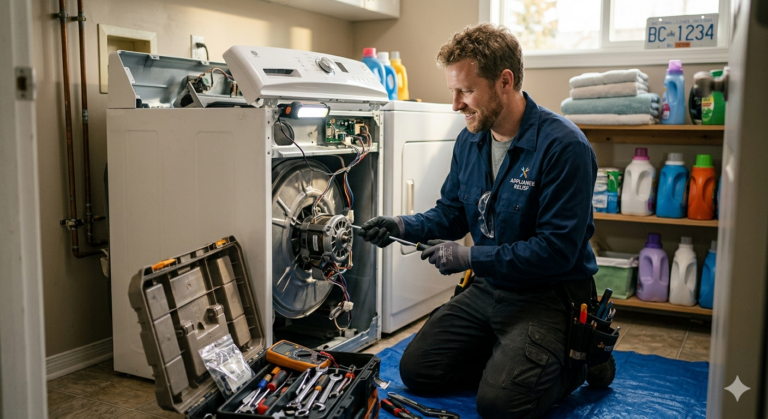
For persistent odor issues, a professional cleaning or repair may be necessary. Tech Angels Appliance Repair can access and clean areas that aren’t reachable in a standard home cleaning, and replace door seals or drain components as needed. Call us at (604) 265-3565.
Final Thoughts
A smelly washing machine is a common but solvable problem. The key is understanding that mold and bacteria are the cause, moisture is their enabler, and detergent residue is their food supply. Address all three — through regular cleaning, proper detergent use, and keeping the machine dry between loads — and your washer will smell fresh every time you open the door.