Your garburator is one of those kitchen appliances that works quietly in the background until something goes wrong. When it does, you realize just how essential it is to your daily routine. A broken garbage disposal can turn simple meal prep into a frustrating experience, and repair costs can quickly add up. The good news? With proper maintenance and smart usage habits, you can significantly extend the life of your garburator and avoid expensive repairs down the road.
Many homeowners don’t think twice about what they’re throwing down their drains, but the truth is, garburator longevity depends heavily on how you use it. Understanding what damages these units and how to care for them properly can save you hundreds of dollars in repair bills. In this guide, we’ll walk you through everything you need to know about maintaining your garburator, from daily habits to preventive care strategies that keep it running smoothly for years to come.
Understanding Your Garburator: How It Works
Before we talk about maintenance, it’s helpful to understand how your garburator actually works. Your garbage disposal is a fairly simple machine with a motor that drives an impeller (a spinning plate with teeth) at high speeds. When food waste falls into the chamber, the impeller forces it against the grind ring, breaking it into small particles that flush down the drain with water.
The entire process happens in seconds, but it’s crucial to remember that your garburator has limits. It’s designed to handle typical food waste, not everything you might think. Understanding these limits is the first step toward extending the life of your unit. The impeller, motor, and seals all work together, and damage to any component can mean your garburator stops working entirely.
Foods That Damage Your Garburator (And Why)
One of the biggest mistakes people make is treating their garburator like it can grind anything. Certain foods and materials can cause serious damage, leading to expensive repairs. Knowing what not to put down your drain is essential for garburator longevity.
Starchy Foods: Pasta, rice, and potatoes expand when they absorb water. In your garburator, they can form a starchy paste that clogs the drain and locks up the impeller. If you’re tempted to dispose of leftover pasta or potatoes, scrap them into the trash instead.
Grease and Oil: Cooking oil and grease seem like liquids, so you might think they’re fine. They’re not. Grease solidifies as it cools, coating the inside of your pipes and garburator. Over time, this buildup restricts water flow and can cause your unit to work harder than necessary, wearing out the motor faster.
Fibrous Foods: Celery, corn husks, onion skins, and other stringy vegetables can wrap around the impeller, jamming the unit. These fibers don’t break down easily, and they can tangle and prevent the impeller from spinning freely. When your garburator can’t rotate properly, the motor strains and can burn out.
Hard Items: Bones, fruit pits, and shells have no business in your garburator. These hard materials can crack the grind ring or damage the impeller. Even small, hard items like popcorn kernels can cause problems if they get wedged in the wrong spot.
Non-Food Items: Plastic, rubber, glass, and metal should never go near your garburator. It’s surprising how often these items accidentally make their way down the drain, but they can cause serious damage. Always double-check that your drain is clear before running your unit.
Daily Habits That Keep Your Garburator Healthy
Extending the life of your garburator starts with smart daily habits. These simple practices take just a few seconds but make a huge difference in how long your unit lasts.
Always Run Cold Water: Never run your garburator with hot water. Cold water helps solidify grease and oils, making them easier to grind and flush away. Hot water softens grease, which can coat your pipes and the interior of your unit. Run cold water for a few seconds before you turn on your garburator, and keep it running for about 30 seconds after you’re done grinding. This helps clear the chamber and pipes.
Use the Right Amount of Water: Your garburator needs adequate water flow to function properly. Without enough water, food waste doesn’t move through the system efficiently, and particles can stick to the sides of the chamber. A steady stream of cold water should run while your unit is operating, and continue for about 30 seconds after.
Feed Food Gradually: Don’t dump a large pile of scraps into your garburator and expect it to handle everything at once. Feed food in gradually, allowing the unit to grind and flush each batch before adding more. This prevents jamming and keeps the impeller working at a safe pace.
Don’t Overload the Unit: Even small amounts of food waste can overwhelm a garburator if you’re not careful. Keep the amount of food going down the drain manageable, especially with harder items. Your unit will work more efficiently and last longer if you’re not constantly pushing it to its limits.
Listen to Your Garburator: Learn what your unit normally sounds like. If you notice unusual grinding noises, rattling, or changes in pitch, something might be wrong. Strange sounds often indicate that something is lodged in the chamber or that a component is wearing out. Addressing problems early can prevent major breakdowns.
Monthly Maintenance Routine
Beyond daily habits, a simple monthly maintenance routine can dramatically improve garburator longevity. These tasks take just a few minutes but help prevent buildup and keep everything running smoothly.
The Ice and Rock Salt Treatment: Once a month, toss a handful of ice cubes and a cup of rock salt down your garburator with cold water running. The ice chunks help sharpen the grinding surface (keeping it as effective as new), while the rock salt acts as a scrubbing agent that removes buildup from the chamber walls. Let the unit run for about 10 seconds, then stop and flush with cold water.
Baking Soda and Vinegar Clean: Another excellent monthly treatment is the baking soda and vinegar combo. Pour half a cup of baking soda down the drain, followed by a cup of white vinegar. Let it sit for 15-20 minutes (don’t run the garburator during this time), then flush thoroughly with hot water. This helps break down grease and eliminates odors naturally.
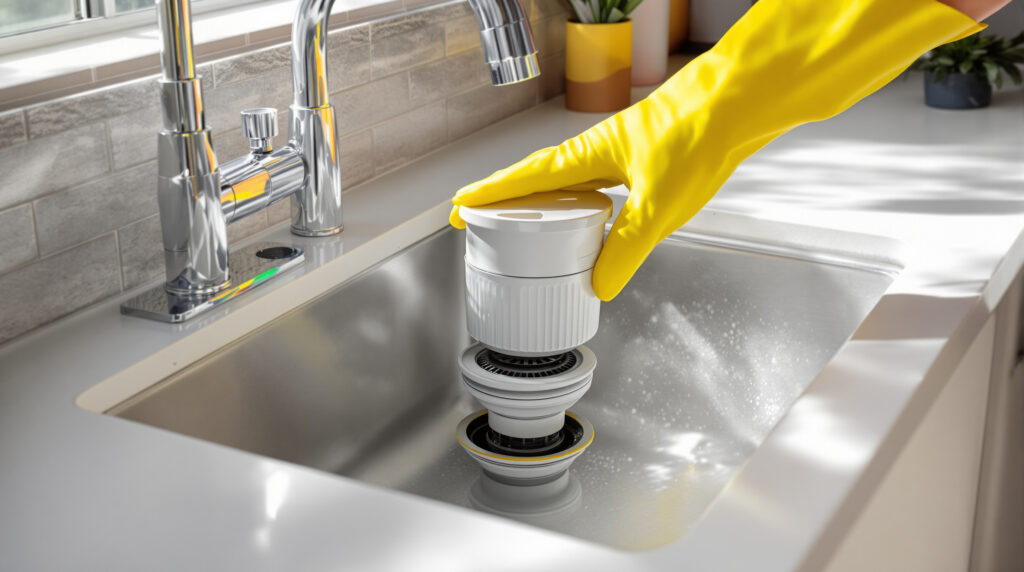
Drain Strainer Cleaning: Check the rubber baffle and drain strainer monthly. Food particles and debris can accumulate around these areas. Remove any visible buildup and rinse thoroughly. A clean strainer ensures water flows freely and reduces strain on your garburator.
What to Do If Your Garburator Jams
Even with perfect maintenance, your garburator might jam occasionally. It’s important to handle this situation correctly to avoid damaging the unit or injuring yourself.
First, Turn It Off: Never try to clear a jam while the unit is running or plugged in. Turn off the switch and unplug the unit from the electrical outlet. This is the most important safety step.
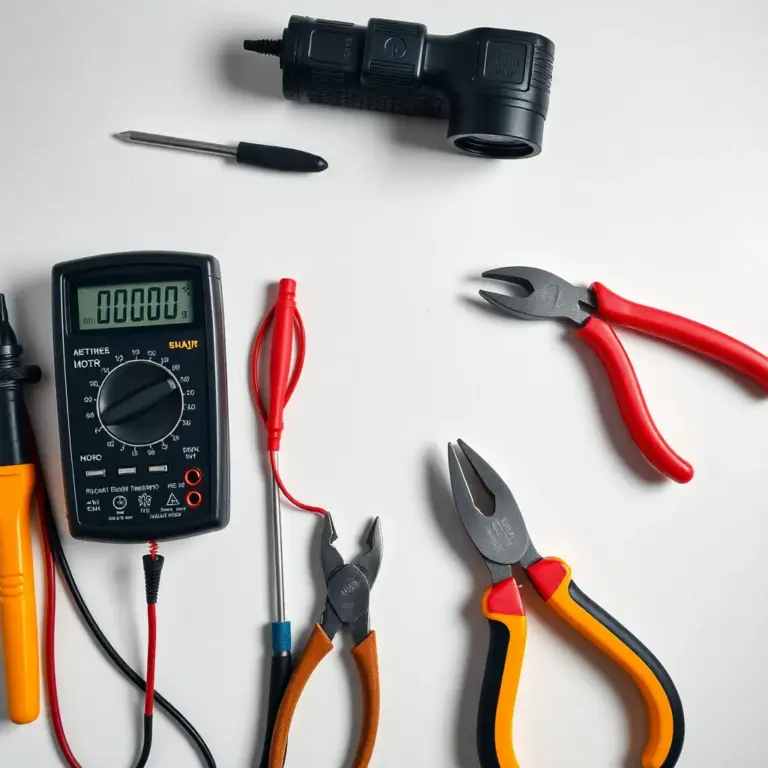
Use a Flashlight: Look into the chamber with a flashlight to identify what’s causing the jam. Often, you’ll see a bone fragment, a piece of string, or a hard object wedged against the impeller or grind ring.
Use Tongs or Pliers: Never put your hands into the garburator. Instead, use long-handled tongs, pliers, or a similar tool to carefully remove the obstruction. Work slowly and carefully to avoid damaging the impeller or other internal components.
Test Carefully: After removing the jam, plug the unit back in and run it briefly with cold water to make sure it’s working properly. If the jam was significant or if you notice any unusual sounds, it’s time to call a professional. A skilled technician can inspect the unit for hidden damage.
Signs Your Garburator Needs Professional Attention
No matter how well you maintain your garburator, repairs will eventually be needed. Recognizing the warning signs early can help you avoid a complete breakdown. If you notice any of these issues, it’s time to call in a professional to diagnose the problem.
Persistent Odors: Despite your regular cleaning routine, persistent foul smells coming from your drain could indicate bacterial growth or trapped food particles. If baking soda and vinegar treatments don’t help, there might be damage allowing waste to accumulate in hard-to-reach areas.
Water Backing Up: If water is backing up into your sink when the garburator runs, there’s likely a blockage in the drain line. This could be caused by a buildup of grease, food particles, or damage inside the unit itself.
Leaks: Any moisture under your sink could indicate a seal failure or crack in the garburator chamber. Leaks only get worse over time, so don’t ignore them. A leaking unit needs professional attention as soon as possible.
Loss of Power: If your garburator won’t turn on even after resetting the outlet, the motor might be burned out. This typically requires a replacement rather than a repair.
Strange Noises: Grinding and whirring sounds are normal, but rattling, squealing, or grinding that sounds rough or uneven indicates a problem. These sounds often mean something is loose or broken inside the unit.
When to Replace vs. Repair
Sometimes the best way to avoid ongoing repair costs is to replace an aging garburator. If your unit is more than 15 years old and starting to fail, replacement might be more cost-effective than repair. Learn more about the repair versus replacement decision to help you evaluate your options.
A new garburator is an investment, but it comes with several benefits: improved efficiency, quieter operation, and modern safety features. Plus, you’ll have a warranty that gives you peace of mind.
Getting Professional Help in Vancouver
If you’re in Vancouver, Burnaby, Coquitlam, or the surrounding areas and your garburator needs repair or replacement, Tech Angels offers professional garburator repair services. Our experienced technicians can diagnose problems quickly and provide reliable solutions. Whether your unit just needs a simple fix or full replacement, we’re here to help.
You can reach Tech Angels at (604) 265-3565 or book an appointment online. We serve Vancouver, Burnaby, Coquitlam, North Vancouver, Port Moody, New Westminster, Surrey, Richmond, Port Coquitlam, and West Vancouver.
Smart Usage Habits That Extend Garburator Life
The most important factor in extending your garburator’s lifespan is how you use it daily. Every time you turn on your disposal, you’re putting stress on the motor and components. By developing smart usage habits, you can dramatically reduce wear and tear.
Always Use Cold Water: Run cold water while using your garburator and for 30 seconds afterward. Cold water helps solidify any greasy particles, making them easier to break down. Hot water can actually liquefy grease, allowing it to coat the impeller and drain pipes, causing clogs and damage over time.
Feed It Slowly: Resist the urge to dump large amounts of food waste at once. Feed your garburator in small batches, allowing each batch to be fully ground before adding more. This reduces strain on the motor and prevents jamming.
Seasonal Maintenance for Vancouver Homeowners
Living in Vancouver’s damp climate means your plumbing system faces unique challenges. Our rainy weather and cool temperatures require special attention to prevent corrosion and mold growth in your garburator system.
Spring Refresh: After winter, clean out any buildup in your drain pipes. Run your garburator with cold water and ice cubes to help dislodge any accumulated particles. This is a great way to start the warmer months with a fresh system.
Summer Prevention: Summer entertaining often means more food waste. Be extra diligent about what goes down your garburator during peak cooking season. Tech Angels recommends composting vegetable scraps instead of relying on your disposal.
Fall Preparation: Before winter weather arrives, consider having a professional inspection. Tech Angels can identify any potential issues before cold weather makes problems worse.
Winter Care: Vancouver’s rainy winters mean extra moisture in your system. Use your garburator regularly to keep it from sitting idle, which can lead to corrosion.
When to Call a Professional Repair Service
Even with perfect maintenance, garburators sometimes need professional attention. Know when it’s time to call experts rather than trying to fix things yourself.
Strange noises are a clear sign that something is wrong internally. If you hear grinding sounds that aren’t the normal grinding of food waste, stop using your unit immediately. Unusual vibrations, burning smells, or water leaks around the unit are also reasons to seek professional help.
If your garburator keeps jamming or becomes unresponsive, there may be internal damage to the impeller or motor. Tech Angels in Vancouver can diagnose garburator problems quickly and perform repairs on most models. We handle everything from simple fixes to complex motor replacement.
DIY Troubleshooting Before Calling for Service
Before you assume you need professional repair, try these simple troubleshooting steps. Most garburators have a reset button on the bottom of the unit. If your garburator has suddenly stopped working, try pressing this button first—it often fixes temporary electrical issues.
If your garburator is jammed, turn it off and never put your hands down the drain. Instead, use a hex wrench to manually turn the impeller back and forth, loosening whatever is stuck. Once it moves freely, flip the reset button and try again.
If none of these steps work, it’s definitely time to call a professional. Don’t attempt to disassemble your garburator yourself—it’s dangerous and can void any remaining warranty.
Conclusion: Extend Your Garburator’s Life
Your garburator is an investment in kitchen convenience. With proper maintenance and smart usage habits, you can keep this essential appliance running smoothly for many years. Consistent small efforts—using cold water, avoiding problem foods, and regular cleaning—are far more valuable than trying to fix problems after they develop. If you ever need help, Tech Angels in Vancouver is here to provide expert appliance repair services.
Related Articles
Explore more appliance care tips from the Tech Angels blog: