Transform Your Fridge Organization for Better Food Storage
Your refrigerator is one of the hardest-working appliances in your home. It keeps your food fresh, prevents spoilage, and helps you maintain a healthy diet. But many people don’t realize that how you organize your fridge has a huge impact on its efficiency and your food’s longevity. A well-organized refrigerator not only keeps food fresher longer but also reduces waste, saves you money, and makes meal prep easier. Understanding how to organize refrigerator space effectively is one of the most underrated ways to improve your kitchen efficiency and save money on groceries.
The good news is that organizing your refrigerator strategically doesn’t require any special tools or expensive accessories. Understanding the natural temperature zones in your fridge, how air circulates, and where different foods should go can dramatically improve your food storage. Let’s explore the best practices for organizing your refrigerator to maximize its efficiency and keep your food fresh longer.
Understanding Your Fridge’s Temperature Zones
Your refrigerator isn’t uniformly cold throughout. Different areas maintain different temperatures, and this variation is actually a feature, not a bug. Understanding these zones is the first step to smart organization. When you organize refrigerator storage using temperature zones, you optimize both food safety and appliance efficiency. This knowledge is fundamental to how to organize refrigerator for maximum food preservation.
The Coldest Zone: Back of the Lower Shelves
The coldest air in your fridge settles at the back and toward the bottom, especially near the back wall where the cooling coils do their work. This zone typically stays between 0-4°C (32-39°F). This is the ideal spot for perishable items like raw meat, poultry, and seafood. Storing these items here minimizes the risk of bacterial growth and foodborne illness. When you organize refrigerator shelves with this zone in mind, you maximize food safety. Understanding this coldest zone is key to how to organize refrigerator properly for perishable proteins.
The Moderate Cold Zone: Front and Middle Shelves
The middle and front portions of your shelves, away from the back wall, maintain temperatures around 4-8°C (39-46°F). This zone is slightly warmer because it’s farther from the cooling source and more exposed to warmer air entering when the door opens. This is the perfect spot for items that need to stay cold but don’t require the coldest temperatures, such as leftovers, dairy products, and ready-to-eat items. Knowing how to organize refrigerator to use this moderate zone is essential for balanced food storage.
The Warmest Zone: The Door
The door is the warmest part of your refrigerator, sometimes reaching 10-12°C (50-54°F) or higher, especially on the outer shelves. Every time you open the door, warm air rushes in, and the temperature in this zone fluctuates more than anywhere else. Despite being convenient, don’t store eggs here (contrary to common practice), and definitely not raw meats, dairy, or other highly perishable items. The door is best reserved for stable items like condiments, jams, butter, and beverages. When you organize refrigerator with door placement in mind, you’re making strategic decisions about food safety.
Organize Refrigerator Shelves by Food Type
Top Shelf: Ready-to-Eat Foods
Use your top shelf for foods that are already cooked or don’t require cooking. When you organize refrigerator with this shelf placement, you prevent cross-contamination and improve food safety:
- Leftovers in sealed containers (with dates written on them)
- Deli meats and prepared foods
- Opened condiments and sauces
- Cooked grains and pasta
- Yogurt and sour cream
- Beverages and water bottles
Keeping these items on the top shelf prevents cross-contamination from raw proteins below and makes them easy to see and access. This is a critical step in how to organize refrigerator for maximum safety.
Second Shelf: Dairy and Other Proteins
The second shelf is ideal for items that need to stay cold but are less perishable than raw meats. When you organize refrigerator this way, you create logical groupings:
- Milk and cream
- Cheese and butter
- Eggs (yes, they go in the fridge, not the door!)
- Tofu and other protein alternatives
- Open jars of pesto or other prepared items
Eggs actually last much longer in the fridge (3-4 weeks after the expiration date) than at room temperature, and they’re less likely to crack if stored in a stable, cool location rather than on the door where they experience temperature fluctuations every time the door opens. Understanding this helps explain how to organize refrigerator for longer food life.
Third Shelf: Pantry Staples That Need Refrigeration
Once opened, some pantry items need refrigeration. When you organize refrigerator with a designated shelf for these items, you maintain order:
- Nut butters and opened jars (peanut butter, almond butter)
- Oils that solidify at room temperature (coconut oil)
- Opened plant-based milks
- Condiments in squeeze bottles (mustard, ketchup)
- Salsa and other jarred sauces after opening
Bottom Shelf: Raw Proteins
The bottom shelf is the coldest area (besides the crisper drawers), making it the ideal location for raw, uncooked proteins. When you organize refrigerator with proteins on the bottom, you follow food safety best practices:
- Raw chicken, beef, pork, and other meats
- Raw fish and seafood
- Raw ground meat
- Poultry and processed meats that will be cooked
It’s smart to place raw proteins on a tray or in a dedicated container to catch any drips and prevent cross-contamination. This simple practice significantly reduces the risk of foodborne illness. Understanding how to organize refrigerator with this separation is crucial for food safety.
Master Your Crisper Drawers
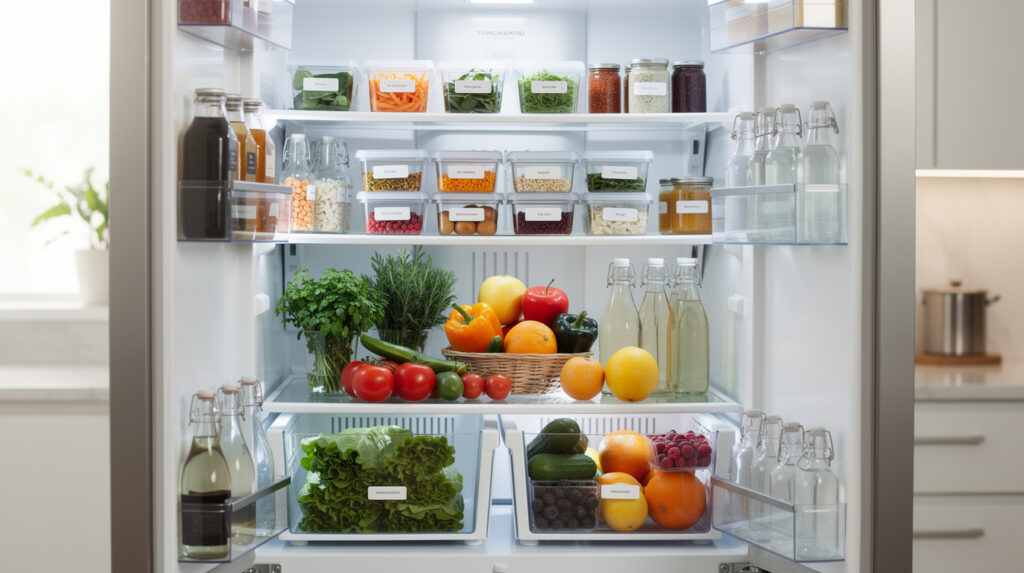
The Low-Humidity (Fruit) Drawer
One of your crisper drawers is designed for low-humidity storage, which prevents moisture buildup. When you organize refrigerator crisper drawers correctly, you extend food freshness significantly:
- Apples
- Berries
- Grapes
- Citrus fruits
- Melons
- Stone fruits (peaches, plums, nectarines)
These items stay fresher longer and less likely to develop mold in a drier environment. Keep the humidity setting on your drawer set to the “open” or “less humid” position. Understanding how to organize refrigerator crisper drawers with humidity controls is key to maximizing freshness.
The High-Humidity (Vegetable) Drawer
The other crisper drawer is designed for high-humidity storage. When you organize refrigerator with the vegetable drawer set to high humidity, you keep vegetables crisp:
- Leafy greens and lettuce
- Broccoli, cabbage, and other cruciferous vegetables
- Carrots and celery
- Bell peppers and cucumbers
- Green beans and snap peas
- Asparagus
- Herbs (wrapped in slightly damp paper towels)
Keep the humidity setting on this drawer set to the “closed” or “more humid” position. The sealed environment maintains moisture, which keeps vegetables fresh significantly longer than leaving them exposed on regular shelves. This is an essential part of how to organize refrigerator for vegetable preservation.
Optimize Door Storage
The door is convenient, but it’s the warmest part of your fridge. When you organize refrigerator door space, use it wisely for items that aren’t overly temperature-sensitive:
- Condiments: ketchup, mustard, mayonnaise, hot sauce
- Beverages: juice, sports drinks, water bottles
- Butter and margarine
- Jams and spreads
- Salad dressings
- Olives and pickled items
- Any items with high salt, sugar, or acid content (these preserve well)
Never store eggs, dairy, or raw proteins on the door. These items need the consistent cold of the inner shelves to stay safe and fresh. Understanding what belongs on the door is critical to how to organize refrigerator safely.
Smart Strategies for Maximum Efficiency
Maintain Proper Air Circulation
Your refrigerator’s cooling system relies on air circulation. When you organize refrigerator shelves, don’t overpack them—leave space between items so cold air can flow freely around your food. Blocked vents mean uneven cooling and potential warm spots where bacteria can grow. Aim for a full but not overcrowded fridge. Proper airflow is essential to how to organize refrigerator for optimal cooling.
Use Clear Containers and Proper Labeling
Store leftovers and prepared items in clear containers so you can easily see what you have. Write the date on the container with a permanent marker or masking tape. This simple practice prevents forgotten items from spoiling at the back of your fridge and helps you use food before it goes bad. A clear fridge is an efficient fridge. Implementing this practice is fundamental to how to organize refrigerator for reduced waste.
Group Similar Items Together
Organize your fridge by food type—keep all dairy together, all vegetables together, all proteins together. This makes it easier to find what you need, see when you’re running low on items, and prevents foods from getting lost in the back. It also helps your family members find what they’re looking for without leaving the door open longer than necessary. When you organize refrigerator this way, you improve efficiency for everyone.
Keep Frequently Used Items Accessible
Place items you use frequently—milk, leftovers, vegetables—at eye level and toward the front of shelves. Reserve the back and top shelves for less-frequently used items. This reduces the time the door is open and the frequency of reaching into all corners. Smart placement is a key principle of how to organize refrigerator efficiently.
Manage Moisture and Prevent Spills
Use shelf liners or washable mats on shelves to catch spills and make cleaning easier. Keep raw proteins on a dedicated tray or in a sealed container to prevent drips from contaminating other foods. A clean, dry refrigerator interior is more efficient and safer. These practices are essential to how to organize refrigerator for sanitation.
Enhance Your Refrigerator’s Efficiency
Temperature Management
Set your refrigerator to 4°C (40°F) or slightly below. At this temperature, your food stays safe and fresh without being frozen. Colder than necessary wastes energy and can cause some vegetables to become mushy. Warmer than 4°C risks foodborne illness. Proper temperature setting supports how to organize refrigerator effectively.
Limit Door Openings
Every time you open the door, the compressor works harder to restore the cold temperature. Plan what you need before opening the door, and retrieve everything at once. Keeping the door open to look around is one of the biggest energy drains. Minimizing door openings is crucial to how to organize refrigerator energy-efficiently.
Allow Hot Foods to Cool First
Never place hot foods directly in the refrigerator. This raises the overall temperature and forces the compressor to work harder. Let foods cool to room temperature first (but don’t leave them out for more than 2 hours for safety). This practice supports how to organize refrigerator for optimal performance.
Keep Coils Clean
Dust that accumulates on the refrigerator’s exterior condenser coils forces the compressor to work harder, wasting energy. Vacuum the coils (usually located at the back or bottom of the fridge) every few months for optimal efficiency. Coil maintenance is part of how to organize refrigerator for longevity.
Regular Maintenance Saves Energy and Food
A well-maintained refrigerator operates at peak efficiency. If you notice that your fridge isn’t cooling properly, is running constantly, or has ice buildup, it might need professional attention. Tech Angels services refrigerators throughout Vancouver and can diagnose and fix cooling problems, ensuring your appliance runs efficiently while keeping your food fresh and safe.
Save Money and Reduce Food Waste
Smart refrigerator organization directly impacts your wallet:
- You’ll see what you have, so you’re less likely to buy duplicates
- Items are easier to find, so less food gets lost in the back
- Better organization means better air circulation and fresher food
- A more efficient fridge uses less energy, lowering your utility bills
- You waste less food, which means spending less at the grocery store
Over time, smart organization can save you hundreds of dollars annually in both energy costs and reduced food waste. Learning how to organize refrigerator effectively pays for itself.
Organize Your Refrigerator for Success
A well-organized refrigerator is more than just neat—it’s a more efficient, safer, and more economical appliance. By understanding temperature zones, using your crisper drawers correctly, maintaining proper air circulation, and keeping foods properly labeled, you can extend the life of your food, reduce waste, and save money on your energy bills. When you organize refrigerator using these proven methods, you’re making an investment in your family’s health and your household budget.
If your refrigerator isn’t maintaining proper temperatures or you’re concerned about its efficiency, Tech Angels is here to help. We can inspect your fridge, address any cooling issues, and ensure it’s running at peak performance. A properly functioning, well-organized refrigerator is a cornerstone of an efficient and healthy kitchen. Understanding how to organize refrigerator is just the first step—having a well-maintained appliance completes the picture.
Related Articles
Explore more appliance care tips from the Tech Angels blog: