It’s one of those everyday kitchen questions that doesn’t have a simple yes-or-no answer: can you put plastic items in the dishwasher? The short version is that some plastics are perfectly safe to wash in the dishwasher, while others can warp, melt, leach chemicals, or even damage your machine. Knowing the difference can save you from ruined containers, questionable food safety, and potentially costly dishwasher repairs.
In this guide, we’ll break down which plastics are dishwasher-safe, how to identify them, the risks of putting the wrong plastics in your machine, and best practices for keeping both your plastic items and your dishwasher in great shape.
Understanding Dishwasher-Safe Symbols
The easiest way to determine whether a plastic item can go in the dishwasher is to check for the dishwasher-safe symbol. Flip the container over and look at the bottom — you’re looking for one of these indicators:
- A square box with plates and water droplets (or diagonal lines): This is the universal dishwasher-safe symbol. If you see it, you’re good to go.
- “Dishwasher Safe” text: Some manufacturers simply print the words on the bottom of the item.
- A glass and fork symbol: This indicates the item is food-safe, but it doesn’t necessarily mean dishwasher-safe. However, it’s a positive sign.
If there’s no symbol or text at all, err on the side of caution and hand-wash the item. The absence of a dishwasher-safe marking usually means the manufacturer hasn’t tested or approved the item for dishwasher use.
Plastic Recycling Numbers and What They Mean for Your Dishwasher
Those little numbers inside the recycling triangle on plastic items tell you what type of plastic the item is made from. Not all plastics respond the same way to the high heat and strong detergents used in dishwashers. Here’s a breakdown:
#1 PET (Polyethylene Terephthalate)
Found in: Water bottles, salad dressing containers, peanut butter jars. These are generally single-use plastics and should NOT go in the dishwasher. They warp easily in heat and are not designed for repeated use or washing.
#2 HDPE (High-Density Polyethylene)
Found in: Milk jugs, detergent bottles, some food containers. HDPE is more heat-resistant and durable. Many HDPE items are dishwasher-safe, but always check for the symbol. Place on the top rack to be safe.
#3 PVC (Polyvinyl Chloride)
Found in: Some cling wraps, certain food containers. PVC should NEVER go in the dishwasher. Heat causes PVC to release harmful chemicals, and the material degrades quickly under high temperatures.
#4 LDPE (Low-Density Polyethylene)
Found in: Squeeze bottles, plastic bags, some container lids. LDPE has a low melting point and generally shouldn’t be put in the dishwasher. It tends to warp and lose its shape.
#5 PP (Polypropylene)
Found in: Yogurt containers, microwave-safe containers, reusable food storage. PP is the most dishwasher-friendly plastic. It has a high melting point, resists warping, and handles repeated washing well. Most dishwasher-safe plastic containers are made from polypropylene.
#6 PS (Polystyrene)
Found in: Styrofoam cups, disposable cutlery, some take-out containers. Never put polystyrene in the dishwasher. It melts at relatively low temperatures and can release styrene, a potential health concern.
#7 Other (Mixed Plastics)
This category includes various plastics, including polycarbonate and some bioplastics. Whether they’re dishwasher-safe depends entirely on the specific material. Check for the dishwasher-safe symbol. Note that some older #7 plastics contain BPA, which can leach at high temperatures.
The Risks of Putting the Wrong Plastic in Your Dishwasher
So what actually happens when you put the wrong type of plastic in the dishwasher? Several things, none of them good:
Warping and Deformation
The most common issue is warping. Dishwashers use water temperatures between 50°C and 70°C (120°F to 160°F), and the drying cycle can push temperatures even higher. Plastics with low heat tolerance will soften, bend, and lose their shape permanently. A warped container lid that no longer seals properly is essentially ruined.
Melting
In severe cases, thin or low-quality plastics can partially melt, especially if they fall onto or near the heating element at the bottom of the dishwasher. Melted plastic on your dishwasher’s heating element is not only a mess to clean up — it can damage the element and create unpleasant fumes. If melted plastic has damaged your dishwasher’s components, it may be time for professional dishwasher repair.
Chemical Leaching
High heat can cause certain plastics to release chemicals into your dishwasher and onto other dishes. BPA (Bisphenol A) and phthalates are the most commonly discussed concerns. While many modern plastics are BPA-free, older containers or those made from #7 polycarbonate plastics may still contain it. When these plastics are exposed to dishwasher heat, BPA can leach out at significantly higher rates than at room temperature.
Reduced Lifespan
Even dishwasher-safe plastics will eventually degrade with repeated dishwasher use. The combination of heat, strong detergent, and high-pressure water jets gradually breaks down plastic surfaces, making them cloudy, scratched, and brittle over time. This doesn’t mean you shouldn’t use the dishwasher for these items — just be aware that they won’t last forever.
Best Practices for Washing Plastic in the Dishwasher
If you’ve confirmed your plastic items are dishwasher-safe, follow these tips to get the best results and extend the life of both your plastics and your dishwasher:
Always Use the Top Rack
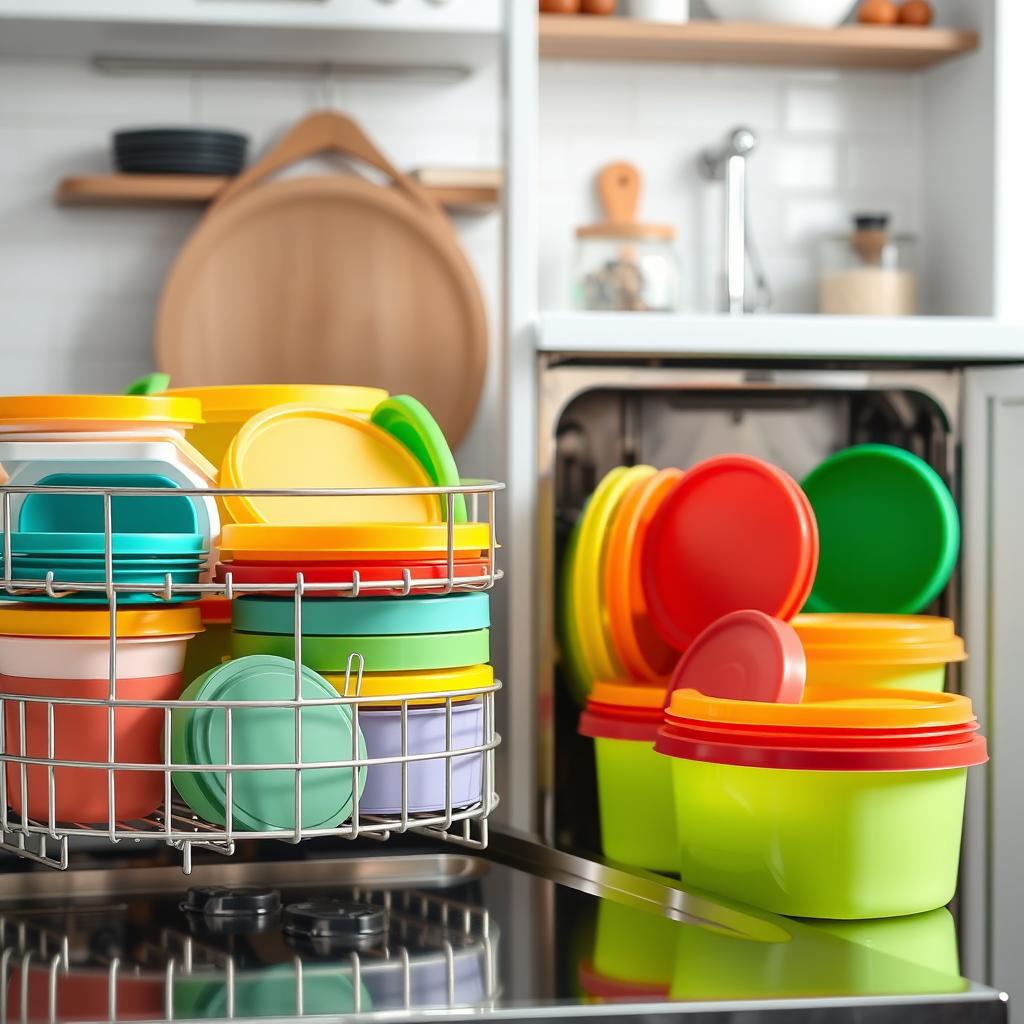
Place all plastic items on the top rack of your dishwasher, as far from the heating element as possible. The bottom rack is closer to the heating element (usually located at the base of the machine), where temperatures are highest. Top-rack placement significantly reduces the risk of warping or melting.
Secure Lightweight Items
Plastic items are lightweight and can get flipped by water jets, filling with dirty water instead of getting cleaned. Worse, they can fall through the racks onto the heating element. Use the dishwasher’s clip-on racks or place smaller items in a mesh dishwasher bag designed for small accessories.
Use a Gentle or Low-Heat Cycle
If your dishwasher has a gentle, eco, or low-temperature cycle, use it when washing a load with lots of plastic items. These cycles use lower water temperatures that are still effective for cleaning but much safer for plastics.
Skip the Heated Dry Cycle
The heated dry function is the most aggressive heat your plastic items will encounter in the dishwasher. If your machine allows it, turn off heated drying and let items air-dry instead. This alone can dramatically reduce warping and extend the life of your plastic containers.
Don’t Overload
Cramming too many items into the dishwasher restricts water flow and prevents proper cleaning. It also increases the chance that lightweight plastic items will shift around during the cycle, potentially landing on the heating element or blocking the spray arms.
Items You Should Always Hand-Wash
Regardless of what the symbol says, certain plastic items do better with hand-washing:
- Insulated water bottles and travel mugs: The dishwasher can damage the vacuum seal between the inner and outer walls, ruining the insulation.
- Items with adhesive labels or stickers: The dishwasher will peel these off, and the adhesive can clog your dishwasher’s filter and spray arms.
- Antique or specialty plastics: If you’re not sure what type of plastic it is, hand-washing is the safest bet.
- Plastic items with metal components: The metal parts may rust or corrode, and dissimilar materials may expand at different rates in heat.
- Painted or decorated plastics: High heat and detergent will strip paint and decorations over time.
What to Do If Plastic Melts in Your Dishwasher
Accidents happen. If a plastic item has melted onto your dishwasher’s heating element or interior, here’s how to clean it up:
- Wait for the machine to cool completely. Never attempt to remove melted plastic while the dishwasher is warm.
- For melted plastic on the heating element: Turn the dishwasher off and unplug it. Once cool, try gently scraping the plastic off with a wooden or plastic spatula. For stubborn residue, apply a small amount of acetone (nail polish remover) on a cloth and rub gently. Avoid using metal scrapers, which can damage the element.
- For melted plastic on racks or interior walls: Warm the area slightly with a hair dryer to soften the plastic, then peel or scrape it off carefully.
- Run an empty hot cycle afterward to flush any remaining residue from the system.
If melted plastic has caused damage to the heating element or other components, it’s worth having a professional take a look. The team at Tech Angels Appliance Repair can assess the damage and replace any affected parts to get your dishwasher running safely again.
Protecting Your Dishwasher’s Performance
Proper loading — including correct placement of plastic items — is key to keeping your dishwasher performing at its best. When plastic items block spray arms, clog filters (from melted bits or peeled labels), or prevent proper water drainage, it affects the cleaning performance for every load.
For more tips on keeping your dishwasher in top shape, check out our articles on how appliance repair enhances home safety.
Final Thoughts
The question “can you put plastic in the dishwasher?” really comes down to knowing your plastics. Polypropylene (#5) containers with a dishwasher-safe symbol? Load them up on the top rack. Single-use water bottles, styrofoam, or anything without a dishwasher-safe marking? Keep those out of the machine.
When in doubt, remember these three rules: check for the symbol, use the top rack, and skip the heated dry. Your plastic containers will last longer, your food will be safer, and your dishwasher will thank you with years of reliable performance.
Having dishwasher troubles? Call Tech Angels at (604) 265-3565 or book a repair online. We serve Vancouver, Burnaby, Coquitlam, and the entire Lower Mainland.