When You Press Start and Nothing Happens
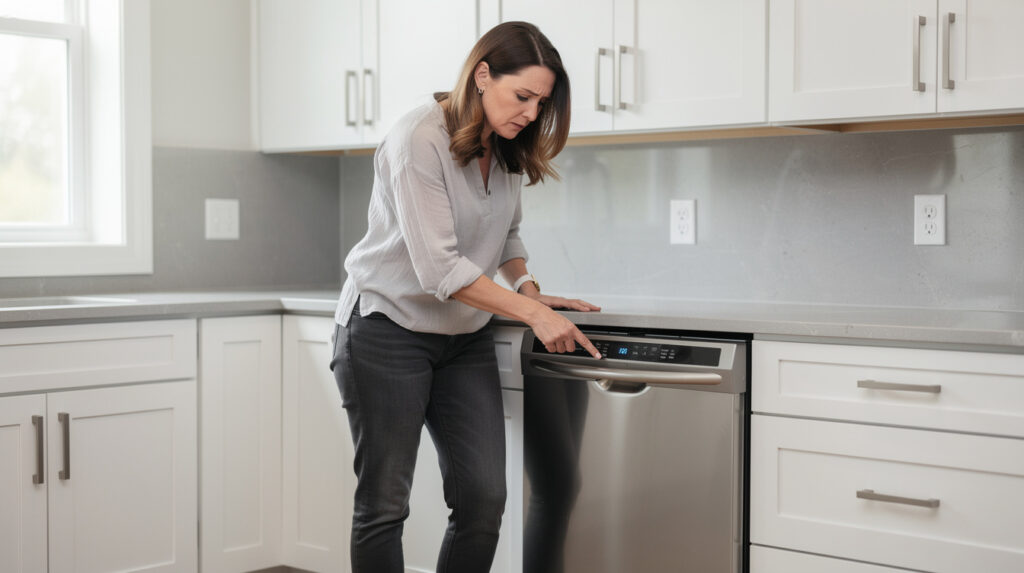
There are few things more frustrating than loading up your dishwasher after a big meal, pressing the start button, and getting absolutely nothing in return. No lights, no sound, no water — just a sink full of dirty dishes and a machine that refuses to cooperate. If your dishwasher won’t start, you are definitely not alone. It is one of the most common dishwasher complaints, and the good news is that many of the causes are things you can check and sometimes fix yourself.
Before you panic and start shopping for a new dishwasher, take a deep breath. A dishwasher that will not start is not necessarily a broken dishwasher. In many cases, the issue is something simple — a tripped breaker, a door that is not fully latched, or an accidental button press that activated a lock feature. In this guide, we will walk through every possible reason your dishwasher might refuse to start, from the simplest fixes to the more complex issues that might need professional attention.
Whether you own a Samsung, LG, Bosch, Whirlpool, or any other brand popular in Vancouver homes, these troubleshooting steps apply broadly across makes and models.
Check the Power Supply First
It sounds almost too obvious, but power issues are the number one reason a dishwasher will not start, and they are the easiest to overlook. Before you start investigating the machine itself, verify that it is actually receiving electricity.
Is the Dishwasher Plugged In?
Many dishwashers are hardwired directly to the home’s electrical system, but some are connected via a standard plug under the kitchen sink. If yours is the plug-in type, check under the sink to make sure the plug has not been knocked loose. It happens more often than you would think, especially if you recently did plumbing work or stored cleaning supplies under the sink.
Check the Circuit Breaker
Find your home’s electrical panel and look for the breaker labeled for the dishwasher or kitchen. If the breaker has tripped — meaning it is in the middle position rather than fully on — flip it all the way off and then back on. A tripped breaker can be caused by a momentary power surge and does not necessarily indicate a problem with the dishwasher itself.
If the breaker trips again immediately after you reset it, there may be an electrical fault in the dishwasher or the circuit, and you should not keep resetting it. Call a qualified electrician or appliance technician to investigate.
Test the Outlet
If your dishwasher plugs into an outlet, test the outlet by plugging in something else — a phone charger or a small lamp. If the other device does not work either, the problem is the outlet or circuit, not the dishwasher. Some under-sink outlets are connected to a GFCI (Ground Fault Circuit Interrupter), which has its own reset button, usually located on the outlet itself or on another GFCI outlet in the kitchen or bathroom. Press the reset button and try again.
The Door Latch: More Important Than You Think
Every dishwasher has a safety mechanism that prevents it from running unless the door is fully closed and latched. This is an essential safety feature — you do not want a dishwasher spraying hot water with the door open. But it also means that even a slightly misaligned door can prevent the machine from starting.
Make Sure the Door Is Fully Closed
Push the door firmly closed and listen for the click of the latch engaging. If the door bounces back slightly or does not click, something may be preventing it from closing completely. Check for dishes, utensils, or racks that are sticking out past the tub and blocking the door. A large pot handle, a cutting board that has shifted, or an upper rack that is not pushed in all the way are common culprits.
Inspect the Latch Mechanism
Open the door and look at the latch — it is usually at the top of the door or on the top of the tub opening. Check for visible damage, food debris, or anything that might prevent the latch from engaging fully. Try operating the latch manually to see if it moves freely. If the latch is bent, broken, or stuck, it will need to be repaired or replaced.
The Door Switch
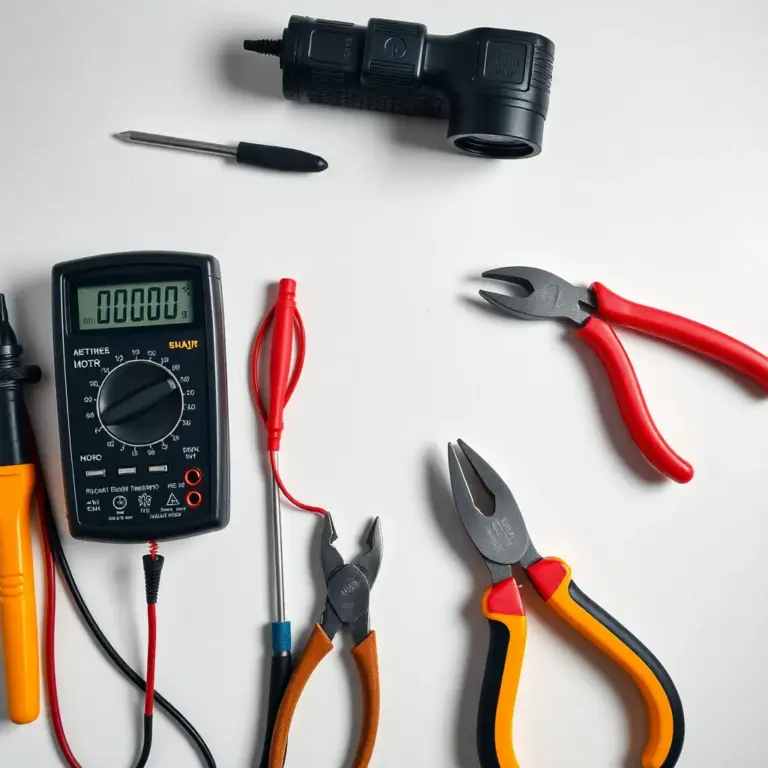
Behind the latch is a small electrical switch that tells the dishwasher’s control board that the door is securely closed. Even if the latch engages physically, a faulty door switch can prevent the signal from reaching the control board. Testing a door switch requires a multimeter and some comfort with basic electrical testing. If you suspect the switch, this is a good point to call a technician for diagnosis.
Control Panel and Settings Issues
Modern dishwashers have sophisticated electronic control panels with multiple buttons, settings, and features. Sometimes the issue is not mechanical or electrical — it is a setting that is been inadvertently changed.
Child Lock or Control Lock
Many dishwashers have a control lock feature designed to prevent children from accidentally starting the machine or changing settings. If the control lock is activated, pressing the start button will do nothing. The indicator light for the lock feature is usually small and easy to miss.
To deactivate the control lock, check your owner’s manual. On most models, you hold down a specific button or combination of buttons for three to five seconds. Common buttons used for the lock function include the “Lock” button, the “Heated Dry” button, or the “No Heat Dry” button. The specific method varies by brand and model.
Delayed Start
Check whether you accidentally set a delayed start. Many dishwashers allow you to program the machine to start hours later — usually for running during off-peak electricity hours. If a delay is set, the display may show a countdown or a delay indicator. Cancel the delay by pressing the cancel or reset button, then try starting the dishwasher normally.
Cycle Selection
On some dishwashers, you must select a wash cycle before the start button will work. If no cycle is selected, the start button may not respond. Try selecting a wash cycle (Normal, Heavy, Quick, etc.) and then pressing start.
A Stuck or Unresponsive Control Panel
If the control panel buttons do not respond at all — no lights, no beeps, nothing — the control panel itself may be malfunctioning. Before assuming the worst, try resetting the dishwasher by turning off the breaker for one to two minutes and then turning it back on. This can clear electronic glitches in the same way restarting a computer fixes software problems.
If the control panel lights up but specific buttons do not respond, there may be a membrane switch failure. The membrane switch is the flexible layer behind the buttons that registers your touch. Over time, moisture, heat, and wear can cause sections of the membrane to fail. Replacing a control panel or membrane switch is a repair best handled by a professional.
Timer and Electronic Control Board Problems
The timer or electronic control board is the brain of your dishwasher. It controls the sequence of operations — filling with water, heating, washing, draining, and drying. When the control board fails, the dishwasher may not start at all, or it may start and then stop prematurely.
Signs of a Faulty Control Board
- The dishwasher does not respond to any button presses.
- Lights flicker or display erratic patterns.
- The dishwasher starts but stops mid-cycle without completing.
- Error codes appear on the display that do not correspond to any specific component failure.
Control board failures can be caused by power surges, moisture intrusion, or simply age. If you suspect a control board issue, a technician can test the board with diagnostic equipment and determine whether it needs replacement.
Thermal Fuse Issues
The thermal fuse is a safety device that cuts power to the dishwasher if it detects excessive heat. Its purpose is to prevent the dishwasher from overheating and potentially causing a fire. If the thermal fuse blows, the dishwasher will not start.
What Causes a Thermal Fuse to Blow
A thermal fuse typically blows due to a malfunction in the heating element or a problem with the thermostat that allows the dishwasher to overheat. Repeated short-cycling or power surges can also cause the fuse to blow.
Testing and Replacing a Thermal Fuse
The thermal fuse is usually located on the control board or near the heating element at the bottom of the dishwasher tub. Testing it requires a multimeter — if the fuse shows no continuity, it has blown and needs to be replaced. Thermal fuses are inexpensive parts, but the diagnosis and replacement should be handled carefully because a blown fuse usually indicates an underlying problem that caused the overheating in the first place.
Water Supply Problems
Some dishwashers will not start — or will start and immediately stop — if they detect insufficient water supply. The water inlet valve opens at the beginning of the wash cycle to fill the tub with water. If the valve cannot open or water pressure is too low, the cycle may not begin.
Check the Water Supply Valve
Under the kitchen sink, find the water supply valve that feeds the dishwasher. It is usually a small valve on the hot water line with a braided steel or copper supply line running to the dishwasher. Make sure this valve is fully open. It may have been accidentally turned off during plumbing work or cleaning under the sink.
Inspect the Water Inlet Valve
The water inlet valve is located inside the dishwasher, usually at the bottom behind the lower access panel. If the valve is clogged with mineral deposits — common in areas with hard water — it may not open properly. If the valve has failed electrically, it will not open even with adequate water pressure. A technician can test the valve and replace it if necessary.
Check for Kinked Supply Lines
The supply line running from the valve under the sink to the dishwasher can sometimes become kinked, especially if the dishwasher has been recently moved or if items stored under the sink have pressed against the line. A kinked line restricts water flow and can prevent the dishwasher from filling.
Motor and Pump Issues
The wash motor is what drives the spray arms and circulates water throughout the dishwasher. The drain pump removes water at the end of each cycle. If either of these components has failed, the dishwasher may not start or may hum without actually running.
A Humming Sound but No Action
If you hear a humming or buzzing sound when you press start but the dishwasher does not actually begin washing, the motor may be seized or stuck. This can happen if the dishwasher has not been used for a long time and the motor has become stiff, or if a piece of debris — a bit of broken glass, a piece of bone, or a small utensil — has jammed the pump impeller.
Try manually turning the motor — access it through the bottom of the dishwasher and look for the motor shaft or the pump impeller. If you can free it by hand and it spins freely afterward, the dishwasher may work again. If the motor is truly burned out or seized, it will need professional replacement.
How to Reset Your Dishwasher
Many dishwasher starting problems can be resolved with a simple reset. Electronic control boards can develop glitches from power fluctuations, and a reset clears the board’s memory and returns it to its default state.
Method 1: Power Cycle
Turn off the dishwasher at the circuit breaker. Wait at least two minutes. Turn the breaker back on. This gives the control board time to fully discharge and reset.
Method 2: Button Reset
Some dishwashers have a specific reset procedure using the control panel buttons. Common methods include:
- Pressing and holding the start or cancel button for three to five seconds.
- Pressing a specific sequence of buttons (often documented in the owner’s manual).
- Opening and closing the door quickly several times within a set time frame.
After resetting, select a new wash cycle and press start to see if the dishwasher responds normally.
Method 3: Full Disconnect
If the breaker reset does not work, try unplugging the dishwasher from the wall (if it is plug-in type) for five to ten minutes, then plugging it back in. This longer disconnect can sometimes clear more stubborn electronic glitches.
A Systematic Troubleshooting Checklist
When your dishwasher won’t start, work through this checklist in order. Start with the simplest, most likely causes before moving to more complex possibilities:
- Verify the dishwasher has power — check the plug, circuit breaker, and GFCI outlet.
- Make sure the door is fully closed and the latch clicks into place.
- Check for child lock or control lock activation.
- Cancel any delayed start setting.
- Select a wash cycle and press start.
- Try resetting the dishwasher by cycling the breaker off for two minutes.
- Verify the water supply valve under the sink is fully open.
- Listen for unusual sounds — humming, clicking, or buzzing — when you attempt to start.
- Check the display for error codes and look them up in your owner’s manual or online.
- Inspect the door latch and switch for visible damage.
If you work through this entire list without finding the solution, the problem likely involves an internal component — the control board, thermal fuse, motor, or wiring — that requires professional diagnosis.
When to Call a Professional
DIY troubleshooting can resolve many common reasons a dishwasher won’t start. However, some repairs involve electrical components, water connections, and diagnostic equipment that are best handled by a trained technician. Consider calling a professional when:
- The circuit breaker keeps tripping when you try to run the dishwasher.
- You see or smell signs of electrical burning.
- The control panel is completely unresponsive after a reset.
- You have checked all accessible components and the dishwasher still will not start.
- The dishwasher is displaying error codes you cannot resolve.
- You are not comfortable working with electrical wiring or water connections.
A qualified appliance repair technician can use diagnostic tools to quickly identify the faulty component and get your dishwasher running again. If you are in the Vancouver, BC area, Tech Angels provides fast, reliable dishwasher repair for all major brands and can usually diagnose the issue in a single visit.
Preventing Future Starting Problems
Once you get your dishwasher running again, a few simple habits can help prevent future starting issues:
- Clean the door gasket and latch regularly: Food residue on the latch or gasket can interfere with the door closing properly.
- Rinse large food particles off dishes: While modern dishwashers do not require pre-rinsing, scraping off large food pieces prevents debris from jamming the pump.
- Run the dishwasher regularly: Dishwashers that sit unused for long periods can develop motor issues. Run at least one cycle per week.
- Use a surge protector: If your dishwasher plugs into an outlet, a surge protector can prevent power surge damage to the control board.
- Keep the area under the sink clear: Avoid pressing items against the water supply line or power cord.
- Schedule annual maintenance: A yearly check by a qualified technician can catch small problems before they become big ones.
Get Back to Clean Dishes
A dishwasher that will not start is usually a fixable problem. By working through the troubleshooting steps in this guide — starting with the simple checks and moving to the more involved ones — you can often identify and resolve the issue without needing to call for service. But when the problem is beyond a simple fix, do not hesitate to reach out to a professional. Modern dishwashers are complex appliances with sophisticated electronics, and a skilled technician can save you time, frustration, and the cost of unnecessary part replacements.
Whatever the cause turns out to be, your dishwasher will be back to handling the after-dinner cleanup before you know it.
Related Articles
Explore more appliance care tips from the Tech Angels blog: