Your refrigerator’s compressor is the heart of your cooling system. It’s the component that does the hard work of removing heat from your fridge and keeping your food fresh. Yet most people never think about their compressor until something goes wrong. Understanding how this critical component works and recognizing the signs of failure can help you catch problems early and avoid a complete refrigerator breakdown.
A failing refrigerator compressor is one of the most expensive repairs you can face as a homeowner. Compressor replacement can cost anywhere from $400 to $1,200, depending on your fridge model. That’s why knowing the warning signs is so important. If you catch a problem early, sometimes a simpler repair can extend your fridge’s life and save you significant money.
What Does a Refrigerator Compressor Do?
Your compressor is essentially a pump. Its job is to compress refrigerant gas, which heats it up. This hot, pressurized refrigerant then flows through coils on the back of your fridge, releasing heat to the surrounding air. As the refrigerant cools, it becomes a liquid. This liquid refrigerant then flows through another set of coils inside your fridge (the evaporator coils), where it expands and absorbs heat from inside the fridge, making everything cold.
This cycle repeats continuously. The compressor is what starts and maintains this cycle. Without it, your refrigerator can’t cool at all. The compressor is powered by an electric motor and runs periodically throughout the day, whenever the fridge temperature starts to rise above the set point.
Think of your compressor as being similar to your heart—it’s always working to move “blood” (refrigerant) through your system, keeping everything alive (cold).
Signs Your Refrigerator Compressor Is Failing
A compressor doesn’t usually fail suddenly without warning. Most of the time, there are signs that something is wrong. Catching these early signs can be crucial.
Your Fridge Isn’t Cooling Properly: If your refrigerator is running but not cooling, the compressor might be failing. You might notice that food isn’t as cold as it should be, ice cream is melting, or drinks aren’t chilled. This is different from your fridge not running at all—the compressor might be running, but it’s not doing its job effectively.
The Compressor Isn’t Running: Listen carefully to your refrigerator. You should periodically hear the compressor kick on—it makes a humming or clicking sound followed by a gentle whirring. If you haven’t heard this sound in a while, the compressor might not be running at all. A compressor that won’t start is definitely a problem.
Strange Noises: A healthy compressor is relatively quiet. If you’re hearing loud humming, clicking, buzzing, or rattling sounds coming from your fridge, something is wrong. These noises often indicate electrical or mechanical problems within the compressor itself. A failing compressor makes noises that get progressively worse over time.
Refrigerant Leaks: Refrigerant leaks most often occur near the compressor. If you notice oily stains on the floor under your fridge, that’s a sign of a refrigerant leak. Refrigerant leaks mean your compressor can’t function properly because it doesn’t have enough refrigerant to circulate. This is a serious problem that requires professional attention.
The Fridge Freezes Everything: Sometimes, a faulty compressor valve can cause the opposite problem—the compressor won’t turn off, and the fridge gets too cold. If everything in your fridge is freezing solid, including vegetables in the crisper drawer, your compressor might be the culprit. This is less common than insufficient cooling, but it does happen.
Frequent On/Off Cycling: Your compressor should run periodically, then turn off while the fridge maintains temperature. If the compressor is constantly cycling on and off every few seconds, it’s struggling to maintain temperature. This indicates a problem with the compressor or other cooling components.
Common Causes of Compressor Failure
Understanding what causes compressor failure helps you prevent it and know when problems are likely to develop.
Age and Wear: Compressors are mechanical devices. Like everything mechanical, they wear out over time. Most refrigerators last 10-15 years. If your compressor fails after 12-15 years of service, it’s probably just due to age. Learn more about how long appliances typically last to understand where your fridge stands.
Dirty Condenser Coils: The condenser coils (located on the back or bottom of your fridge) need to be clean for your compressor to work efficiently. If these coils are clogged with dust and pet hair, your compressor has to work harder to cool your fridge. This extra strain can lead to premature failure. Regular cleaning of condenser coils can extend your compressor’s life significantly.
Low Refrigerant: If your fridge has a refrigerant leak, the compressor is working with insufficient refrigerant. This causes it to overheat and work harder than it should. Eventually, this stress causes the compressor to fail. Refrigerant leaks must be fixed promptly.
Electrical Problems: The compressor requires proper electrical power to function. If the power cord is damaged, the electrical outlet is faulty, or the fridge’s internal wiring is compromised, the compressor might not receive adequate power. Electrical issues can cause the compressor to fail prematurely or not function at all.
Liquid Slugging: Compressors are designed to compress gas only. If liquid refrigerant somehow enters the compressor (a condition called liquid slugging), it can damage the compressor’s internal components. This is why proper refrigerant management is so important.
Overworking: If your fridge is in a hot environment (next to an oven, in a room without air conditioning, or in direct sunlight), your compressor has to work harder. Excessive heat forces the compressor to run more frequently and for longer periods, accelerating wear.
Is It the Compressor or Something Else?
Before assuming your compressor is the problem, consider that other components might be causing your cooling issues. A refrigerator is complex, and several parts work together to keep it cold.
Thermostat Issues: Your fridge’s thermostat controls when the compressor turns on and off. If the thermostat is faulty, it might signal the compressor to run constantly, or the compressor might never turn on at all. A bad thermostat is usually cheaper to replace than a bad compressor.
Condenser Coils: If the coils are too dirty, your fridge won’t cool even if the compressor is working fine. Cleaning the coils might solve your problem without needing compressor repair. This is one reason why basic maintenance is so important.
Evaporator Coils: These coils inside your fridge can freeze solid if there’s a problem with the defrost cycle. When they’re frozen, cold air can’t flow into your fridge. This might seem like a compressor problem, but it’s actually a different issue.
Capacitor: Your compressor’s capacitor is a small electrical component that helps start the motor. If the capacitor fails, the compressor won’t start, even though the motor itself is fine. Replacing a capacitor is much cheaper than replacing a compressor.
This is why professional diagnosis is important. A skilled technician can test these components and identify which one is actually causing your cooling problem. Learn more about what to do when your refrigerator isn’t cooling to understand common cooling issues.
Maintenance to Protect Your Compressor
The best way to extend your compressor’s life is through regular maintenance. Most of these tasks are simple and take just minutes.
Clean the Condenser Coils: At least twice a year (more often if you have pets), clean the condenser coils on the back or bottom of your fridge. Use a soft brush or vacuum to remove dust and debris. This simple task makes a huge difference in compressor efficiency.
Maintain Proper Temperature: Don’t keep your fridge in a hot environment. If possible, keep it away from ovens, direct sunlight, and hot areas of your kitchen. If your fridge is in a hot space, it has to work harder.
Keep the Vents Clear: Make sure your fridge’s vents aren’t blocked by food or packaging. Air needs to circulate freely inside and around your fridge for the compressor to work efficiently.
Don’t Overload: While you can’t damage the compressor by filling your fridge with food, overloading can restrict air circulation. Try to keep loading at reasonable levels to allow air to flow freely.
Let Hot Food Cool First: Never put hot food directly into your fridge. Let it cool to room temperature first. Hot food forces your compressor to work extra hard, shortening its lifespan.
Repair vs. Replacement: When to Make the Decision
If your compressor fails, you face a difficult decision: repair or replace? Check out our guide on when to repair or replace your appliances for a detailed analysis.
Consider Your Fridge’s Age: If your fridge is older than 10 years and the compressor fails, replacement might be the better choice. A new refrigerator often costs less than a compressor replacement, especially when you factor in the reduced energy consumption of a new model.
Compressor Cost: Get a quote for compressor replacement. If the cost is more than 50% of a new fridge, replacement is usually the better investment.
Warranty Status: Check if your fridge is still under warranty. Some manufacturers cover compressor failures for extended periods.
Getting Professional Help in Vancouver
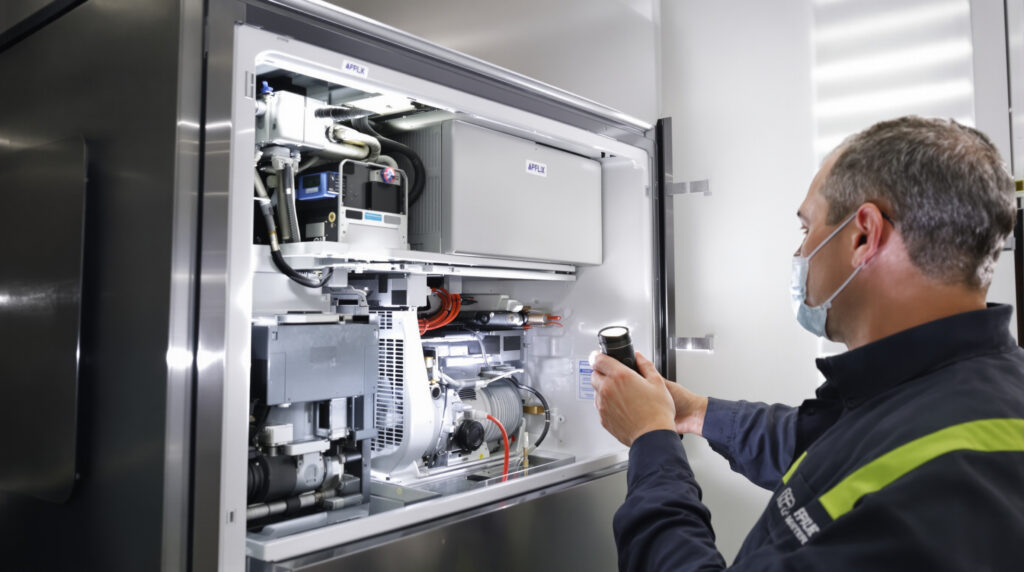
If you suspect your refrigerator’s compressor is failing, Tech Angels offers professional refrigerator repair services. Our experienced technicians can diagnose compressor problems, repair other failing components, or help you decide whether repair or replacement is best for your situation.
We serve Vancouver, Burnaby, Coquitlam, North Vancouver, Port Moody, New Westminster, Surrey, Richmond, Port Coquitlam, and West Vancouver. Call (604) 265-3565 or book online to schedule your service.
We can also help you understand common refrigerator mistakes that lead to costly repairs, helping you avoid future problems.
Conclusion
Your refrigerator’s compressor is a critical component that keeps your food fresh and safe. Understanding how it works and recognizing the signs of failure gives you the knowledge to act quickly if problems develop. With proper maintenance, you can extend your compressor’s lifespan and avoid expensive repairs. And if failure does occur, professional diagnosis ensures you make the right decision about repair or replacement. Don’t ignore signs of compressor trouble—address them promptly to protect your investment and keep your fridge running smoothly.
The Cost of Compressor Replacement and When to Repair vs. Replace
A failing refrigerator compressor raises an important question: should you repair or replace the entire fridge? Compressor replacement typically costs $400 to $1,200, depending on your fridge model. If your refrigerator is older than 10 years and has other issues, replacement might make more financial sense than repair.
The Repair Math: Calculate the cost of compressor replacement plus any other needed repairs. Compare this to the cost of a new fridge. If repair costs exceed 50% of a new unit’s price, replacement is usually the smarter choice. Newer fridges are also more energy-efficient, which saves you money on electricity long-term.
Warranty Considerations: If your fridge is still under warranty, compressor replacement might be covered at no cost. Always check your warranty before authorizing repairs.
Compressor Failure Causes and Prevention
Understanding what causes compressor failure can help you prevent it. Several factors contribute to premature compressor wear.
Dirty Condenser Coils: Your fridge’s condenser coils release heat to the surrounding air. When these coils get dusty or clogged, the compressor has to work harder to remove heat. This extra strain can lead to premature failure. Cleaning your condenser coils every six months prevents this problem.
Refrigerant Leaks: Your compressor relies on proper refrigerant levels to function. If refrigerant leaks out, the compressor overworks itself trying to cool your fridge, leading to failure. If you suspect a leak (indicated by warm temperatures or hissing sounds), get professional service immediately.
Electrical Problems: Power surges can damage the compressor’s motor. A whole-house surge protector helps prevent this. Also, don’t unplug and replug your fridge frequently—electrical stress accumulates.
Running Continuously: If your fridge runs constantly instead of cycling on and off, your compressor is getting excessive strain. This usually indicates a separate cooling problem, but it stresses your compressor nonetheless.
What to Do if Your Compressor Starts Failing
The moment you notice signs of compressor failure—strange noises, reduced cooling, or clicking sounds—stop using your fridge for anything other than essentials. Stop adding new food to avoid spoilage. Call a professional repair service immediately.
Continuing to use a fridge with a failing compressor can cause complete failure, leaving you without refrigeration and risking food spoilage. It also gives you a longer window to arrange professional repair before the unit stops working entirely.
Tech Angels in Vancouver provides prompt, professional refrigerator repair. We diagnose compressor problems accurately and discuss repair versus replacement options with you. We understand the urgency of a failing fridge and prioritize fast service.
Maintenance to Extend Your Compressor’s Life
Preventive maintenance is your best tool for avoiding compressor problems. Clean the condenser coils (usually located at the bottom or back of your fridge) every six months. Ensure your fridge isn’t placed in direct sunlight or near heat sources, as this forces your compressor to work harder.
Keep the area around your fridge clear for proper air circulation. Don’t block vents. Maintain steady room temperature—extreme heat or cold forces your compressor to work harder. Most fridges function best in rooms between 60 and 80 degrees Fahrenheit.
Regular maintenance isn’t expensive, but it’s invaluable for extending your compressor’s lifespan. Many of our Vancouver clients have avoided costly repairs simply by following basic maintenance guidelines.
Final Thoughts: Your Refrigerator’s Heart
Your compressor is truly the heart of your refrigeration system. By understanding how it works and recognizing warning signs of failure, you can catch problems early and avoid expensive emergencies. With proper maintenance and prompt professional service when needed, your fridge should serve you reliably for many years.