The real signs your refrigerator is dying are ones you can check at home: milk that sours early, a fresh food section that drifts above 4°C, frost that keeps coming back, or a motor that never gets a break. Plenty of other things that look alarming are normal, though. A fridge that runs most of the day, a warm cabinet side, or a gurgle after the door shuts are part of how a healthy unit works.
This guide separates the two, with a test for each sign you can do with a thermometer, a sheet of paper and a flashlight. When a test points at a failing part, our refrigerator repair team covers Coquitlam, the Tri-Cities and the Lower Mainland, usually same or next day.
Key Takeaways
- Buy a fridge thermometer. Health Canada says the fridge should sit at 4°C or lower and the freezer at -18°C or lower.
- Long run times alone aren't a fault. GE designs its compressors to run 80% to 90% of the time.
- Warm food plus a fridge that runs nonstop, frost piled on one freezer wall, or a seal that fails the paper test are the signs worth acting on.
- Rule out the simple causes first: control settings, blocked vents, a door held open by a bin, dusty coils.
- A fridge that is still warm 24 hours after you fix those things needs a technician.
Start with a thermometer, not a guess
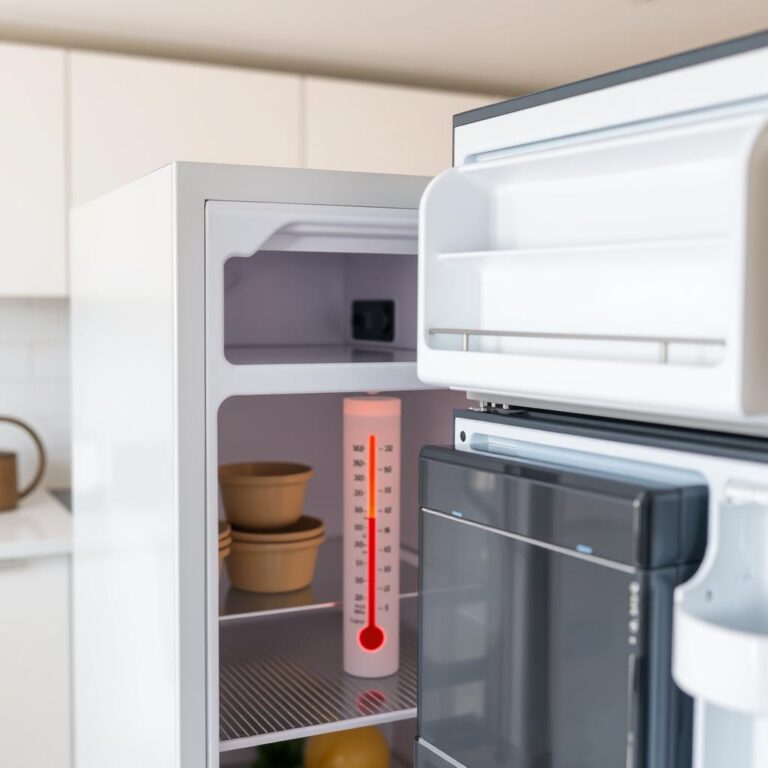
A hunch that things aren't as cold as they used to be is a starting point. Put a number on it. Health Canada's safe food storage guidance says to keep the refrigerator at 4°C (40°F) or lower and the freezer at -18°C (0°F) or lower, because food between 4°C and 60°C sits in the temperature danger zone where bacteria grow quickly. Natural Resources Canada suggests a slightly tighter target of 1.7°C to 3.3°C for the fridge, which it says balances efficiency and food safety.
How you measure matters. GE's page on measuring internal temperatures says not to read the air, because air temperature swings during defrost and every time the door opens. Instead:
- Put the thermometer in a glass of water or a food container that has been inside for at least 24 hours.
- Place it in the middle of the fresh food section, away from the door.
- Read it first thing in the morning, before the door has been opened much.
- After any control change, wait another 24 hours before you judge the result.
If the reading is above 4°C after a full day, you have a real symptom. If it's in range, the fridge is doing its main job, whatever else it sounds like. The dial or display on the control panel is a setting. It tells you what the fridge is aiming for, and only the thermometer tells you whether it's getting there.
Signs your refrigerator is dying vs. normal behaviour
| What you notice | Usually normal when | Worth a closer look when |
|---|---|---|
| Motor runs for long stretches | Hot weather, a big grocery load, lots of door openings | It never cycles off and the food is warm |
| Fridge feels warm inside | A new unit in its first 24 hours, or right after restocking | It stays above 4°C after a day with good settings |
| Frost in the freezer | Doors opened often or left ajar | It returns after cleanup, or one wall is heavy and the other bare |
| Gurgling, clicking, popping | Refrigerant flow, defrost timer, ice maker | Loud new buzzing or clicking with warm food |
| Door doesn't close by itself | Fridge is slightly off level | The gasket is torn or fails the paper test |
The right column is where repair conversations start. Each row is explained below.
The motor never seems to stop
People often expect a fridge to switch on and off in short bursts. GE says the opposite: its refrigerators and freezers have compressors built to run 80% to 90% of the time, which is more efficient because the most energy is used at start up. In a heat wave, GE says run time can approach 100%.
GE lists the everyday things that stretch run time further:
- loading a large amount of food at once, especially warm food
- a freezer that is nearly empty (GE suggests keeping it at least three quarters full)
- frequent or long door openings
- dirty or damaged door gaskets
- blocked air vents in the freezer
- dusty condenser coils on models that have cleanable coils
- an interior light that stays on after the door closes
So a busy motor on its own tells you little. It becomes a warning when it pairs with a warm thermometer reading. That combination suggests the system is working flat out and still losing ground. We go through the step by step checks in why your refrigerator runs constantly.
Warm food and a fridge that won't come down
When the fresh food side won't hold temperature, GE's not cooling guide walks through a set of checks before anyone suspects a failing part:
- Controls. Make sure no one bumped the dial. GE's usual starting point is about 37°F (roughly 3°C) for fresh food and 0°F (-18°C) for the freezer.
- Door closure. Trays, pizza boxes or ice behind the ice bin can keep a door from shutting fully.
- Airflow inside. Tall containers pushed against the back can block cold air. Move them forward.
- Condenser coils. GE notes that many fridges built since 2001 have coils that don't need cleaning, but compact and smaller top freezer models still do. Your owner's manual will say which you have. Unplug the fridge before cleaning.
- Room temperature and clearance. GE says a fridge may not cool properly in a space below 60°F (about 16°C) or above 110°F (about 43°C), and generally wants at least 1 inch of clearance on each side, the top and the back.
- The light. Close the door slowly. On most models the light should go out when the gap is about an inch. A light that stays on adds heat.
GE also points out that a fridge just serviced may still be in diagnostic mode. Cutting power for 30 seconds resets the control.
If you've worked through that list and the fridge is still warm 24 hours later, the cause is more likely a part. GE Appliances Factory Service names the evaporator fan or its motor, the damper control assembly and the compressor as possible culprits in a fridge that isn't getting cold. Those are technician jobs. For background on the most expensive of the three, see refrigerator compressors and when they fail.
Frost that keeps coming back
Some frost comes from door habits. GE says frost on shelves, packages or freezer walls isn't unusual when doors are opened often or left slightly ajar. Its fix is to wipe the frost away with a dry towel, try a slightly warmer setting, check that the doors close properly, look for cuts or tears in the gasket and make sure the fridge is level so the doors swing shut on their own.
Frost that returns after all of that points deeper. GE Appliances Factory Service explains that frost forms when moisture reaches the evaporator coils and freezes, and that a faulty defrost timer, defrost heater or defrost thermostat can stop the defrost cycle from clearing it. A pattern matters too: GE's manual defrost page recommends a repair visit when frost is heavy on one wall and missing from the opposite one. Keep the freezer at least three quarters full as well, which GE says helps it hold the proper temperature. Our post on a refrigerator that's not defrosting covers what you can try first.
A door seal that has given up
A worn gasket lets warm, damp air in around the door, which feeds frost and makes the motor run longer. Natural Resources Canada gives two quick tests:
- Close the door on a sheet of paper. If it slides around or slips out easily, the seal is weak at that spot.
- Put a flashlight inside, close the door and look for light around the edge in a dark room.
Either result means the seals need replacing. If the door doesn't swing closed by itself, GE says to raise the front by adjusting the levelling legs or rollers until a door opened halfway closes on its own. Our guide to refrigerator door gaskets explains how replacement works.
Noises that are, and aren't, a warning
A long list of fridge sounds are normal. GE names clicks from the defrost timer and temperature control, boiling or gurgling as refrigerant circulates, popping as coils cool after defrost, sizzling when defrost water lands on the heater, and the clatter of an ice maker dropping cubes. A clicking that lasts 3 to 5 minutes after a power outage, GE says, is the compressor trying to restart.
What changes the picture is a new or louder sound that arrives alongside warm food. GE Appliances Factory Service links louder buzzing to the condenser and evaporator fan motors, and clicking to the condenser fan, an overheating compressor that shuts itself off, or the control board. For a sound by sound guide, see refrigerator making noise.
Age and the bigger decision
Age is a signal only in context. A Natural Resources Canada study of white goods used an average life of 16 years for refrigerators, the longest in its table. The report used its high estimate for fridges because many are kept running as second units. A fridge near that age with a failing compressor is a different decision from a seven year old model with a worn gasket.
NRCan also says an old refrigerator uses about 35% more energy, on average, than an ENERGY STAR certified one, which is worth weighing if you're close to replacing anyway. Our guide on whether to repair or replace walks through that choice, including how long each machine tends to last.
What to do before you call
- Record the morning thermometer reading in the fridge and freezer for a day or two.
- Note whether the motor ever cycles off and whether the back or bottom fan is running.
- Check the gasket with paper and a flashlight, and check the door closes on its own.
- Write down the model number from the label inside the fresh food section.
- Keep the doors shut as much as you can. GE Appliances Factory Service, citing the FDA, says an unopened fridge keeps food cold for about 4 hours without power.
If the food is warming, don't wait it out. Health Canada's rule for anything you're unsure about is simple: when in doubt, throw it out.
Getting the fridge checked
Book refrigerator repair when the thermometer stays above 4°C after a day of good settings, frost keeps rebuilding, or a new sound arrives with warm food. Our technicians work in Coquitlam, Port Coquitlam, Port Moody, Burnaby, Vancouver and across the Lower Mainland. A technician confirms the failed part before any repair goes ahead.
We charge a $100 diagnostic, and it's credited toward labour when you approve the repair. You get the parts quote first. The Get $25 Off Your Repair Today form takes $25 off your repair, and every completed repair has a 3-month warranty on parts and labour.
You can book a visit online or call (604) 265-3565. We usually offer same or next day appointments.
Frequently Asked Questions
Is it bad if my fridge runs all the time? Not on its own. GE builds its compressors to run 80% to 90% of the time, and close to 100% in a heat wave. It's a warning sign only when the thermometer also reads above 4°C after a full day.
What temperature should my fridge and freezer be? Health Canada says 4°C or lower in the fridge and -18°C or lower in the freezer. Measure in a glass of water left inside for 24 hours, not the air.
How do I know if my fridge door seal is bad? Close the door on a sheet of paper. If it slides out easily, the seal is weak there. A flashlight left inside with the door closed will also show light through gaps.
How long does a refrigerator usually last? A Natural Resources Canada study used an average life of 16 years for refrigerators. Age matters most when it lines up with a costly repair such as a compressor.
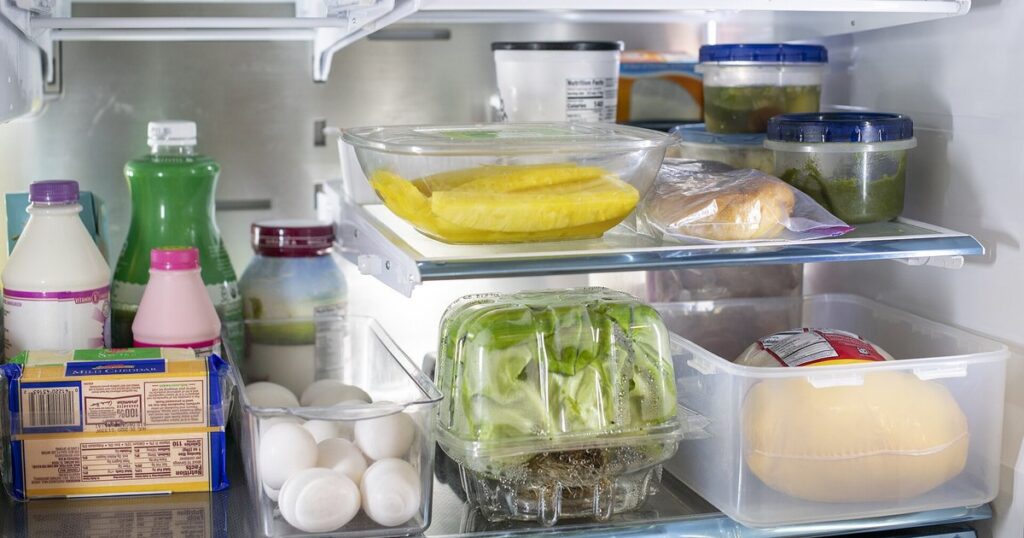
Featured image: Food Safety - Cut Waste in Refrigerators by the U.S. Department of Agriculture, public domain. Cropped.