A clogged dishwasher drain line is one of those problems that announces itself unmistakably: you open the door after a cycle and find dirty, smelly water sitting at the bottom of the tub. While a clogged filter is the most common cause of dishwasher drainage issues, the drain line itself can also become blocked with grease, food debris, and mineral buildup over time.
In this step-by-step guide, we’ll show you how to locate, access, and unclog your dishwasher’s drain line — a task that most homeowners can complete in about 30 minutes with basic tools.
Understanding the Drain Path
Your dishwasher’s drain system consists of several components working in sequence. Water flows from the dishwasher tub through the filter, into the drain pump, through the drain hose, and either into an air gap, a garbage disposal, or directly into the sink drain pipe. A clog at any point in this path will cause water to back up.
What You’ll Need
- Towels and a shallow pan for catching water
- Phillips and flathead screwdrivers
- Pliers
- A flexible drain snake or pipe cleaner
- White vinegar and baking soda
- A bucket
Step 1: Run the Garbage Disposal
If your dishwasher drains into a garburator, run it with cold water for 30 seconds. A clogged disposal is the #1 reason dishwashers won’t drain — and the easiest to fix.
Step 2: Clean the Dishwasher Filter
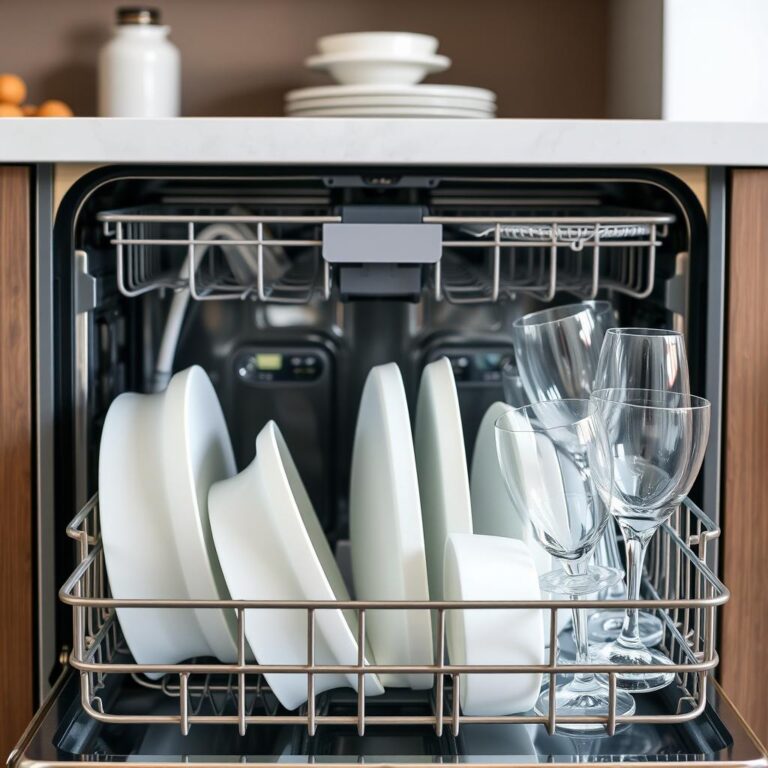
Remove the bottom rack and pull out the filter assembly (usually a twist-off cylinder at the bottom of the tub). Clean it thoroughly under running water. Even if the filter doesn’t appear to be the problem, cleaning it ensures water can reach the drain pump freely.
Step 3: Check the Drain Hose Under the Sink
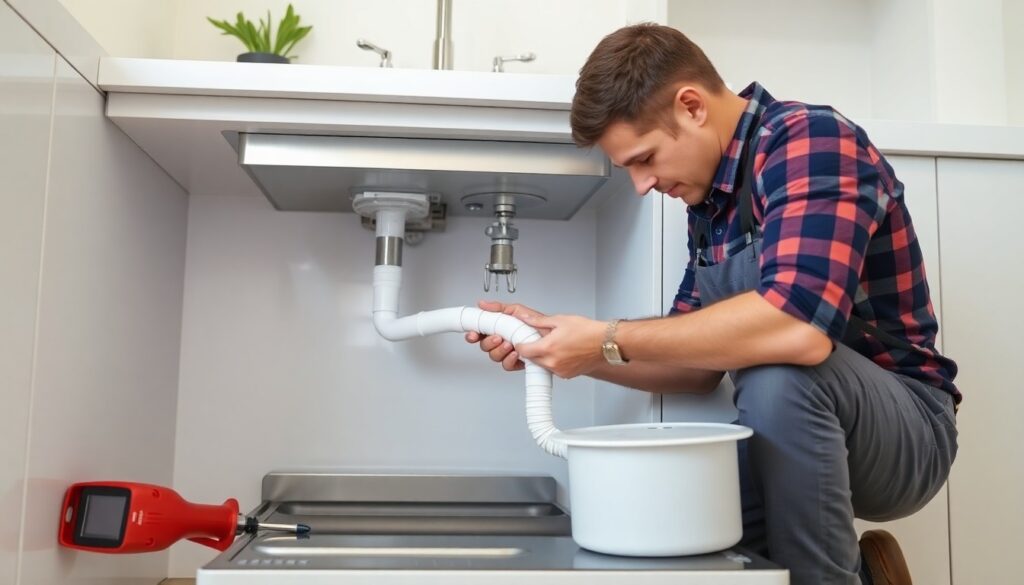
Open the cabinet under the sink and locate the dishwasher drain hose — it’s the ribbed plastic hose running from the dishwasher to either the air gap, disposal, or sink drain connection. Check for obvious kinks, which can occur if the hose was compressed when the dishwasher was pushed into position. Straighten any kinks you find.
Step 4: Disconnect and Flush the Drain Hose
Place towels and a bucket under the drain hose connection. Using pliers, loosen the hose clamp where the drain hose connects to the sink drain or disposal. Pull the hose free (water will come out — hence the bucket). Look inside the hose for visible clogs. If you can see a blockage, use a flexible drain snake or a straightened wire hanger to gently push it through. Flush the hose with warm water to clear any remaining debris.
Step 5: Clean the Air Gap
If your kitchen has an air gap (a small cylindrical fitting on the countertop), remove the decorative cap and inner cap. Check for debris inside and clean it out. A clogged air gap is a common cause of slow drainage that’s often overlooked.
Step 6: Clear the Drain Connection
Where the dishwasher hose connects to the disposal or drain pipe, inspect the connection point. Food debris and grease often accumulate right at this junction. Clean the opening thoroughly and ensure it’s clear before reattaching the hose.
Step 7: Flush the System
Reattach all connections securely. Pour a cup of baking soda followed by a cup of white vinegar directly into the dishwasher drain (at the bottom of the tub, with the filter removed). Let it fizz for 15 minutes — the chemical reaction helps dissolve grease and organic material in the drain path. Follow with a pot of boiling water, then replace the filter and run a hot rinse cycle.
Step 8: Test
Run a short wash cycle and check that water drains completely at the end. Look under the sink for leaks at the hose connections you disturbed. If everything drains properly and there are no leaks, you’re done.
Preventing Future Clogs
- Scrape plates thoroughly before loading
- Clean the filter every 1-2 weeks
- Run the disposal before starting the dishwasher
- Run a monthly vinegar-and-baking-soda cleaning treatment
- Use the correct amount of dishwasher detergent
When to Call a Professional
If you’ve cleared every accessible part of the drain path and the dishwasher still won’t drain, the clog may be deeper in the plumbing or the drain pump itself may be failing. Tech Angels Appliance Repair can handle both the appliance and the drain connection. Call (604) 265-3565 for service across the Greater Vancouver area.
Final Thoughts
Unclogging a dishwasher drain line is a manageable DIY task that saves you the cost of a service call in most cases. The key is working systematically from the easiest fixes (running the disposal, cleaning the filter) through to the more involved steps (disconnecting and flushing the hose). With regular maintenance, you can prevent most drain clogs from forming in the first place.