When Your Oven Starts Making a Racket
You turn on your oven to preheat for dinner, and instead of the familiar quiet hum, you hear rattling, grinding, buzzing, or squealing coming from inside. A noisy oven fan is more than just an annoyance — it is usually a signal that something needs attention before a minor issue turns into a bigger, more expensive problem.
If you have ever stood in your kitchen in Vancouver wondering whether that sound from your oven is normal or cause for concern, this guide is for you. We will cover the different types of fans in your oven, what each type of noise usually means, and what you can do about it — whether it is a simple DIY fix or something that needs a professional technician.
Understanding the Fans in Your Oven
Before you can troubleshoot a noisy fan, it helps to understand that most modern ovens have more than one fan, and each serves a different purpose.
The Convection Fan
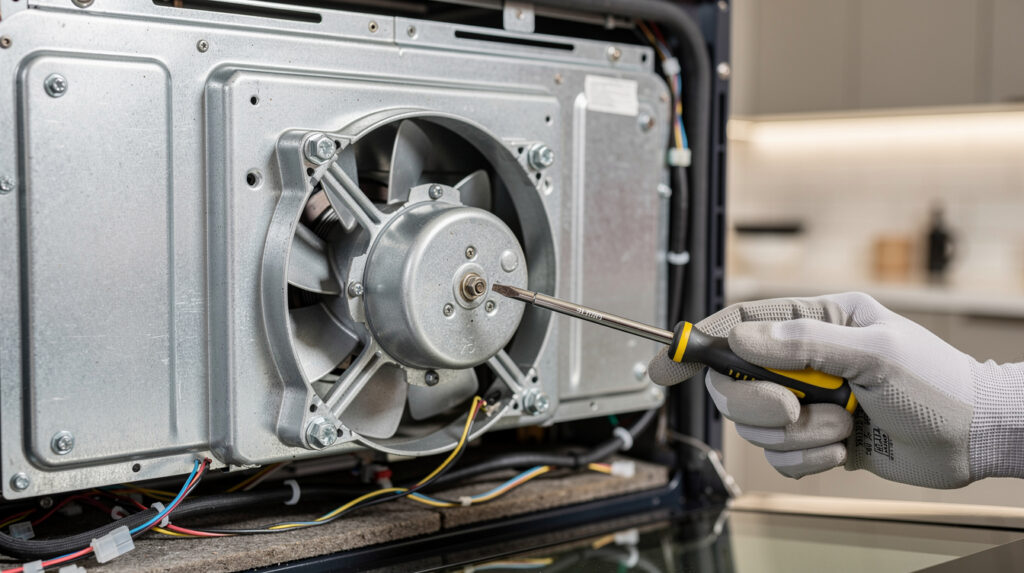
If you have a convection oven — and most ovens sold in the last 15 to 20 years offer at least a convection setting — there is a fan mounted on the back wall inside the oven cavity. This fan circulates hot air around the food for more even cooking. The convection fan runs whenever you use a convection cooking mode and is exposed to the full heat of the oven, which makes it subject to more wear and tear than other fans.
The convection fan typically has a heating element associated with it (sometimes called the convection element), which heats the air as the fan pushes it around the oven. This fan-and-element combination is what makes convection cooking faster and more even than traditional radiant heat cooking.
The Cooling Fan
The cooling fan is located in a separate compartment, usually at the top of the oven behind the control panel or in the back of the oven housing. Its job is not to help cook food — it blows air across the oven’s exterior surfaces and electronic components to prevent them from overheating. The cooling fan runs during cooking and often continues running after you turn the oven off, until the oven’s external surfaces cool down to a safe temperature.
Because the cooling fan is not inside the hot oven cavity, it is exposed to less extreme temperatures, but it still runs for extended periods and can develop problems over time.
Exhaust or Vent Fan
Some oven models have a small exhaust fan that helps ventilate hot air and steam out of the oven cavity. This is different from your range hood fan — it is built into the oven itself and helps regulate internal pressure and moisture during cooking.
Common Causes of a Noisy Oven Fan
Now that you know which fans you are dealing with, let us look at the most common reasons an oven fan starts making noise.
Worn Fan Bearings
This is the most common cause of oven fan noise. The fan motor has bearings that allow the shaft to spin smoothly. Over time, these bearings wear down due to heat, friction, and the accumulation of grease and food particles. When the bearings start to fail, you will hear a grinding, squealing, or rumbling sound that typically gets worse over time.
Worn bearings are more common in the convection fan because it operates in an extremely hot environment. The heat breaks down lubricants in the bearings faster than normal operating temperatures would. You might notice the noise is worse when the oven is hot and diminishes somewhat when the oven is cool — this is because thermal expansion makes the worn bearing fit even more loosely at higher temperatures.
Loose Fan Blade
The fan blade is attached to the motor shaft with a nut, clip, or set screw. If this fastener loosens — which can happen gradually from vibration — the blade will wobble as it spins, creating a rattling or clicking sound. A loose blade can also hit the fan housing or other internal components, producing a louder banging or tapping noise.
This is one of the easier problems to fix because it often requires nothing more than tightening a nut or screw. However, accessing the fan inside the oven requires removing the back panel of the oven cavity, which means working with parts that get extremely hot during normal operation.
Debris Buildup
The inside of an oven accumulates grease, food splatter, and carbonized particles over time. These can collect on the fan blades and in the fan housing, creating imbalance that causes vibration and noise. The convection fan is particularly susceptible because it is constantly circulating air that carries grease and food particles.
Debris buildup does not just cause noise — it also reduces the fan’s efficiency. A greasy, unbalanced fan does not circulate air as effectively, which can lead to uneven cooking and longer preheat times.
Bent or Damaged Fan Blade
If the fan blade has been physically damaged — bent, cracked, or chipped — it will be out of balance and produce vibration and noise. This can happen if something falls against the fan during cleaning, if the oven is bumped or moved roughly, or if a piece of debris lodges between the blade and the housing.
A damaged blade cannot be repaired — it needs to be replaced. Running the oven with a damaged blade accelerates bearing wear because the vibration puts extra stress on the motor bearings.
Fan Motor Failure
When the motor itself starts to fail, the symptoms can include grinding, buzzing, or humming sounds. A failing motor may also cause the fan to run intermittently — spinning up normally at first but then slowing down or stopping as the motor overheats. In the final stages of motor failure, you might hear the motor trying to start (a buzzing or clicking sound) but the fan not spinning at all.
Motor failure is the most serious of the common fan problems because it typically means the entire fan motor assembly needs to be replaced. This is a more involved repair, but it is still far less expensive than replacing the oven itself.
Thermal Expansion Noises
Not all oven sounds indicate a problem. Ovens are made of metal, and metal expands when heated and contracts when cooled. This expansion and contraction can produce popping, ticking, or pinging sounds, particularly during preheating and after the oven is turned off. These sounds are normal and are not related to the fan.
The key distinction: thermal expansion sounds are random and irregular. Fan-related noises are usually continuous and rhythmic because they follow the rotation of the fan blade.
How to Diagnose Which Fan Is Making the Noise
Identifying which fan is the source of the noise helps narrow down the cause and the fix.
Listen for Timing
- Noise only during convection mode: The convection fan is the culprit. Switch to a non-convection setting and see if the noise stops.
- Noise during all cooking modes: The cooling fan runs regardless of the cooking mode, so the cooling fan may be the issue.
- Noise after the oven is turned off: The cooling fan continues to run after cooking to cool the oven. If the noise persists after you turn the oven off, the cooling fan is making the sound.
Listen for Location
- Sound comes from inside the oven cavity: This points to the convection fan, which is mounted on the back wall inside the oven.
- Sound comes from the top or back of the oven housing: This suggests the cooling fan, which is located outside the oven cavity.
Check for Speed Dependency
If the noise gets louder or changes pitch as the oven heats up, it is likely related to thermal expansion effects on the fan bearings. Worn bearings often get noisier at higher temperatures as the metal components expand and the fit becomes sloppier.
DIY Fixes for a Noisy Oven Fan
Some oven fan noise issues can be resolved at home with basic tools and a bit of patience. Here is what you can safely tackle yourself.
Cleaning the Fan and Fan Housing
If debris buildup is causing the noise, a thorough cleaning can make a significant difference.
Important safety note: Always turn off the oven and let it cool completely before attempting any work inside it. Disconnect the oven from power by unplugging it or switching off the circuit breaker. Oven interiors retain heat for a long time — give it at least an hour to cool after the last use.
To clean the convection fan, you typically need to remove the cover panel on the back wall inside the oven. This panel is usually held in place by several screws. Once the panel is removed, you can access the fan blade. Clean the blade and the surrounding area with a degreasing spray and a cloth, removing all built-up grease and food residue. Let everything dry completely before reassembling.
For the cooling fan, you usually need to remove the back panel of the oven from outside the unit. This gives you access to the cooling fan and motor. Clean the fan blades and housing with the same approach — degreaser, cloth, and a brush for hard-to-reach areas.
Tightening a Loose Fan Blade
If the fan blade wobbles on the motor shaft, the mounting nut or fastener may need tightening. With the oven disconnected from power and completely cool, access the fan as described above. Hold the blade steady and tighten the center nut or screw. Be careful not to overtighten — you just want it snug, not strained.
After tightening, spin the blade by hand to make sure it rotates freely and does not rub against the housing or cover panel. If it rubs, the blade may be bent and needs to be replaced rather than tightened.
Inspecting for Foreign Objects
Sometimes a piece of aluminum foil, a chunk of carbonized food, or another small object gets into the fan area and causes intermittent noise as the blade contacts it. With the oven cool and disconnected from power, look inside the fan area for any foreign objects and remove them. Check between the blade and the housing, and around the motor shaft.
When You Need a Professional
Some oven fan repairs require professional expertise, specialized tools, or replacement parts that are best handled by a qualified technician.
Bearing Replacement
Replacing worn fan bearings is technically possible but impractical for most homeowners. It requires disassembling the motor, pressing out the old bearings, and pressing in new ones — a process that needs a bearing press and precise alignment. In most cases, it is more practical to replace the entire fan motor assembly, which includes new bearings.
Motor Replacement
If the fan motor has failed or is failing, replacement is the solution. This involves disconnecting electrical wiring, removing the old motor, and installing and wiring the new one. While some mechanically inclined homeowners can handle this, it involves working with electrical connections in an appliance that runs on 240 volts. For safety, many homeowners prefer to have a professional handle motor replacement.
Blade Replacement
If the fan blade is bent, cracked, or chipped, it needs to be replaced. Replacement blades are available for most oven models and are relatively inexpensive. The challenge is accessing the blade — it requires removing interior panels and sometimes the oven door, depending on the model.
Electrical or Control Issues
If the fan runs intermittently, runs at the wrong speed, or does not respond correctly to oven settings, the problem may be in the wiring, connectors, or the oven’s electronic control board rather than the fan itself. Diagnosing and repairing electrical issues requires experience and proper testing equipment.
The experienced repair technicians at Tech Angels handle oven fan repairs regularly across all major brands found in Vancouver homes — Samsung, LG, Bosch, Whirlpool, GE, and more. Whether it is a simple blade tightening or a full motor replacement, professional diagnosis ensures the root cause is identified and fixed correctly the first time.
Can You Still Use Your Oven with a Noisy Fan?
This depends on the type and severity of the noise. Here are some general guidelines:
- Mild humming or buzzing: Usually safe to continue using the oven while you arrange a repair. The fan is still functioning, just not as smoothly as it should.
- Grinding or squealing: Use the oven sparingly and plan for repair soon. The bearings are wearing out, and continued use accelerates the deterioration.
- Loud rattling or banging: Stop using the oven until the problem is diagnosed. A loose or damaged blade can break free and damage other components or the oven interior.
- Burning smell accompanied by noise: Stop using the oven immediately. A burning smell combined with fan noise can indicate a motor overheating or an electrical issue that poses a fire risk.
If you are unsure whether it is safe to keep using your oven, err on the side of caution and have it inspected by a professional before continued use.
Preventing Oven Fan Problems
While you cannot prevent all fan issues — bearings do wear out eventually regardless of maintenance — these practices can extend the life of your oven fans and reduce the likelihood of noise problems:
- Keep the oven clean: Regular cleaning reduces the amount of grease and food debris that accumulates on the fan and in the fan housing. Use the self-cleaning function if your oven has one, or clean manually with an oven-safe degreaser every few months.
- Wipe up spills promptly: Large spills that burn onto the oven floor can release particles that circulate and coat the fan. Clean up spills as soon as the oven cools enough to be safe.
- Use oven liners or drip trays: Catching spills before they hit the oven floor reduces the amount of debris that can reach the fan.
- Avoid blocking the vent: Make sure the oven vent (usually located at the top of the oven or at the back of a cooktop above the oven) is not blocked by pots, pans, or towels. Blocked vents can cause the cooling fan to work harder and wear faster.
- Do not line the oven bottom with aluminum foil: While this is a common practice to catch drips, foil on the oven floor can disrupt airflow patterns, causing the convection fan to work harder and potentially directing grease toward the fan. It can also block vents and cause overheating.
Get Your Quiet Kitchen Back
A noisy oven fan is trying to tell you something. Whether it is a simple fix like tightening a loose blade or a more involved repair like replacing a worn motor, addressing the problem early prevents it from escalating into a costlier repair. Most oven fan issues are well within the range of routine appliance repairs — they do not mean your oven is at the end of its life.
Pay attention to the type of noise, when it occurs, and where it seems to come from. This information helps you — or your appliance repair technician — diagnose the problem quickly and get your oven running quietly again.
After all, the only sounds you want coming from your kitchen should be the sizzle of dinner and the timer telling you it is ready.
Related Articles
Explore more appliance care tips from the Tech Angels blog: