Garburator maintenance takes a few minutes a week, and most of it happens while you use the sink. InSinkErator calls its disposers very low maintenance and says the best way to keep one in good shape is to use it regularly.
What wears a garburator out early is how it gets used: hot water while grinding, grease, big loads of peels and the wrong fix when it jams. Here's how to run it, what to keep out, how to clean it, and when to book garburator repair in Coquitlam, Port Moody or Port Coquitlam.
Key Takeaways
- Turn on cold water first, then the garburator, and keep the water running for several seconds after grinding stops.
- Keep fats, oils and grease out. Metro Vancouver asks you to "wipe it, green bin it".
- Clean the rubber baffle with a scouring pad when you notice a smell.
- Flush the chamber with a sink of warm water and 1/4 cup of baking soda.
- Never use caustic drain cleaners or bleach, and never put a hand inside.
Garburator maintenance starts with how you run it
Start with the order you do things in. InSinkErator's care manual says:
- Turn on the cold water first.
- Switch on the disposer and feed food in gradually.
- Let it run until you only hear the motor and the water, which means grinding is done.
- Switch the disposer off, and keep cold water running for several seconds so the drain line gets flushed.
Cold water is the rule while food is grinding. InSinkErator says not to use hot water when grinding food waste, though it's fine to drain hot water through the disposer between grinding sessions.
Feed food in gradually. The manual warns against filling the chamber with a lot of vegetable peels at once. Start the water and the motor first, then add peels a handful at a time.
Running the unit regularly is maintenance too. InSinkErator notes that frequent use helps clear food scraps that build up in the chamber.
What to keep out of the drain
Grease is the first thing to keep out. InSinkErator's manual says not to pour grease or fat into the disposer or any drain, because it can build up in pipes and block them. Metro Vancouver gives the same message for homes in our region: fats, oils and grease harden as they move through pipes and sewers, pick up other material along the way, and can block both your plumbing and the sewer.
Metro Vancouver's advice is short: wipe it, green bin it. Scrape small amounts from plates, pots and pans into the green bin before washing. Larger amounts, such as deep fryer oil, can go to a recycling depot that accepts cooking oil.
InSinkErator's manual also lists things that should never go into a disposer:
- Clam or oyster shells
- Glass, china or plastic
- Metal, such as bottle caps, tin cans or utensils
- Hot grease or other hot liquids
- Paints, solvents, household cleaners, chemicals, automotive fluids and plastic wrap
- Caustic drain cleaners
It also advises against grinding large amounts of eggshells or fibrous material such as corn husks and artichokes, to avoid a possible drain blockage. On InSinkErator's standard models, the company says stringy and fibrous foods like banana peel, celery and rhubarb are the ones to avoid. For a fuller food list, see our post on garburator dos and don'ts.
How to clean a garburator
An odour usually means food has built up, according to InSinkErator's troubleshooting FAQ. Food collects in two places: inside the grind chamber and on the underside of the rubber sink baffle. Clean both.
Clean the sink baffle
- Turn off the garburator.
- Remove the sink baffle and scrub its underside with a scouring pad.
- Put the baffle back in the sink opening.
- Turn on the unit with a medium stream of cold water.
- Drop in ice cubes mixed with lemon or lime wedges to freshen it.
Flush the grind chamber
For build-up inside the chamber, the care manual describes a flush:
- Put the stopper in the sink and fill the sink halfway with warm water.
- Mix in 1/4 cup of baking soda.
- Turn the garburator on and pull the stopper at the same time, so the rush of water carries loose particles away.
InSinkErator also suggests grinding citrus peels to freshen drain smells, and grinding hard items such as ice, small bones and fruit pits, because the particles create a scouring action inside the chamber. For odours caused by grease build-up, the manual allows a disposer cleaner, degreaser or deodorizer.
What to skip: InSinkErator says never to put bleach in the disposer, and its manual lists caustic drain cleaners among the products that shouldn't go in.
Check under the sink for leaks
The manual calls out a leak hazard and tells owners to inspect the disposer and plumbing fittings regularly. Once a month, open the cabinet with a flashlight and look at:
- The sink flange where the unit meets the sink
- The discharge tube that runs to the drain trap
- The dishwasher hose connection, if your dishwasher drains through the garburator
- The bottom of the unit itself
InSinkErator's manual also warns against storing rags, paper, aerosol cans or other flammable items near the disposer, so keep that part of the cabinet clear. If the dishwasher drains through the garburator and starts leaving water behind, our guide to a dishwasher that won't drain covers the checks on that side.
How to clear a jam without damaging it
If the motor stops while you're grinding, the unit may be jammed. InSinkErator's manual gives these steps:
- Turn off the garburator and the water.
- Free the object by turning the turntable in either direction with a wooden spoon.
- Take the spoon out, then lift the object out with tongs.
- The unit has an automatic overload switch. Turn off the wall switch and let it cool for up to 20 minutes before turning it back on.
- If it still won't run, check the electrical panel for a tripped breaker or blown fuse.
Never reach into the chamber with your hand. InSinkErator's safety instructions say to switch the power off before clearing a jam and to use long-handled tongs or pliers to remove objects. If yours hums but won't turn, our step-by-step guide to a garburator that hums but won't spin explains the hex wrench method many models use.
A simple garburator maintenance schedule
| How often | Task |
|---|---|
| Every use | Cold water on first, feed food gradually, run water several seconds after grinding |
| Every use | Grease and oil into the green bin, never the drain |
| Weekly, or when it smells | Scrub the underside of the baffle, then run ice and citrus |
| Monthly | Baking soda flush, and a flashlight check under the sink for leaks |
| After a jam | Power off, wooden spoon and tongs, let the overload cool |
Habits like these are what let any appliance reach or beat its typical lifespan. Our guide to how long major appliances last has the figures for the bigger machines.
When to call a technician
Book a repair if the unit hums and won't turn after you've cleared it, trips the breaker again and again, leaks from its body, or keeps backing up with a clear drain. Tech Angels handles garburator repair across Coquitlam, Port Moody, Port Coquitlam, Vancouver and the Lower Mainland.
We charge a $100 diagnostic, and it's credited toward labour when you approve the repair. You get the parts quote first. The Get $25 Off Your Repair Today form takes $25 off your repair labour (not the diagnostic charge), and every completed repair has a 3-month warranty on parts and labour.
You can book a visit online or call (604) 265-3565. We usually offer same or next day appointments.
Frequently Asked Questions
Should I use hot or cold water with a garburator? Cold. InSinkErator says to run cold water while grinding and for several seconds afterwards. Hot water is fine between grinding sessions.
How do I get rid of a garburator smell? Scrub the underside of the rubber baffle, then flush the chamber with a half sink of warm water and 1/4 cup of baking soda. Grinding citrus peels also helps, according to InSinkErator.
Can I use bleach or drain cleaner in a garburator? No. InSinkErator says never to put bleach in a disposer, and its manual lists caustic drain cleaners among items to keep out.
Can a garburator grind bones? InSinkErator's manual lists small bones and fruit pits as hard items that help scour the chamber. Large amounts of eggshells and fibrous scraps are the bigger risk for drain blockages.
What does the overload switch do? It stops the motor when it's jammed or overheated. Switch off, clear the jam with a wooden spoon, and let the unit cool for up to 20 minutes before trying again.
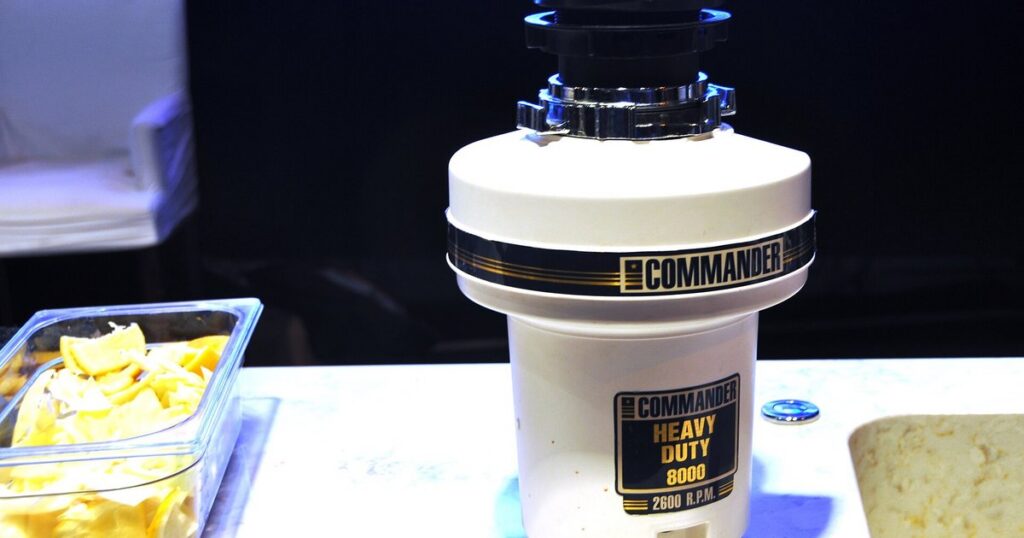
Featured image: Garbage disposal unit (04) by S.J. de Waard, CC BY-SA 3.0. Cropped.