Understanding Why Refrigerators Develop Odors
Unpleasant refrigerator odors are one of the most common complaints from Vancouver homeowners. The smell creeps out whenever you open the fridge, making the entire kitchen smell bad and sometimes affecting the taste of your food. The good news is that refrigerator odors are usually preventable and removable without expensive chemical cleaners or professional service beyond diagnostics.
The root cause of most refrigerator odors is bacterial growth combined with food decomposition. Your refrigerator is a closed environment where mold, mildew, and bacteria thrive if you do not maintain proper cleanliness. Forgotten vegetables, spilled foods, dirty seals, and clogged drains all contribute to that unpleasant smell. Understanding these causes helps you both prevent future odors and eliminate current ones effectively.
Your refrigerator’s sealed environment creates ideal conditions for microorganism growth. Unlike open-air kitchens, fridges trap bacteria and mold spores, allowing them to multiply. The combination of moisture, temperature, and organic matter creates perfect conditions for rapid microbial growth that generates offensive odors.
The Power of Baking Soda for Refrigerator Odors
Baking soda is nature’s odor eliminator. It works through a process called absorption, actually trapping and neutralizing odor molecules rather than just masking them with fragrance. This is why baking soda is far more effective than air fresheners for refrigerator problems. Baking soda has been trusted for odor control for over a century.
The chemical structure of baking soda allows it to chemically neutralize odor molecules. Unlike fragrance-based solutions that only cover smells, baking soda actually eliminates the source of the odor. This makes it the gold standard for refrigerator odor problems.
How to Use Baking Soda Effectively
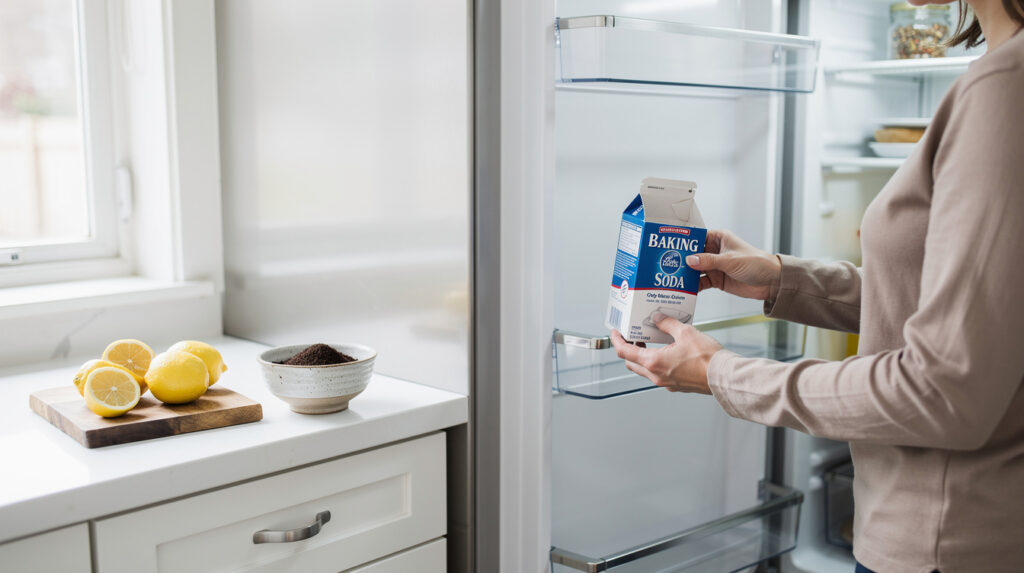
The traditional method is simple: place an open box of baking soda in your refrigerator. However, this method works slowly and is less effective than it could be. Here are better approaches that maximize odor elimination:
Maximum Absorption Method for Best Results
- Pour baking soda into an open bowl: Transfer baking soda from the box into a shallow bowl to increase surface area. More surface area means more absorption capacity and faster odor elimination.
- Place multiple bowls strategically: If your refrigerator is large, use 2-3 bowls in different locations. Place one in the main compartment, one in the vegetable drawer, and one in the upper shelf area.
- Replace every 30 days: Baking soda gradually becomes saturated with odors. Monthly replacement keeps absorption working effectively and prevents odor buildup.
- Use expired baking soda: Do not waste good baking soda—old, expired baking soda works just as well for odor absorption as fresh baking soda.
Baking Soda Paste for Stubborn Stains and Odors
For stubborn odors coming from specific spots, make a paste of baking soda and water. Apply this paste to the problem area, let it sit for 15-20 minutes, then wipe clean. This is particularly effective for removing stuck-on food or mold that contributes to persistent odor.
Cleaning Your Drip Pan: A Forgotten Source of Smell
One of the most overlooked sources of refrigerator odors is the drip pan beneath the refrigerator. This pan collects water as your fridge defrosts, but many homeowners never clean it. Over time, stagnant water in the pan develops bacteria and mold, creating a potent source of odor that seems to emanate from inside the fridge. This hidden problem is often the culprit behind persistent refrigerator odors.
The drip pan becomes a breeding ground for microorganisms. The warm, moist environment under your refrigerator is ideal for bacterial and mold growth. These organisms produce volatile compounds that create foul smells permeating your entire kitchen.
Locating and Cleaning Your Drip Pan Properly
The drip pan is typically located at the bottom of your refrigerator, behind the kick plate (the panel at floor level). To access and clean it properly:
- Unplug the refrigerator: Always disconnect power before reaching behind or under appliances for safety
- Remove the kick plate: This usually slides or pulls off; some models have small screws holding it in place
- Locate the drip pan: You should see a rectangular pan collecting water
- Slide the pan out carefully: Be careful, as it contains water and may spill on your flooring
- Empty and clean thoroughly: Dump water, rinse the pan, and scrub with warm soapy water and a brush
- For stubborn buildup: Use baking soda paste or a mixture of equal parts white vinegar and water
- Dry and reinstall: Allow the pan to dry completely, add fresh water, and slide back into place
Clean your drip pan monthly, more frequently if you live in Vancouver where humidity can encourage bacterial growth. In our coastal climate, moisture is always a factor promoting microbial growth.
Cleaning Refrigerator Condenser Coils for Efficiency
Condenser coils are responsible for releasing heat from your refrigerator’s cooling system. They are located either on the back of older refrigerators or beneath newer models behind the kick plate. Dust and dirt accumulation on these coils reduces cooling efficiency and can contribute to odors from improperly cooled food.
When condenser coils become clogged with dust, your refrigerator cannot cool as efficiently. This allows food to warm slightly, speeding up spoilage and odor generation. Keeping coils clean maintains proper cooling temperatures.
Steps to Clean Condenser Coils Safely
- Unplug the refrigerator: This is non-negotiable for safety with electrical components
- Access the coils: Depending on your model, they may be visible at the back or hidden behind the kick plate
- Brush away dust gently: Use a soft brush or vacuum brush attachment to gently remove dust buildup
- Coil cleaner spray: If available, use a commercial condenser coil cleaner (usually unnecessary for home use)
- Do not use water: Water can damage electrical components on condenser coils
- Reconnect and test: Once clean, plug the refrigerator back in and verify it is cooling properly
Cleaning coils every 6-12 months keeps your refrigerator running efficiently and prevents odor-causing temperature issues. This is particularly important in dusty homes or homes with pets.
Managing Expired Food: Prevention Over Removal
The absolute best way to prevent refrigerator odors is preventing spoiled food accumulation. One forgotten vegetable can create odors that linger for weeks even after removal. Prevention is far easier than remediation.
Food Management Strategies for Odor Prevention
- Date everything: Use a marker to date containers and leftovers when you refrigerate them
- Use first-in-first-out method: Place new items in the back; use older items first
- Weekly inspection: Every Sunday, remove expired items and wipe away any spills
- Proper storage containers: Keep foods in sealed, airtight containers to prevent bacterial growth
- Appropriate temperature: Verify your fridge is at 40 degrees Fahrenheit or below; warmer temps accelerate spoilage
- Vegetable drawer care: This compartment is a common odor source; clean it weekly
This preventive approach saves you from dealing with terrible smells and extends the life of your food. Most food waste is preventable with proper management.
Cleaning Refrigerator Seals and Gaskets Thoroughly
The rubber seals around your refrigerator doors trap moisture and food particles, creating an ideal environment for mold and mildew. These seals are a major source of refrigerator odors that many people do not realize. The hidden grooves in seals trap bacteria that multiply rapidly.
Seal Cleaning Method for Best Results
- Mix cleaning solution: Combine equal parts white vinegar and water, or use diluted baking soda solution
- Soak a cloth: Saturate a soft cloth with your cleaning solution
- Wipe seals thoroughly: Pay special attention to crevices where mold hides
- Use an old toothbrush: For grooves, an old soft toothbrush can reach into tight spaces
- Dry completely: Wipe with a dry cloth to remove excess moisture
- Monthly maintenance: Regular cleaning prevents mold establishment
Clean seals monthly, especially during humid Vancouver summers when mold thrives. Our coastal climate makes this maintenance critical.
Natural Odor Elimination Methods Beyond Baking Soda
While baking soda is the gold standard, several other natural methods also eliminate refrigerator odors effectively. Having multiple options provides flexibility.
White Vinegar Solution
White vinegar has antimicrobial properties and neutralizes odors effectively. Mix equal parts white vinegar and water in a spray bottle. Spray this solution on interior surfaces, let sit for a few minutes, and wipe clean. The vinegar smell will dissipate in a few hours, leaving your fridge fresh.
Activated Charcoal
Activated charcoal is even more absorbent than baking soda. Place activated charcoal in small mesh bags throughout your refrigerator. It absorbs odors effectively and typically lasts longer than baking soda before needing replacement.
Coffee Grounds
Used coffee grounds are excellent odor absorbers. Place dry, used grounds in a small bowl in your refrigerator. They are completely safe, reusable, and provide the bonus of coffee-scented freshness. Replace every 2-3 weeks.
Lemon and Salt
Cut a lemon in half and rub it with salt. Place the lemon halves on a small plate in your fridge. The lemon naturally deodorizes while salt enhances the effect. This method works quickly and smells fresh.
Rice or Newspaper
Uncooked white rice absorbs odors effectively. Place rice in a small bowl in your refrigerator. Newspaper works similarly, though it is less pleasant-smelling than rice.
Deep Cleaning Your Refrigerator Interior
For severe odor problems, a complete interior cleaning is necessary. This process removes accumulated grime, spills, and bacterial colonies that simple surface cleaning will not address.
Complete Cleaning Process Step by Step
- Remove everything: Empty all shelves, drawers, and door compartments
- Mix cleaning solution: Use warm water with dish soap or a vinegar-water solution
- Remove shelves: Glass and plastic shelves can be washed in warm soapy water separately
- Wipe all interior surfaces: Use your cleaning solution and cloth to thoroughly clean walls, ceiling, floor, and corners
- Do not forget corners: Bacteria colony in corners is a major odor source
- Dry completely: Use a dry cloth to remove excess moisture
- Reinstall components: Return clean shelves and drawers
- Place baking soda: Add fresh baking soda bowls for ongoing odor control
This deep clean typically eliminates even severe odors. Plan for it when you can empty your refrigerator for an hour or two.
Addressing Temperature-Related Odor Problems
Sometimes refrigerator odors indicate a temperature problem. If your refrigerator is not staying cold enough, food spoils quickly and creates powerful odors.
Temperature Warning Signs
- Food spoils faster than normal
- Ice cream becomes soft
- Milk expires before the date
- Refrigerator feels warm inside
- Condensation appears on exterior
If you notice any of these signs, your refrigerator is not cooling properly. This requires professional service from Tech Angels to diagnose cooling system failures, thermostat problems, or compressor issues. A refrigerator that cannot maintain proper temperature will constantly produce spoiled-food odors regardless of how much baking soda you place inside.
Preventing Moisture That Encourages Odors
Excess moisture in your refrigerator encourages mold, mildew, and bacterial growth. Control moisture to prevent odors.
Moisture Control Strategies
- Allow hot food to cool: Do not put hot foods directly in the fridge; cool them first
- Wrap wet produce: Pat produce dry before storing; excess moisture creates odor problems
- Use vegetable drawer humidity control: Most drawers have a humidity slider; adjust based on produce type
- Do not overfill: Air circulation prevents moisture accumulation
- Clean drip tray: Stagnant water in the drip tray is a moisture problem source
Maintaining Fresh-Smelling Refrigerator Long-Term
Once you have eliminated current odors, these habits keep your refrigerator fresh permanently:
- Change baking soda bowls monthly without fail
- Clean drip pan monthly or more frequently
- Wipe seals and gaskets monthly
- Weekly food inspection and expired item removal
- Immediate cleanup of spills
- Annual condenser coil cleaning
- Maintain proper temperature (40 degrees Fahrenheit or below)
These simple practices prevent odor problems from developing. Your refrigerator should smell neutral or slightly fresh, not unpleasant. By following these natural cleaning methods and preventive practices, you will maintain a fresh-smelling refrigerator that keeps your kitchen pleasant and your food safer. Contact Tech Angels if you notice cooling problems or chemical smells that suggest mechanical failure.
When to Seek Professional Help for Persistent Odors
If you have followed all these natural odor elimination methods and your refrigerator still smells bad, professional help may be needed. Tech Angels can diagnose whether the problem is a mechanical failure preventing proper cooling or if there is another underlying issue with your refrigerator system.
Related Articles
Explore more appliance care tips from the Tech Angels blog: