Moving appliances during a home renovation is one of those tasks that seems straightforward until you actually try to move appliances and realize just how heavy, fragile, and complicated they can be. Whether you’re renovating your kitchen, replacing flooring, or completely redesigning your laundry room, knowing how to move appliances safely is essential. Improper handling can result in damaged equipment, costly repairs, injury, or voided warranties. This comprehensive guide will walk you through everything you need to know to move appliances during your renovation without disaster.
A successful renovation depends on proper planning, and moving appliances is often the trickiest part of that plan. Large appliances like refrigerators, washing machines, dryers, and dishwashers are expensive investments that you want to protect. When you move appliances carelessly, you risk damaging the compressor, motor, or delicate internal components. Worse, you might injure yourself or family members in the process. The good news is that with the right preparation and technique, you can move appliances safely and keep your renovation on track.
Preparation: The Foundation for Safely Moving Appliances
Before you touch a single appliance, proper preparation is absolutely critical. Rushing into the physical move without preparation is how accidents happen and appliances get damaged.
Read the Manufacturer’s Manual
Your appliance’s manual contains specific instructions for moving, disconnecting, and transporting that particular model. Some appliances have special requirements—certain models need to be moved upright only, others require special bolts to stabilize internal components during transport. Read the manual thoroughly before starting. If you don’t have the manual, most manufacturers provide downloadable PDFs on their websites.
Take Measurements and Plan Your Route
Before you move appliances, measure doorways, hallways, staircases, and the new location. A refrigerator that fits through your kitchen door might not fit through the bathroom door. Plan the exact route you’ll take, accounting for tight corners and low ceilings. If an appliance won’t fit through the planned route, you may need to remove doors or find an alternative path. Taking time for this planning step prevents the frustration of getting stuck halfway through.
Turn Off Water and Power
This is non-negotiable when you move appliances that use water or electricity. For washing machines, dryers, and dishwashers, turn off the water supply valves and unplug the machines. For refrigerators, defrost them first if they have manual defrost cycles, then unplug them. For electric ranges or ovens, turn off the circuit breaker. Never, ever move appliances while they’re connected to water or power—this creates safety hazards and can damage the appliance’s internal systems.
Drain Water and Allow for Defrosting
Washing machines and dishwashers may have residual water inside. Most machines have drain plugs at the bottom. Place a bucket underneath and carefully drain any remaining water. Refrigerators need special attention—water can damage motors and electrical components. If your refrigerator has an ice maker or freezer, allow 24 hours for complete defrosting if it’s a manual defrost model, or simply drain the defrost pan if it’s frost-free. Never move appliances with water sloshing around inside.
Disconnecting Appliances: The Technical Side
Water Lines and Hoses
For appliances that use water—washing machines, dishwashers, and some refrigerators with ice makers—carefully disconnect the inlet hoses. Have towels ready because there’s almost always a little water in the lines. Keep track of which hose is hot and which is cold water (usually marked with red and blue caps). If you’re moving the appliance to a temporary location during renovation, you may want to cap the water line connections or leave them disconnected until the appliance is in its final position.
Drain Lines
Washing machines and dishwashers have drain hoses that connect to your home’s drainage system. Carefully disconnect these and ensure they’re not kinked or damaged. Some appliances have rubber standpipes that can be removed; others connect directly to the wall. Take a photo before disconnecting so you remember how it was set up for reconnection later.
Gas and Electrical Connections
Gas appliances require professional disconnection—this is not a DIY task. If you’re moving a gas range or oven, call a licensed professional. For electric appliances, turn off the circuit breaker and carefully unplug. If an appliance is hardwired (connected directly to your electrical panel rather than through a plug), you’ll need a licensed electrician to disconnect it safely.
The Physical Process: How to Move Appliances Without Damage
Get Help and Use Proper Equipment
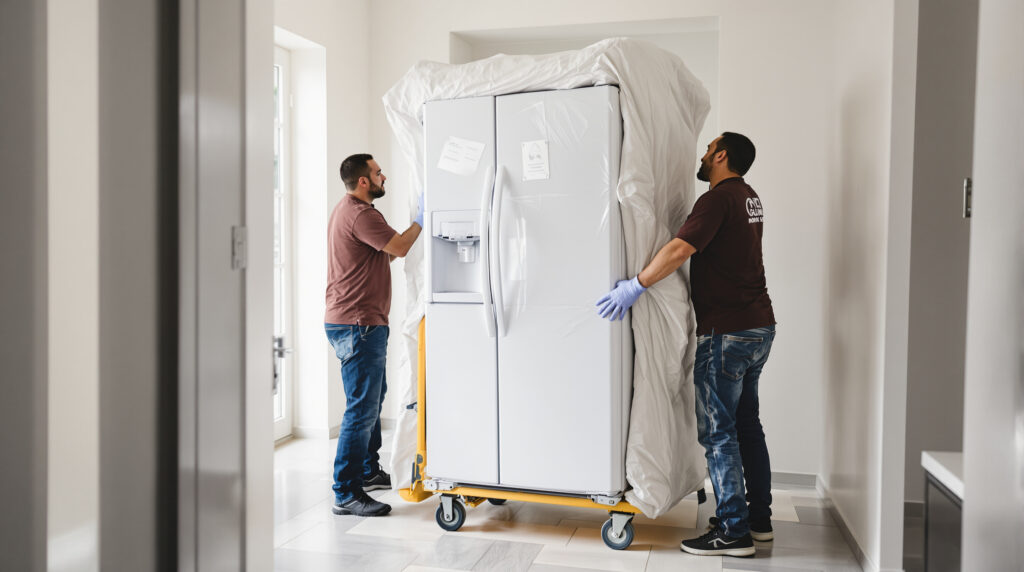
Never move appliances alone. A refrigerator can weigh 300+ pounds, washing machines 200+ pounds, and even smaller appliances like dishwashers can be awkward to maneuver. Recruit at least one strong helper, ideally two. Use proper equipment: a dolly or furniture slider makes a massive difference. Appliance dollies have straps specifically designed to secure heavy items. Regular furniture sliders work for smooth floors and can reduce friction significantly, making it easier to push large appliances.
Secure the Appliance
Once the appliance is on a dolly, secure it with straps or rope to prevent it from shifting during transport. This is especially important when moving appliances up or down stairs or over uneven surfaces. Tie the straps firmly but not so tight that you damage the appliance’s exterior.
Protect the Finish
Use blankets or furniture pads to protect your appliance from scratches and dings during the move. This is particularly important for stainless steel finishes that show every mark. Wrap the appliance loosely so padding doesn’t interfere with the dolly straps or your ability to grip it.
Moving Up and Down Stairs
Moving appliances up or down stairs is when most accidents happen. For stairs, you absolutely need at least three people—ideally four. One person should guide from above, one from below, and one or two controlling the dolly. Tilt the appliance slightly backward on the dolly to keep it balanced. Move slowly and carefully, taking one step at a time. If stairs are narrow or winding, a professional moving service may be your safest option.
Setting Down in the New Location
Once you’ve moved appliances to their final location, set them down gently. Don’t drop or drag appliances into place. Leave about a half-inch gap on sides and behind refrigerators for air circulation. For washing machines and dryers, ensure they’re level—unlevel appliances vibrate excessively and can damage internal components. Most washers and dryers have adjustable feet; use a level to get them perfectly even.
Reconnecting Appliances After Your Renovation
Once your renovation is complete and appliances are in their final position, you’ll need to reconnect them properly. This is where many people make mistakes that lead to leaks or malfunctions.
Water Connections
Reconnect water lines carefully, ensuring hot and cold lines go to the correct inlets. Hand-tighten hose connections first, then use a wrench to snug them up—but don’t overtighten, as this can damage the fittings. Run the appliance through a cycle to check for leaks before you consider the job complete.
Electrical Reconnection
If you’ve unplugged an appliance, plugging it back in is straightforward. If a professional disconnected it, have them reconnect it. Always test the appliance after reconnection to ensure it’s functioning properly.
Check All Systems
After reconnecting, run the appliance through a test cycle. Listen for unusual noises—some sounds during operation are normal, but loud grinding or banging might indicate internal damage from the move. Check for water leaks, ensure heating elements work, and verify that all functions operate as expected. If something seems wrong, stop using the appliance and seek professional diagnosis.
Common Mistakes to Avoid When Moving Appliances
- Moving without unplugging: Always disconnect power and water before moving
- Tilting refrigerators: Never tip a refrigerator on its side—the compressor can be damaged
- Moving without securing: Appliances can shift during transport and cause injuries
- Ignoring the manual: Manufacturer instructions exist for a reason
- Attempting alone: Appliances are heavy; this requires multiple people
- Forgetting to level: Unlevel washers and dryers vibrate excessively and wear out faster
- Reconnecting incorrectly: Wrong water line connections or loose electrical connections cause leaks and malfunctions
When to Call a Professional
If your renovation is complex, or if you’re uncomfortable with any part of moving appliances, professional help is worth the investment. Licensed professionals know how to move appliances safely and can often reconnect them properly as well. They have the right equipment and insurance to protect both your appliances and themselves.
If something goes wrong during or after the move—if an appliance won’t turn on, is leaking, or making strange noises—don’t attempt repairs yourself. Contact a qualified technician. In the Vancouver area, including Burnaby, Coquitlam, North Vancouver, and surrounding communities, Tech Angels can help diagnose and repair any issues that occur from moving your appliances. We service all major appliances and can get your renovation back on track quickly.
Protect Your Appliances and Your Safety
Moving appliances during a home renovation requires patience, planning, and proper technique. By following these guidelines—measuring your space, disconnecting properly, using appropriate equipment, and reconnecting carefully—you can move appliances safely without damage. Your appliances are significant investments; treating them with care during your renovation ensures they’ll continue operating reliably for years to come.
If you have questions about moving a specific appliance or encounter any issues during the process, don’t hesitate to reach out. Call Tech Angels at (604) 265-3565 or contact us online to speak with our experienced technicians.
Understanding Your Appliance’s Weight and Dimensions
Before you even attempt to move an appliance, you need to know exactly what you’re dealing with. Refrigerators, washing machines, and dryers can weigh between 200-500 pounds depending on the model and size. Dishwashers and ovens add another layer of complexity because they’re often built-in or connected to plumbing and electrical systems. Always consult your appliance’s manual to find the exact weight and dimensions before moving day.
Vancouver homeowners undertaking renovations need to be especially careful because many older homes have narrow doorways and tight spaces. Measure your doorways, hallways, and stairways to ensure your appliances can physically fit through these spaces. It’s frustrating to have movers at your door only to discover that a refrigerator won’t fit around a corner or down a staircase.
Documentation Before Moving
Take photos and videos of your current appliance setup before disconnection. Document cable connections, water line placements, and gas connections if applicable. This visual record becomes invaluable when it’s time to reconnect everything in your new location. Tech Angels recommends this step for all appliance moves—it prevents costly mistakes during reinstallation.
Tools and Equipment You’ll Need
Moving appliances without proper equipment is a recipe for disaster. Here’s what you should have ready:
- Heavy-duty appliance dolly (not a regular hand truck)
- Furniture sliders or moving blankets
- Plastic tubing or PEX pipe for water line protection
- Adjustable wrench and socket set
- Screwdrivers (both Phillips and flathead)
- Flashlight or headlamp
- Safety glasses and work gloves
- Bending straps or furniture moving straps
An appliance dolly is specifically designed to handle the weight and size of appliances, with a lower center of gravity than standard hand trucks. Never try to move a heavy appliance with a regular dolly or without proper equipment. The risk of the appliance tipping or falling is far too high.
When to Rent vs. Buy Equipment
If you’re only moving appliances once, renting equipment from a local hardware store or moving company is more economical than buying. Most rental shops in the Vancouver area have appliance dollies available for $10-15 per day. If you’re moving multiple appliances or plan future renovations, buying your own equipment might make sense.
Detailed Step-by-Step Moving Process for Each Appliance Type
Moving a Refrigerator
Refrigerators are often the trickiest appliances to move because of their size and the delicate components inside. Before disconnection, turn off the ice maker if your model has one. Defrost the freezer completely to prevent water spillage during the move. Wait at least 4 hours after disconnecting before tilting the refrigerator, as the compressor oil needs time to settle.
Use an appliance dolly rated for at least 600 pounds. Wrap the refrigerator in moving blankets to protect the finish and prevent damage to walls and doorways. When maneuvering through tight spaces, tilt slightly away from you rather than toward you for better control. Never lay a refrigerator on its side unless absolutely necessary, and if you must, leave it upright for 24 hours before plugging it back in.
Moving a Washing Machine and Dryer
Washing machines contain significant amounts of water in the drum and components. Before moving, run a drain cycle to remove excess water. Most machines have shipping bolts that need to be installed during a move—consult your manual for their location. These bolts stabilize the drum during transit and prevent internal damage. Mark their location so you remember to remove them before operation in the new location.
Dryers need careful handling because their venting systems can be damaged during moving. Disconnect the vent duct before moving, and protect the vent connection point with tape or a plug to prevent dirt from entering. Never crush or overly bend dryer vent hoses during the move, as this reduces airflow efficiency.
Moving Built-In Dishwashers and Ovens
Built-in appliances present special challenges because they’re secured to cabinetry and connected to utilities. Unless you have plumbing and electrical experience, it’s worth paying a professional to disconnect these safely. Improper disconnection can damage water lines, gas lines (for ovens), and electrical systems, leading to expensive repairs or safety hazards.
Professional Help for Vancouver Area Moves
Tech Angels can handle appliance disconnection and reconnection for your renovation project. Our technicians ensure that water lines are properly capped, electrical connections are safe, and gas lines are secure. We can also assist with positioning appliances in their new locations and ensuring everything operates correctly before we leave your home.
Professional service is particularly important for gas appliances, which should never be handled by anyone without proper training and certification. Improper gas line connections are a serious safety risk that could lead to gas leaks or explosions.
Post-Move Inspection and Testing
After moving your appliances to their new location, don’t just plug them in and assume everything is working correctly. Run a test cycle on each appliance before actually using them. For refrigerators, let them sit upright for several hours before plugging in. For washing machines and dryers, check that the water lines aren’t leaking and that the machines operate smoothly.
Listen for unusual noises, check for vibration issues, and verify that all cycles complete properly. If something seems off, stop using the appliance and call for professional service. It’s better to catch problems early than to discover them after you’ve caused damage.
Common Mistakes to Avoid During Appliance Moves
Even experienced homeowners make mistakes when moving appliances. Here are the most common pitfalls to avoid:
- Not draining water or gas before disconnecting
- Ignoring shipping bolts or stabilization hardware
- Moving appliances without proper equipment or help
- Bending or crushing water lines or drain hoses
- Not documenting the original setup before moving
- Rushing the reconnection process
- Attempting to move gas appliances without professional help
Taking time to plan your appliance move carefully can save you thousands of dollars in repairs and potential safety issues. When in doubt, call the professionals—it’s a worthwhile investment in your renovation project’s success.
Related Articles
Explore more appliance care tips from the Tech Angels blog: