There’s nothing more frustrating than a dryer that won’t turn on. You’ve got a pile of wet laundry, time is ticking, and your dryer just sits there, completely unresponsive. Before you panic and assume you need a brand new unit, take a deep breath. A dryer that won’t turn on doesn’t always mean it’s broken beyond repair. There are several common reasons why your dryer might not be responding, and many of them are surprisingly easy to fix yourself.
In this guide, we’ll walk you through the most common reasons a dryer won’t turn on, how to troubleshoot the issue, and when it’s time to call in a professional. Understanding what’s causing the problem is the first step toward getting your laundry routine back on track.
The Power Supply: Where Most Problems Start
When your dryer won’t turn on, the first thing to check is whether it’s actually getting power. This seems obvious, but it’s easy to overlook. A dryer that won’t turn on might not be broken at all—it might just be disconnected from its power source.
Check the Outlet: Make sure the dryer is plugged in properly. You’d be surprised how often the outlet itself is the culprit. If you have a 240-volt dryer (which most electric dryers use), the outlet requires a specific three- or four-prong plug. Make sure the plug is fully seated in the outlet and hasn’t accidentally been pulled out.
Test the Outlet: Plug another appliance into the same outlet to see if it works. If nothing else powers on, the outlet itself might be faulty. Check your circuit breaker panel to see if the breaker for that outlet has tripped. A tripped breaker looks different from a normal one—it’s usually in the middle position between “on” and “off.” Flip it back to the “on” position and try your dryer again.
Check for Blown Fuses: If your dryer uses fuses instead of circuit breakers (older homes sometimes do), check whether the fuse is blown. A blown fuse will have a broken filament inside. If the fuse is blown, replace it with a new one of the correct amperage. This is a simple fix that solves the problem about half the time.
Power Cord Damage: For electric dryers with a power cord, check for visible damage to the cord itself. If you see fraying, burn marks, or cracks in the insulation, the cord is damaged and needs replacement. A damaged power cord is a safety hazard and should be replaced by a professional.
The Thermal Fuse: A Common Culprit
One of the most common reasons a dryer won’t turn on is a blown thermal fuse. This might sound technical, but it’s actually a protective device that works for your safety. Understanding how it functions helps explain why your dryer might not be responding.
A thermal fuse is a one-time safety device designed to cut power to your dryer if it gets too hot. Think of it as a heat-sensitive kill switch. If your dryer overheats for any reason, the thermal fuse blows, stopping the unit from running. Once a thermal fuse blows, it cannot be reset—it must be replaced.
Why Does a Thermal Fuse Blow? Usually, a blown thermal fuse indicates that your dryer has been overheating. The most common cause is a clogged dryer vent. If air can’t escape from your dryer, heat builds up inside the unit, triggering the thermal fuse. Other causes include a blocked lint trap, restricted airflow, or a faulty thermostat.
Replacing the Thermal Fuse: If you’re handy with tools, you might be able to replace a thermal fuse yourself. You’ll need to unplug your dryer, access the internal components (usually by removing a panel), and swap out the old fuse for a new one. However, if you’re not comfortable doing this, a professional technician can handle it quickly and affordably.
The important thing to remember is that if your thermal fuse blew, there’s a reason. Before assuming the problem is solved once you replace the fuse, investigate why it blew in the first place. Is your dryer vent clear? Is the lint trap clean? Addressing the underlying cause prevents the new fuse from blowing again.
The Door Latch: A Hidden Problem
Your dryer’s door latch is a safety feature that tells the dryer when the door is closed. If the door isn’t properly closed or if the latch is broken, the dryer won’t turn on. This is a deliberate safety mechanism to prevent the dryer from running with the door open.
Check the Door Seal: First, make sure the door is closed properly. Open and close it again, making sure it latches securely. You should hear a distinct click when the door closes. If there’s no click or if the door feels loose, the latch might be broken.
Inspect the Latch: Look closely at the door latch mechanism. Is there visible damage or wear? Is any part of the latch bent or broken? If the latch looks damaged, it needs to be replaced. This is a fairly common repair that most professional technicians can handle in about an hour.
Clean the Latch Area: Sometimes lint and debris accumulate around the door latch, preventing it from engaging properly. Try cleaning the latch mechanism thoroughly with a soft brush or cloth. Removing accumulated lint sometimes solves the problem.
The Control Switch and Electrical Issues
Beyond the obvious power and door latch issues, a dryer that won’t turn on might have electrical problems inside the unit. These are more complex issues that usually require professional diagnosis.
The Control Switch: Your dryer has an internal control switch that responds when you press the start button. If this switch fails, the dryer won’t respond to your commands. Replacing a faulty control switch requires opening up the dryer, which is best left to a professional.
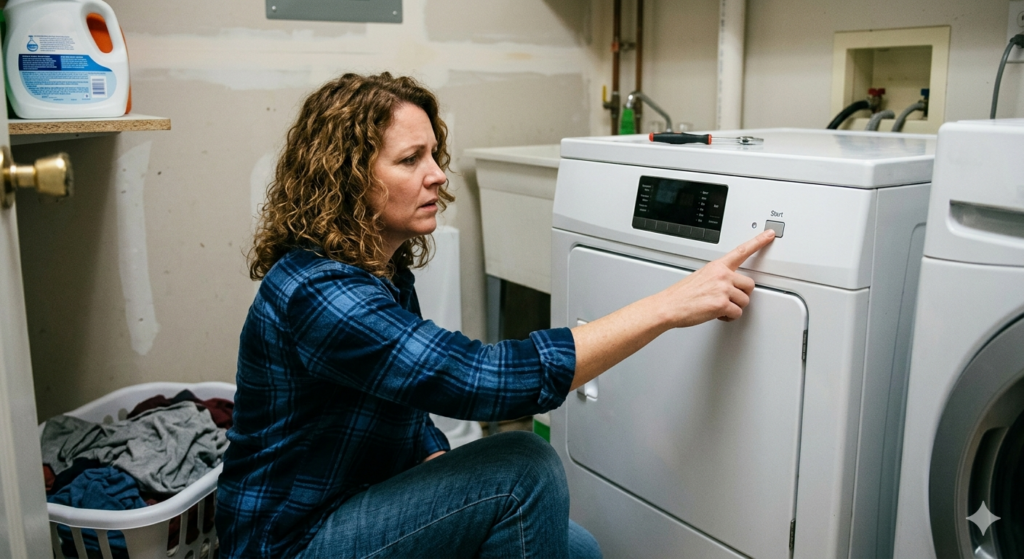
The Start Button: The start button itself might be stuck or broken. Try pressing it firmly a few times. Sometimes a stuck button just needs a little extra pressure to engage. If the button is visibly cracked or broken, it needs replacement.
Wiring and Connections: Inside your dryer, there’s a network of wires and connections. If any of these connections are loose or if wiring is damaged, the electrical circuit is interrupted and the dryer won’t turn on. This is definitely a job for a professional technician who can safely diagnose and repair internal wiring.
The Thermal Overload Protector
Some dryers have a thermal overload protector in addition to the thermal fuse. This is another safety device that cuts power if the dryer gets too hot. Unlike a thermal fuse, a thermal overload protector can sometimes reset itself after cooling down. However, if it keeps tripping, there’s an underlying problem that needs attention.
What to Do If It Keeps Tripping: If your dryer starts briefly then stops, with the thermal overload protector resetting repeatedly, the problem usually traces back to poor ventilation. Clean your dryer vent thoroughly and make sure lint isn’t blocking airflow. Learn more about maintaining your dryer to prevent fire hazards, which includes proper ventilation.
Troubleshooting Steps for a Dryer That Won’t Turn On
If your dryer won’t turn on, follow these steps in order to help identify the problem:
Step 1: Check the Power Make sure the dryer is plugged in and the outlet is working. Test the outlet with another appliance or check your circuit breaker.
Step 2: Inspect the Door Ensure the door closes properly and latches securely. Try opening and closing it several times.
Step 3: Clean the Lint Trap A completely clogged lint trap can sometimes prevent the dryer from running. Remove and clean the trap thoroughly.
Step 4: Check the Vent Make sure the external vent opening isn’t blocked. If you can’t see daylight through it, clean it out.
Step 5: Listen for Sounds When you press the start button, does anything happen? Do you hear any sounds at all? This helps technicians diagnose the problem.
Step 6: Call a Professional If none of these steps work, it’s time to bring in a professional. Internal electrical issues require expertise and specialized tools.
Thermal Fuse Issues: Another Common Culprit
Beyond the power supply, one of the most common reasons a dryer won’t turn on is a blown thermal fuse. The thermal fuse is a safety device designed to prevent your dryer from overheating. When the dryer gets too hot, the fuse blows to shut down the unit. Once it blows, it can’t be reset—it must be replaced.
How to Check the Thermal Fuse: The thermal fuse is located near the blower wheel on your dryer. To check it, you’ll need to unplug your dryer and access the interior panels. This is where things get a bit technical. If you’re not comfortable taking apart your dryer, this is an excellent time to call a professional.
Why It Blows: Thermal fuses blow when your dryer’s vent is clogged. When lint buildup blocks proper airflow, your dryer can’t cool down properly and the internal temperature rises. The thermal fuse detects this dangerous temperature and shuts down the unit to prevent fire.
Vent Blockage: The Hidden Problem Behind Non-Starting Dryers
A blocked vent is one of the most common reasons dryers fail. When your dryer’s exhaust vent becomes clogged with lint, the dryer can’t expel hot air and moisture. This creates a dangerous situation and often triggers the thermal fuse to blow.
Check Your Vent: Go outside to where your dryer vent exits your home. Look for any visible lint buildup or obstructions. If there’s a lot of lint visible at the vent opening, that’s a clear sign your vent needs cleaning.
Professional Vent Cleaning: Cleaning your dryer vent is something homeowners should do regularly—at least once a year, more frequently if you do lots of laundry. A professional dryer vent cleaning service uses specialized equipment to remove deeply embedded lint that a DIY approach might miss.
The Thermal Cut-Off Switch
Another component that can prevent your dryer from turning on is the thermal cut-off switch. This is different from the thermal fuse but serves a similar protective purpose. When the dryer overheats, this switch opens to cut power to the unit.
Unlike the thermal fuse, the thermal cut-off switch can sometimes reset automatically once the dryer cools down. Try unplugging your dryer for 30 minutes to allow it to cool completely, then plug it back in and attempt to start it.
If this doesn’t work and you suspect the thermal cut-off switch is the problem, professional service is your best option.
Don’t Ignore Non-Starting Problems
A dryer that won’t turn on might seem like a minor inconvenience, but it often indicates an underlying safety issue. Most commonly, it’s telling you that your dryer has overheated or your vent is dangerously clogged. Both of these situations need immediate attention.
If you’ve checked the basics—power supply, circuit breaker, and outlet—and your dryer still won’t start, don’t keep trying. Continued attempts might damage components further. Tech Angels in Vancouver provides professional dryer repair services. We can diagnose the exact problem and get your dryer working safely again.
Prevention: Avoid Dryer Problems in the Future
Once you’ve gotten your dryer working again, focus on prevention. Clean your lint trap after every load. Check and clean your vent regularly. Have your dryer serviced annually to catch problems before they become serious. These simple steps will keep your dryer reliable and safe for years to come.
When you do need professional help, Tech Angels is just a call away. We serve Vancouver and surrounding areas with fast, reliable dryer repair service.
The Motor and Drive Belt Issues
Another component that prevents dryers from starting is the motor itself or the drive belt. The drive belt connects the motor to the drum, spinning it during operation. If this belt snaps or wears out, your dryer won’t start because the motor can’t transmit power to the drum.
Visual Inspection: To check your drive belt, you’ll need to access the interior of your dryer, which requires removing panels. This is generally a task for professionals, but you should know that a broken drive belt is one of the most common reasons dryers stop working.
Signs of Belt Failure: If your dryer makes a loud screeching or squealing noise when you try to start it, the belt might be worn. If there’s no noise at all and the drum doesn’t turn, the belt might be completely broken.
Idler Pulley Problems
The idler pulley is a wheel that keeps tension on the drive belt. When this pulley wears out, the belt goes slack and your dryer won’t start properly. The pulley takes constant stress from the spinning motion of the drum.
Like the drive belt, replacing an idler pulley usually requires professional service. However, knowing that this component exists helps you understand what’s happening when your dryer won’t turn on.