What’s Behind That Washing Machine Shake?
You toss a load of laundry in, press start, and walk away—only to come running back when it sounds like a freight train is rolling through your laundry room. An excessively vibrating washing machine is more than just annoying. Left unchecked, it can damage your flooring, loosen plumbing connections, and even shorten the lifespan of the machine itself.
The good news? Most causes of washing machine vibration are surprisingly straightforward to diagnose and fix. In this guide, we’ll walk you through the most common reasons your washer shakes, rattles, and walks across the floor—and exactly what you can do to stop it.
Is Some Vibration Normal?
Before we dive into troubleshooting, let’s set expectations. Every washing machine vibrates to some degree, especially during the spin cycle. The drum spins at high speeds to extract water from your clothes, and that motion naturally produces some movement and noise.
What’s not normal is a washer that:
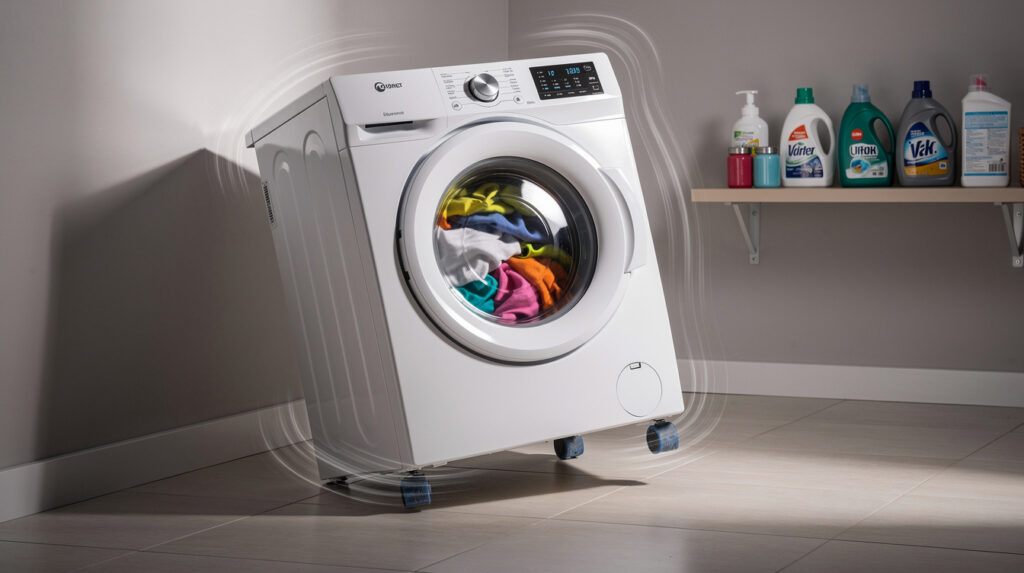
- Moves or “walks” across the floor during a cycle
- Makes loud banging or thumping sounds
- Shakes so hard that items fall off nearby shelves
- Produces a grinding or metallic rattling noise
- Vibrates noticeably more than it used to
If any of those sound familiar, something is off—and it’s worth investigating before a minor issue turns into a costly repair. If you’re noticing other warning signs as well, check out our guide on signs your washing machine needs repair to see if professional service might be in order.
The Most Common Causes of Excessive Washing Machine Vibration
1. The Machine Isn’t Level
This is the number-one cause of washing machine vibration, and it’s also the easiest to fix. If your washer isn’t sitting perfectly level on the floor, it will rock and shake during the spin cycle. Even a small imbalance can amplify dramatically at high spin speeds.
How to check: Place a bubble level (or use the level app on your smartphone) on top of the machine, checking both side-to-side and front-to-back. If the bubble isn’t centered, your washer isn’t level.
How to fix it:
- Most washing machines have adjustable leveling feet. Turn them clockwise to raise that corner or counterclockwise to lower it.
- Have someone gently rock the machine. If it wobbles, adjust the feet until it sits solidly on all four corners.
- Once level, tighten the lock nuts on the feet to keep them from shifting.
- If your floor itself is uneven, consider placing a piece of 3/4-inch plywood under the machine to create a flat surface.
2. Unbalanced Loads
Stuffing all your heavy bath towels on one side of the drum—or washing a single heavy item like a comforter by itself—creates an unbalanced load. When the drum spins, the weight is unevenly distributed, and the machine shakes violently to compensate.
How to fix it:
- Distribute clothes evenly around the drum before starting a cycle.
- Avoid washing a single large, heavy item alone. Add a few towels or similar items to balance the load.
- Don’t overload the machine. A packed drum can’t distribute weight properly.
- Don’t underload it either—a few small items in a large drum can clump together on one side.
A good rule of thumb: fill the drum about three-quarters full, and mix heavy items with lighter ones.
3. Shipping Bolts Are Still Installed
This one catches a lot of people off guard, especially if you’ve recently purchased or moved your washing machine. Most front-load washers (and some top-loaders) come with shipping bolts—metal bolts that lock the drum in place during transport to prevent damage.
If these bolts aren’t removed before you use the machine, the drum can’t move freely on its suspension system. The result? Intense vibration, loud banging, and potential damage to the machine.
How to fix it: Check the back of your washing machine for large bolts (usually 3 to 4 of them). Your owner’s manual will show their exact location. Remove them with a wrench, and keep them in a safe place in case you ever need to move the machine again.
4. Worn or Damaged Shock Absorbers
Front-loading washing machines use shock absorbers (also called dampers or struts) to cushion the drum’s movement during the spin cycle. Over time, these shock absorbers wear out. When they do, nothing is dampening the drum’s motion, and the machine vibrates excessively.
Signs of worn shock absorbers:
- The machine shakes much more than it used to
- You hear loud thumping during spin cycles
- The drum seems to move more freely than it should when you push it by hand
How to fix it: Shock absorbers typically need to be replaced in pairs. While some handy homeowners can tackle this job, it usually involves tilting or partially disassembling the machine. If you’re not comfortable with that, it’s a good idea to call in a professional.
5. Worn Suspension Springs
Top-loading washing machines use suspension springs (or suspension rods) to support the drum. These springs absorb the motion of the drum during agitation and spinning. If one or more springs break or stretch out, the drum sits unevenly and vibrates heavily.
How to check: Open the lid and try pressing down on the drum, then releasing it. If the drum bounces excessively or doesn’t return smoothly to its resting position, a suspension spring may be damaged.
How to fix it: Like shock absorbers, it’s best to replace all suspension springs at once, even if only one is broken. A new spring paired with worn ones will still result in uneven support.
6. Worn Tub Bearings
The tub bearings allow the inner drum to spin smoothly. Over time—especially after years of heavy use—these bearings wear out. When they do, you’ll hear a rumbling or grinding noise, and the machine will vibrate more during spin cycles.
Signs of worn tub bearings:
- A loud rumbling or roaring noise during spinning
- Rust-colored water or stains on your laundry
- The drum feels rough or gritty when you spin it by hand
- Water leaking from the bottom of the machine
How to fix it: Replacing tub bearings is one of the more involved washing machine repairs. It typically requires removing the drum entirely. This is almost always a job for a qualified appliance repair technician.
7. A Damaged or Worn Drive Belt
Some washing machines use a drive belt to connect the motor to the drum. If this belt becomes worn, cracked, or loose, it can cause the drum to spin unevenly, leading to vibration and noise.
Signs of a belt problem:
- A squealing or burning rubber smell during cycles
- The drum spins slower than usual or inconsistently
- Visible cracks or fraying on the belt (if you can access it)
If your washer drum isn’t spinning properly at all, that’s a different but related issue—our article on why your washing machine won’t spin covers the most common causes and quick fixes.
8. The Floor Can’t Support the Machine
This is an often-overlooked cause of washing machine vibration, especially in older homes. If your laundry room has a weak or flexible floor—like an upper-story laundry room with thin subfloor, or a pedestal that isn’t sturdy—the floor itself can amplify the machine’s vibrations.
How to fix it:
- Place the washer on a solid, ground-level surface whenever possible.
- Use anti-vibration pads under the feet. These rubber or foam pads absorb vibrations before they transfer to the floor.
- Consider a plywood platform to distribute the machine’s weight more evenly.
- If the floor is genuinely too weak, you may need to reinforce the subfloor from below.
Quick Fixes You Can Try Right Now
Before calling for service, try these simple steps to reduce or eliminate washing machine vibration:
Adjust the Leveling Feet
Grab a wrench and a level. Spend five minutes getting all four feet perfectly adjusted. This single fix resolves the problem more often than you’d think.
Redistribute the Load
If your washer starts shaking mid-cycle, pause the machine, open it up, and rearrange the clothes so they’re more evenly distributed. Then restart the cycle.
Install Anti-Vibration Pads
These inexpensive rubber pads slip under each foot of your washing machine. They absorb vibrations and help prevent the machine from walking across the floor. You can find them at most home improvement stores for under $30 for a set of four.
Check for Shipping Bolts
If you’ve recently bought or moved your washer, take two minutes to check the back for shipping bolts. Removing them could instantly solve your problem.
Reduce the Spin Speed
Many modern washers let you adjust the spin speed. If vibration is a persistent issue, try lowering the spin speed. Your clothes will come out slightly wetter, but the reduced vibration may be worth the trade-off while you investigate the root cause.
When to Call a Professional
Some vibration issues are easy DIY fixes—leveling the machine, balancing loads, or adding anti-vibration pads. But other causes require professional diagnosis and repair:
- Worn shock absorbers or suspension springs — These require partially disassembling the machine and should be replaced in matching sets.
- Damaged tub bearings — This is a complex repair that involves removing the drum. Attempting it without experience can cause further damage.
- Persistent vibration after trying all DIY fixes — If you’ve leveled the machine, balanced your loads, and installed anti-vibration pads but the problem continues, there’s likely an internal component that needs attention.
- Unusual noises accompanying the vibration — Grinding, squealing, or metallic clanking sounds point to worn parts that need replacement.
At Tech Angels, we see vibrating washing machines on a regular basis across Vancouver, and the fix is often simpler (and more affordable) than homeowners expect. A quick diagnostic visit can pinpoint the exact cause and get your laundry room peaceful again.
Preventing Future Vibration Problems
Once you’ve resolved the immediate issue, a few good habits will help keep your washing machine running smoothly for years to come:
Load Your Washer Properly Every Time
Make it a habit to distribute clothes evenly and avoid overloading. Mix heavy and light items together, and never wash a single bulky item alone.
Check the Leveling Feet Periodically
Vibrations can gradually loosen leveling feet over time. Every few months, give your machine a gentle rock. If it wobbles, re-adjust and tighten the lock nuts.
Keep Up with Regular Maintenance
Cleaning your washing machine regularly, checking hoses for wear, and running maintenance cycles all contribute to smoother operation and a longer machine life. For a complete maintenance routine, our washing machine maintenance guide covers everything you need to know.
Don’t Ignore New Noises
If your washer starts making a sound it hasn’t made before, investigate sooner rather than later. A small issue caught early—like a loose belt—is far cheaper to fix than a major failure like worn bearings.
Use the Right Detergent
This might seem unrelated, but using too much detergent (or the wrong type) can create excess suds that cause the machine to work harder and vibrate more. If you have a high-efficiency (HE) washer, always use HE detergent and follow the recommended amount.
Vibration vs. Other Washing Machine Problems
Sometimes what seems like a vibration problem is actually a symptom of something else entirely. Here’s how to tell the difference:
- Vibration + walking across the floor = Leveling issue or missing anti-vibration pads
- Vibration + loud banging = Unbalanced load or worn shock absorbers
- Vibration + grinding noise = Worn tub bearings
- Vibration + burning smell = Worn drive belt
- Vibration + water leaking = Possible bearing failure or loose connections
- Vibration only on spin cycle = Most likely a balance or suspension issue
Identifying the specific combination of symptoms helps narrow down the cause and determines whether it’s a DIY fix or a job for a technician.
The Bottom Line
A washing machine that vibrates excessively isn’t just a nuisance—it’s a sign that something needs attention. The good news is that most causes are well-understood and fixable. Start with the simple stuff: check that your machine is level, balance your loads properly, and look for any shipping bolts that might still be installed. If those basic checks don’t solve the problem, it’s likely time to look at internal components like shock absorbers, suspension springs, or bearings.
Whatever the cause, addressing washing machine vibration sooner rather than later protects your machine, your flooring, and your peace of mind. And if you need a hand diagnosing or fixing the issue, the Tech Angels team is always happy to help homeowners across the Vancouver area get their appliances back to smooth, quiet operation.