What Does a Dishwasher Pump Do?
Before we dive into the warning signs of a failing dishwasher pump, let’s quickly cover what this critical component actually does. Your dishwasher has two main pumps — or in some models, a single pump that serves both functions — that keep water circulating and draining during every cycle.
The circulation pump (also called the wash pump) pressurizes water and forces it through the spray arms, which is what actually cleans your dishes. The drain pump removes dirty water from the dishwasher at the end of each wash and rinse cycle, pushing it through the drain hose and into your home’s plumbing.
When either pump starts failing, you’ll notice problems with cleaning performance, drainage, or both. Catching these issues early can save you from a much bigger mess — literally — down the road.
Warning Signs Your Dishwasher Pump Is Failing
A dishwasher pump rarely fails without giving you some advance warning. Here are the most common signs that your dishwasher pump is on its way out.
1. Standing Water at the Bottom of the Dishwasher
This is one of the most obvious signs of a drain pump problem. If you open your dishwasher after a cycle and find a pool of water sitting at the bottom of the tub, the drain pump may not be working properly. A small amount of water in the sump area is normal, but an inch or more of standing water is a clear sign that something is wrong.
Before blaming the pump, it’s worth checking for simpler causes like a clogged filter or blocked drain hose. If you’ve already ruled those out, our guide on dishwasher not draining troubleshooting covers the full diagnostic process. If those simpler fixes don’t resolve the problem, the drain pump itself is likely the culprit.
2. Unusual Noises During the Wash Cycle
A healthy dishwasher pump operates with a steady, quiet hum. When a pump starts failing, you’ll often hear sounds that are hard to ignore.
- Grinding or rattling: This usually indicates debris caught in the pump impeller, or an impeller with broken or worn blades. Small pieces of glass, bone, or food particles can get past the filter and jam the impeller.
- Loud buzzing or humming: A pump motor that buzzes loudly but doesn’t move water effectively may have a seized bearing or a burned-out winding. The motor is trying to run but can’t.
- Squealing or whining: Worn bearings in the pump motor can produce a high-pitched squeal, especially during startup. This usually gets worse over time.
- Clicking or tapping: This can indicate a loose or damaged impeller that’s hitting against the pump housing as it tries to spin.
Pay attention to when the noises occur. If they happen primarily during the wash cycle, the circulation pump is likely the issue. If they occur during draining, focus on the drain pump.
3. Dishes Coming Out Dirty
If your dishes are consistently coming out with food residue, spots, or a film — even when you’re loading them properly and using quality detergent — the circulation pump may not be generating enough water pressure to clean effectively.
A failing circulation pump can’t push water through the spray arms with enough force to dislodge food particles. You might notice that items on the top rack are especially poorly cleaned, since water pressure needs to be strong enough to reach the upper spray arm.
However, dirty dishes can also result from clogged spray arms, a faulty water inlet valve, or water temperature issues. Rule out these simpler causes before concluding the pump is failing.
4. Water Leaking from the Bottom of the Dishwasher
A failing pump can develop leaks around its housing, seals, or connections. If you notice water pooling under or around your dishwasher, the pump seals may have worn out. This is a sign you should act on quickly — persistent leaks can damage your kitchen flooring, subfloor, and cabinetry.
Pump leaks can sometimes be confused with other sources, like a leaking door gasket, a cracked hose, or a loose connection. Our guide on dishwasher leaking from the bottom can help you identify the exact source of the leak.
5. The Dishwasher Won’t Start or Stops Mid-Cycle
Modern dishwashers have sensors that detect pump operation. If the control board senses that the pump isn’t running or isn’t generating adequate pressure, it may prevent the cycle from starting or shut it down mid-cycle as a safety measure.
If your dishwasher repeatedly starts and stops, or if it advances through the cycle but skips the wash phase entirely, a pump failure could be the reason. The control board may also display an error code — check your owner’s manual to decode any error messages.
6. Slow or Incomplete Draining
A drain pump that’s on its last legs may still work, but not well enough. You might notice that draining takes much longer than usual, or that there’s always a bit of water left behind after the cycle completes. This partial functionality often means the pump motor is weakening or the impeller is partially obstructed.
7. Burning Smell
If you detect a burning or electrical smell coming from your dishwasher, turn it off immediately. A failing pump motor can overheat, and in some cases, this can damage the motor windings or even pose a fire risk. This is not a wait-and-see situation — unplug the dishwasher and call a professional.
What Causes Dishwasher Pumps to Fail?
Understanding what causes pump failure can help you prevent it — or at least extend the life of your pump. Here are the most common causes.
Normal Wear and Tear
Like any mechanical component, dishwasher pumps have a finite lifespan. The motor bearings wear down, seals degrade, and impeller blades can erode over time. Most dishwasher pumps last 7 to 12 years with regular use, which often aligns with the overall lifespan of the dishwasher itself.
Debris and Foreign Objects
Small items like broken glass, fruit pits, bones, toothpicks, label fragments, and other debris can make their way past the filter and into the pump. These objects can jam the impeller, damage the blades, or lodge in the pump housing, causing it to work harder and fail sooner.
This is why it’s important to scrape (but not necessarily pre-rinse) dishes before loading them, and to regularly clean the dishwasher filter.
Hard Water Mineral Buildup
In areas with hard water, mineral deposits can accumulate inside the pump, on the impeller, and in the water passages. Over time, this buildup restricts water flow and puts additional strain on the pump motor. Using a dishwasher cleaner or adding a rinse aid can help minimize mineral buildup.
Electrical Issues
Power surges, faulty wiring, or control board malfunctions can damage the pump motor. If your dishwasher has experienced power issues — such as tripping a breaker or being affected by a lightning strike — the pump motor may have been compromised.
Running Dry
If the dishwasher runs without sufficient water (due to a faulty water inlet valve or a plumbing issue), the pump can overheat and burn out. The pump relies on water for both lubrication and cooling, so running dry even once can cause significant damage.
How to Inspect Your Dishwasher Pump
If you suspect a pump problem, here’s how to inspect it yourself before calling for service.
Step 1: Safety First
Turn off the dishwasher and unplug it from the electrical outlet, or switch off the circuit breaker. You’ll be working near electrical components and water, so safety is paramount.
Step 2: Check the Filter and Sump Area
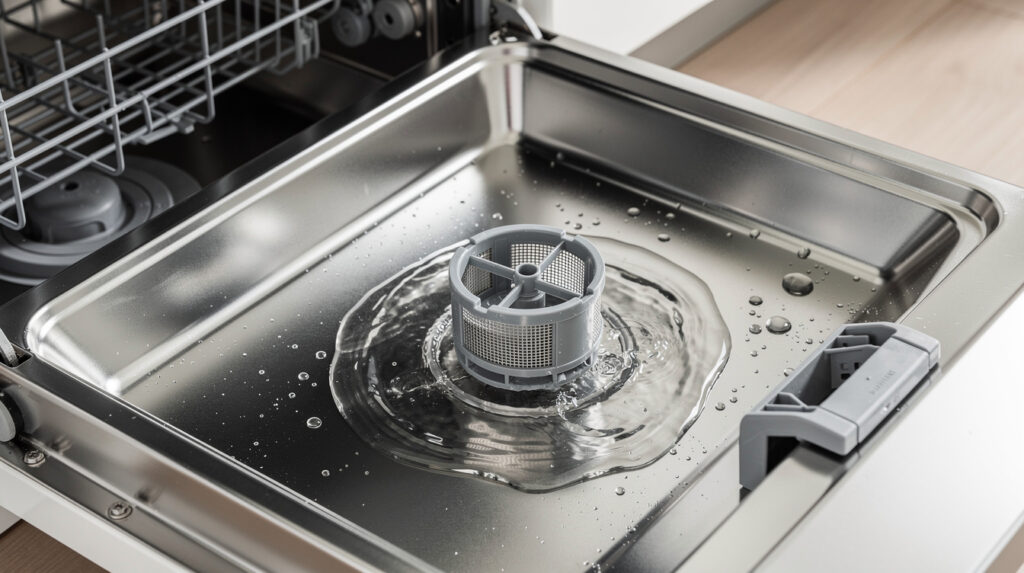
Remove the bottom dish rack and the spray arm (usually twists off counterclockwise). Remove the filter assembly, which is typically located at the bottom center of the tub. Clean the filter thoroughly and inspect the sump area for debris, broken glass, or any objects that shouldn’t be there.
Step 3: Listen to the Pump
Reassemble everything, plug the dishwasher back in, and start a cycle. Listen carefully to the pump. A normal pump produces a steady, quiet hum. Grinding, buzzing, or squealing sounds indicate a problem.
Step 4: Access the Pump (Advanced)
For a more thorough inspection, you’ll need to access the pump from underneath the dishwasher. This typically requires:
- Turning off power and water supply to the dishwasher.
- Removing the kick plate (the panel at the bottom front).
- Locating the pump assembly — it’s usually connected to the bottom of the tub with mounting brackets and connected to the drain hose.
- Looking for visible signs of leakage, damage, or corrosion on the pump housing and connections.
- Checking the pump motor connections for burned wires or loose terminals.
If you find signs of leaking from the pump seals, visible damage to the pump housing, or burned electrical connections, the pump likely needs replacement.
Repair vs. Replacement: What Makes Sense?
When facing a dishwasher pump failure, the big question is whether to repair the pump, replace the pump, or replace the entire dishwasher. Here’s how to think about it.
When to Replace Just the Pump
- The dishwasher is less than 8 years old and otherwise in good condition.
- The pump is the only component with issues.
- The replacement pump part is readily available for your model.
- The cost of the pump replacement (parts and labor) is significantly less than a new dishwasher.
A typical dishwasher pump replacement costs $150 to $400 including parts and labor, depending on the brand and model. For a dishwasher that’s relatively new and otherwise functioning well, this is usually a worthwhile repair.
When to Consider Replacing the Dishwasher
- The dishwasher is more than 10 years old.
- Multiple components are failing (not just the pump).
- The repair cost exceeds 50 percent of the price of a comparable new dishwasher.
- Replacement parts are difficult to find or discontinued.
- The dishwasher has had previous major repairs.
If you’re dealing with a pump failure on a dishwasher that also has a leaking tub, a failing control board, or rusty racks, the combined repair costs may exceed the value of the appliance. For a thorough look at this decision, check out our comprehensive guide on fixing a leaky dishwasher to determine how many issues are in play.
Can You Replace a Dishwasher Pump Yourself?
Replacing a dishwasher pump is a moderate-difficulty repair that a confident DIYer can handle with basic tools. However, it does involve working with electrical connections and plumbing, so proceed with caution.
What You’ll Need
- Replacement pump (make sure it matches your exact dishwasher model)
- Screwdrivers (Phillips and flathead)
- Pliers or channel locks
- Towels and a shallow pan for catching water
- A multimeter (optional, for testing electrical continuity)
General Process
- Disconnect power and water supply.
- Remove the dishwasher from under the counter (you’ll need access to the bottom).
- Lay the dishwasher on its back or side to access the pump from underneath.
- Disconnect the drain hose and electrical connections from the old pump.
- Remove the mounting screws or clips that hold the pump in place.
- Install the new pump, reconnect the drain hose and electrical connections.
- Reinstall the dishwasher, reconnect water and power.
- Run a test cycle to verify the new pump works properly and there are no leaks.
The entire process typically takes one to two hours for someone comfortable with appliance repair. If you’re not confident working with electrical connections or pulling out the dishwasher, this is definitely a job for a professional.
Maintaining Your Dishwasher Pump for Longer Life
Regular maintenance can significantly extend the life of your dishwasher pump and help you avoid premature failure.
Clean the Filter Regularly
Your dishwasher filter is the pump’s first line of defense against debris. Clean it at least once a month — more often if you use the dishwasher daily or don’t pre-scrape dishes. A clean filter means less debris reaches the pump, reducing wear on the impeller and motor.
Scrape Dishes Before Loading
You don’t need to pre-rinse dishes (modern detergents actually work better with some food soil to cling to), but do scrape off large food particles, bones, toothpicks, and stickers. These are the items most likely to cause pump damage.
Run Hot Water Before Starting
Run the kitchen faucet until the water is hot before starting your dishwasher. This ensures the dishwasher starts with hot water, which helps dissolve detergent and food particles more effectively, reducing the workload on the pump.
Use the Right Detergent
Always use detergent specifically designed for dishwashers. Regular dish soap creates excessive suds that can interfere with pump operation and potentially damage seals. Use the recommended amount — more is not better.
Run a Monthly Cleaning Cycle
Once a month, run an empty dishwasher on the hottest cycle with a cup of white vinegar placed in a measuring cup on the top rack, or use a commercial dishwasher cleaner. This helps dissolve mineral buildup and grease that can affect pump performance.
Check Spray Arms Periodically
Clogged spray arm holes can create back pressure that strains the circulation pump. Remove the spray arms every few months and clean out any mineral deposits or debris from the spray holes using a toothpick or thin wire.
When to Call a Professional
While some dishwasher pump issues can be diagnosed and even fixed by handy homeowners, there are situations where professional help is the smart choice.
- You smell something burning: A burning smell from the dishwasher means the pump motor may be overheating. Stop using the dishwasher immediately and get professional help.
- Water is leaking significantly: A small amount of moisture is one thing, but active leaking from the pump area can cause water damage to your flooring and cabinets if not addressed quickly.
- The dishwasher displays error codes: Error codes related to the pump or motor usually require professional diagnostic equipment to properly identify and resolve.
- You’re not comfortable with the repair: Dishwasher pump replacement involves electrical work, plumbing, and heavy lifting. There’s no shame in calling a pro.
- The dishwasher is under warranty: If your dishwasher is still under manufacturer or extended warranty, attempting a DIY repair may void the warranty. Check your coverage before touching anything.
If you’re in Vancouver or the surrounding area and need a dishwasher pump diagnosis or replacement, Tech Angels can help. Our technicians work with all major dishwasher brands and can quickly determine whether your pump needs repair, replacement, or if a different issue is at play.
Cost Breakdown for Dishwasher Pump Repairs
Here’s what you can generally expect to pay for dishwasher pump-related repairs:
- Drain pump replacement: $100 to $250 for the part. With professional labor, expect $200 to $400 total.
- Circulation pump replacement: $150 to $350 for the part. Professional repair typically runs $300 to $550 total.
- Pump motor replacement: Some models allow motor-only replacement at $80 to $200 for the part, with total repair costs of $180 to $350.
- Pump seal replacement: If only the seals are leaking, replacement seals cost $10 to $40, with professional installation running $100 to $200 total.
Compare these costs against the price of a new dishwasher, which typically ranges from $400 to $1,200 for a quality mid-range unit. In many cases, pump repair makes financial sense, especially for newer or high-end dishwashers.
Final Thoughts
Your dishwasher pump is a critical component that you probably never think about — until it fails. By knowing the warning signs of a failing dishwasher pump — standing water, unusual noises, poor cleaning, leaks, and mid-cycle shutdowns — you can catch problems early and avoid the inconvenience and potential water damage of a complete failure.
Regular maintenance is your best defense. Keep the filter clean, scrape dishes before loading, and run a monthly cleaning cycle. These simple habits can add years to your pump’s life and keep your dishwasher running at peak performance.
If you’re experiencing any of the symptoms described in this article, start with the basic troubleshooting steps — clean the filter, check for debris, and inspect the pump area for leaks. If the problem persists or you’re not comfortable digging deeper, call a professional appliance repair technician who can diagnose the issue accurately and recommend the most cost-effective solution.