Why Dryer Settings Actually Matter
Most of us have a simple dryer routine: throw everything in, press start, and hope for the best. But if you have ever pulled out a shrunken sweater, a wrinkled dress shirt, or a load of clothes that feels stiff and rough, you already know that the one-size-fits-all approach does not work. The dryer settings you choose have a direct impact on the longevity of your clothing, your energy bills, and the lifespan of the dryer itself.
Modern dryers come with an impressive array of settings and cycles, but very few owners take the time to learn what they all do. Understanding your dryer settings is not complicated once you know the basics, and the payoff is significant: clothes that look better, last longer, and feel softer. Plus, using the correct settings reduces energy consumption and puts less wear on the machine.
In this guide, we will break down every dryer setting and cycle you are likely to encounter, explain what each heat level does to different fabrics, and give you practical recommendations for drying everything from heavy cotton towels to delicate silk blouses.
Understanding Heat Levels
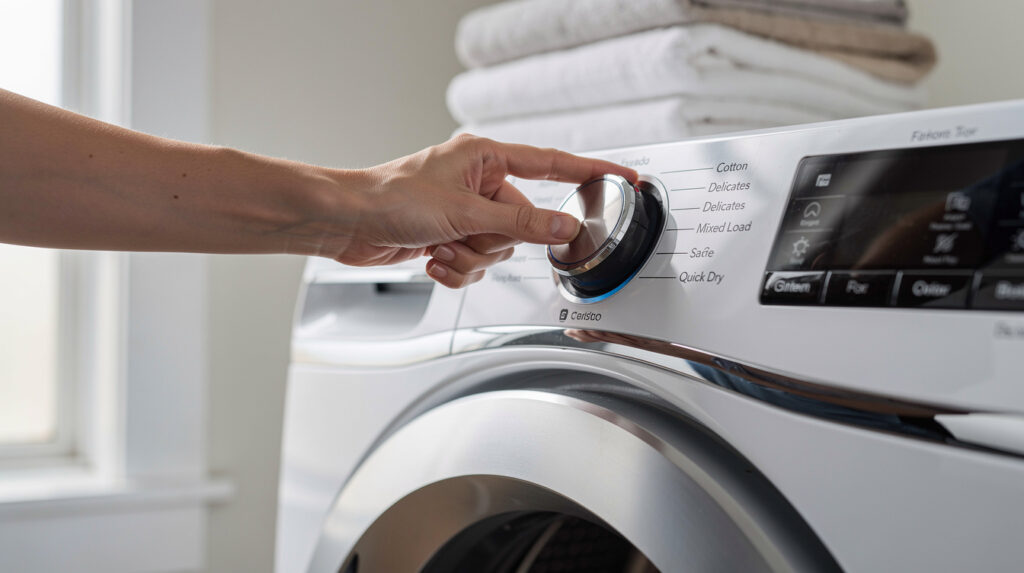
The heat setting is the most important choice you make when using your dryer. Different heat levels serve different purposes, and using the wrong one is the primary cause of dryer-related clothing damage.
High Heat
High heat is the most aggressive drying setting, typically reaching temperatures between 130 and 150 degrees Fahrenheit (54 to 66 degrees Celsius). This setting is designed for heavy, durable fabrics that can withstand intense heat without damage. Use high heat for thick cotton items like towels, jeans, heavy sweatshirts, and cotton sheets. These items are dense and hold a lot of moisture, so they benefit from the higher temperature to dry efficiently.
However, high heat is also the setting most likely to cause shrinkage, fading, and damage to elastic fibers. It uses the most energy and puts the most wear on your dryer’s heating element. For these reasons, reserve high heat for items that genuinely need it.
Medium Heat
Medium heat, sometimes labeled as “permanent press” or “wrinkle control,” operates in the range of 120 to 135 degrees Fahrenheit (49 to 57 degrees Celsius). This is the most versatile setting on your dryer and is appropriate for the majority of everyday clothing. It provides enough heat to dry clothes efficiently while being gentle enough to minimize shrinkage and wrinkle formation.
Use medium heat for cotton and cotton-blend casual clothing like t-shirts, polo shirts, casual pants, and light sweatshirts. It is also a good choice for synthetic blends, polyester, and nylon items that are not specifically labeled as delicate.
Low Heat
Low heat settings, often labeled “delicate” or “gentle,” typically range from 100 to 125 degrees Fahrenheit (38 to 52 degrees Celsius). This is the appropriate setting for fabrics that are sensitive to heat, including lightweight synthetics, spandex or elastane blends, activewear, lingerie, and loosely woven fabrics. Low heat takes longer to dry clothes, but it significantly reduces the risk of heat damage, shrinkage, and deterioration of elastic fibers.
Air Dry or No Heat
The air dry or fluff setting uses no heat at all, only the tumbling action of the drum and room-temperature air. This setting is ideal for items that should not be exposed to any heat, such as rubber-backed mats, items with embellishments or screen prints, shoes (if your dryer is designed for them), and items you just want to freshen up or de-wrinkle without washing.
Air dry is also useful for finishing the drying process on items you have partially air-dried on a rack, removing dust from items that have been in storage, and fluffing pillows and comforters.
Cycle Types Explained
Beyond heat levels, dryers offer different cycle types that control how long the dryer runs and how it manages the drying process.
Timed Dry
Timed dry runs the dryer at your selected heat level for a fixed amount of time that you set. The dryer does not sense whether the clothes are dry; it just runs until the timer expires. This gives you maximum control but requires you to estimate how long the load needs. The risk with timed dry is overdrying, which wastes energy, causes unnecessary wear on fabrics, and can make clothes feel stiff or develop static cling.
Sensor Dry
Sensor dry uses moisture sensors inside the drum (usually metal strips on the front or back of the drum) to detect how much moisture remains in the clothes. When the sensors determine that the clothes have reached the desired dryness level, the dryer automatically shuts off. This is generally the better choice for most loads because it prevents overdrying and saves energy.
For sensor dry to work properly, the sensors must be clean. Dryer sheet residue, fabric softener buildup, and lint can coat the sensors and cause them to misread moisture levels, leading to the dryer stopping too early or running too long. Wipe the sensor strips with rubbing alcohol and a soft cloth every few months to keep them accurate.
Permanent Press Cycle
The permanent press cycle uses medium heat for the main drying phase, then switches to a cool-down period with no heat for the last several minutes. The cool-down helps relax the fibers in the fabric and reduces wrinkle formation. This cycle is excellent for dress shirts, blouses, slacks, and any clothing you want to look neat without extensive ironing.
Delicates Cycle
The delicates cycle combines low heat with reduced tumbling speed (in some dryer models) and a shorter total cycle time. It is designed for fabrics that can handle gentle tumble drying but not full heat or vigorous movement. Use it for lingerie, hosiery, lightweight knits, and anything labeled “tumble dry low” on the care tag.
Heavy Duty Cycle
This cycle uses high heat and an extended drying time, designed for heavy loads like towels, bedding, and work clothes. It is the most aggressive cycle and should be reserved for items that are both heavy and durable. Using the heavy duty cycle on regular clothing will cause unnecessary wear and shrinkage.
Dryer Settings for Specific Fabrics
Here is a practical fabric-by-fabric guide to help you choose the right dryer settings every time.
Cotton
Cotton is durable and handles heat well, but it is also the fabric most prone to shrinkage. For heavy cotton items like towels and jeans, use high heat. For everyday cotton clothing like t-shirts and casual shirts, medium heat is the better choice to balance drying efficiency with shrinkage prevention. Always remove cotton items promptly when the cycle ends to prevent wrinkles from setting in.
Polyester and Synthetic Fabrics
Synthetic fabrics dry quickly because they do not absorb as much water as natural fibers. Use medium or low heat for polyester, nylon, and acrylic fabrics. High heat can cause synthetics to pill, develop a shiny appearance, or even melt in extreme cases. Most synthetics also generate more static cling than natural fibers, so using a lower heat setting and removing items while they are still very slightly damp can help reduce static.
Cotton-Polyester Blends
Blended fabrics are common in everyday clothing and respond well to medium heat with a permanent press cycle. The cool-down period at the end of the cycle is particularly beneficial for blends, as it helps the different fibers relax at compatible rates, reducing wrinkles.
Wool
Wool requires extreme caution in the dryer. Most wool items should be air-dried flat to prevent stretching and shrinkage. If you must use the dryer, use only the air dry or no heat setting for a very short time to fluff the item. Never use heat on wool unless the care label specifically says it is safe. Even low heat can cause wool to felt and shrink irreversibly.
Silk
Silk should generally not go in the dryer at all. The tumbling action and any level of heat can damage the delicate fibers, causing pilling, loss of sheen, and distortion of the fabric. If the care label permits tumble drying, use air dry only. Otherwise, lay silk items flat or hang them to dry.
Linen
Linen can handle medium heat, but it wrinkles very easily. Remove linen items from the dryer while they are still slightly damp and either hang them or lay them flat to finish drying. Using the permanent press cycle is a good choice for linen, as the cool-down phase helps minimize wrinkles.
Activewear and Performance Fabrics
Most activewear is made from synthetic moisture-wicking fabrics like polyester blends, spandex, and nylon. These materials dry quickly and are sensitive to heat, which can break down the moisture-wicking and stretch properties. Use low heat or air dry for all activewear. Avoid dryer sheets with activewear, as the coating they leave on fabrics can interfere with moisture-wicking performance.
Down and Down-Alternative
Drying down jackets, comforters, and pillows requires a specific approach. Use low heat and add two or three clean tennis balls or dryer balls to the load. The balls help break up clumps of down as it dries, ensuring even drying and restoring the item’s loft. Plan for a long drying time, as down items hold a lot of moisture and need to be completely dry to prevent mold and mildew growth inside.
Denim
Jeans and denim jackets can handle medium to high heat, but if you want to preserve the color and minimize shrinkage, turn denim items inside out and use medium heat. Remove jeans from the dryer while they are still slightly damp and hang them to finish drying. This helps maintain the fit and prevents the stiff, crunchy feel that comes from overdrying.
Wrinkle Prevention Strategies
Wrinkles form in the dryer when fabrics sit in a hot, tangled heap after the cycle ends. Here are effective strategies to keep your clothes wrinkle-free.
- Remove clothes from the dryer immediately when the cycle ends. Most dryers have an end-of-cycle signal for this reason.
- Do not overload the dryer. Clothes need room to tumble freely, and an overstuffed dryer creates wrinkles and uneven drying.
- Use the permanent press cycle for wrinkle-prone fabrics. The cool-down period makes a significant difference.
- If you cannot attend to the dryer right away, use the wrinkle guard or extended tumble feature if your dryer has one. This continues to tumble the clothes periodically without heat to prevent wrinkles from setting.
- Shake out each item before putting it in the dryer to prevent tangling.
Energy-Saving Dryer Tips
Your dryer is one of the most energy-intensive appliances in your home. These strategies can help reduce your energy consumption without sacrificing drying performance.
Use Sensor Dry Instead of Timed Dry
Sensor dry automatically stops when clothes are dry, preventing the wasted energy of overdrying. This alone can save a noticeable amount on your electricity bill over time.
Clean the Lint Filter Before Every Load
A clogged lint filter restricts airflow, which forces the dryer to work harder and run longer. Cleaning the filter before every load improves efficiency and also reduces the fire risk associated with lint buildup. In Vancouver, where many homes use electric dryers, a clean lint filter can noticeably reduce cycle times and energy consumption.
Dry Similar Fabrics Together
Mixing heavy towels with lightweight t-shirts means the lighter items are done long before the heavy ones, leading to overdrying of some items and wasted energy. Sort your laundry into loads of similar fabric weight and type for the most efficient drying.
Use Dryer Balls Instead of Dryer Sheets
Wool or rubber dryer balls separate clothes in the drum, improving airflow and reducing drying time. Unlike dryer sheets, they are reusable (lasting for hundreds of loads), do not leave a residue on your clothes or the dryer’s moisture sensors, and they reduce both static and wrinkles naturally.
Do Not Overdry Your Clothes
Overdrying wastes energy and damages fabrics. If you are using timed dry, start with a shorter time than you think you need and check. Most items should be removed from the dryer while they still have a very slight hint of moisture, as they will finish drying in the ambient air within minutes.
When Your Dryer Settings Are Not Working Right
If you are choosing the correct dryer settings but your clothes are still not drying properly, coming out too hot, or the dryer is running excessively long cycles, there may be an issue with the dryer itself.
Common Issues
- A clogged dryer vent restricts airflow and makes the dryer work much harder than it should. Have your dryer vent cleaned at least once a year, more often if you do a lot of laundry.
- A failing heating element can cause the dryer to produce too much heat on lower settings or not enough heat on any setting.
- Worn drum seals allow heat to escape, increasing drying times and energy use.
- Faulty moisture sensors can cause sensor dry cycles to end too early or run too long.
- A malfunctioning thermostat can prevent the dryer from regulating temperature correctly.
If you suspect a mechanical issue with your dryer, it is worth having it inspected. The technicians at Tech Angels can diagnose and repair dryer problems to ensure your settings are working as intended and your machine is running safely and efficiently.
Reading Care Labels
When in doubt, the care label on your clothing is your best resource. Here is a quick guide to the most common dryer-related care symbols.
- A square with a circle inside means the item can be tumble dried.
- One dot inside the circle means low heat.
- Two dots mean medium heat.
- Three dots mean high heat.
- An empty circle means any heat setting is acceptable.
- A filled-in circle means no heat or air dry only.
- An X through the symbol means do not tumble dry.
Taking a moment to check the care label before loading the dryer might seem tedious, but it can save you from ruining a favorite garment. When care labels are missing or faded, default to a lower heat setting to be safe.
Making the Most of Your Dryer
Choosing the right dryer settings is a small habit change that yields real results. Your clothes will look better, last longer, and feel more comfortable. Your dryer will run more efficiently and with less wear. And your energy bills will reflect the improvement. Take a few seconds before each load to think about what is in the drum and which settings will serve those fabrics best. Your wardrobe and your wallet will thank you.
Related Articles
Explore more appliance care tips from the Tech Angels blog: