What Are Dryer Sheets Actually Doing Inside Your Dryer?
If you have been tossing a dryer sheet into every load of laundry for years, you are not alone. Dryer sheets are one of the most popular laundry products on the market, and most people never think twice about using them. They smell great, they reduce static cling, and they make your towels feel soft. What is not to love?
Well, quite a lot, actually. Behind that fresh-linen scent, dryer sheets are doing things to your dryer that you probably never considered. The waxy coating that makes your clothes feel soft is the same substance that can gradually coat your lint screen, clog your dryer vent, and reduce the efficiency of your machine over time.
In this article, we will walk you through exactly how dryer sheets work, the damage they can cause to your dryer, and some easy alternatives that are gentler on your machine and your wallet. Think of this as the honest conversation about dryer sheets that nobody ever has.
How Dryer Sheets Work: The Chemistry Behind the Softness
Dryer sheets are thin, nonwoven polyester sheets coated with a mixture of fatty acids, fragrances, and a quaternary ammonium compound. When heat from the dryer melts this coating, it transfers onto your clothes. The fatty acids act as a lubricant between fabric fibers, which is what makes everything feel softer. The quaternary ammonium compounds neutralize static electricity by balancing the positive and negative charges that build up when fabrics tumble together.
That all sounds perfectly fine, right? The problem is that this waxy, chemical-laden coating does not just stay on your clothes. It also deposits on every surface inside your dryer, including the lint screen, the drum, the moisture sensors, and even the inside of your dryer vent.
Over time, this residue builds up and starts causing real problems. Let us look at what those problems are.
The Hidden Damage Dryer Sheets Cause to Your Dryer
Clogged Lint Screen
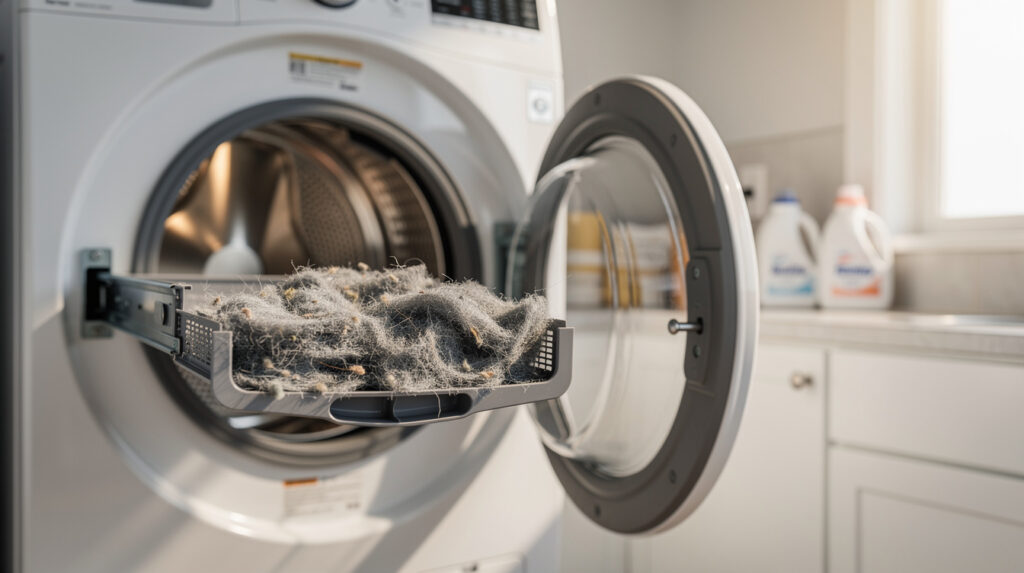
This is the biggest issue, and it is one most people never notice. Run your lint screen under water. If the water pools on top instead of flowing through, you have a film buildup from dryer sheets. Even if you clean the lint off your screen after every load (which you should), that invisible waxy residue is still there, blocking airflow.
Reduced airflow means your dryer has to work harder and run longer to dry your clothes. If you have noticed that your dryer takes too long to dry your clothes, dryer sheet residue on your lint screen could be a major contributor.
Coated Moisture Sensors
Modern dryers use moisture sensors to detect when your clothes are dry. These sensors are usually two small metal strips inside the drum. When fabric touches them, the dryer measures the moisture content and decides whether to keep running or shut off.
When dryer sheet residue coats these sensors, they cannot get an accurate reading. Your dryer may shut off too early, leaving clothes damp, or it may run far longer than necessary, wasting energy and putting extra wear on your machine. If your dryer seems confused about when clothes are actually dry, dirty moisture sensors could be to blame.
Restricted Dryer Vent
The waxy residue from dryer sheets does not just stay inside the dryer. It travels into your dryer vent along with lint and warm air. Over time, this residue combines with lint to create a thick, sticky buildup inside the vent that is much harder to clean than regular lint alone.
A restricted dryer vent is more than just an inconvenience. It is a genuine safety hazard. According to the National Fire Protection Association, failure to clean dryer vents is the leading cause of dryer fires. If you want to learn more about keeping your dryer safe, check out our guide on how to maintain your dryer and prevent fire hazards.
Reduced Heating Efficiency
When airflow is restricted because of lint screen film and vent buildup, your dryer’s heating element has to work overtime. This does not just mean higher energy bills. It also means more wear and tear on the heating element itself, which can shorten its lifespan significantly.
If your dryer is not heating properly, the root cause might not be a failed component at all. It could be months or years of dryer sheet residue reducing your machine’s ability to circulate hot air effectively.
Damage to Certain Fabrics
This one is not about your dryer, but it is worth mentioning. Dryer sheets can actually damage certain fabrics. The waxy coating reduces the absorbency of towels over time, which is ironic since most people use dryer sheets specifically to make their towels feel soft. That soft feeling comes at the cost of the towel actually doing its job.
Dryer sheets can also damage moisture-wicking athletic wear, microfiber cloths, and flame-resistant clothing. The chemical coating interferes with the special properties of these fabrics, reducing their effectiveness or even creating a safety risk in the case of flame-resistant garments.
Signs That Dryer Sheet Residue Is Already Causing Problems
You might already be dealing with dryer sheet damage without realizing it. Here are some common signs to watch for:
- Longer drying times — If loads that used to take 45 minutes now take over an hour, residue buildup is likely restricting airflow.
- Clothes still damp after a full cycle — Coated moisture sensors may be telling your dryer to stop before clothes are actually dry.
- Dryer feels excessively hot to the touch — Restricted airflow causes heat to build up inside the machine instead of venting properly.
- Musty smell on clothes — When clothes take too long to dry, they can develop a damp, musty odor.
- Lint screen water test fails — If water does not flow through your lint screen freely, you have a film problem.
- Towels are not as absorbent as they used to be — The waxy coating from dryer sheets reduces towel absorbency over time.
- Higher energy bills — A dryer that runs longer and works harder costs more to operate.
How to Clean Dryer Sheet Residue from Your Dryer
If you have been using dryer sheets for a while, it is a good idea to do a thorough cleaning of your dryer to remove any built-up residue. Here is how to tackle each area:
Cleaning the Lint Screen
Remove the lint screen and brush off any visible lint. Then wash it with warm water and a small amount of dish soap using a soft brush or old toothbrush. Scrub both sides gently and rinse thoroughly. Let it air dry completely before putting it back in. Do this once a month if you have been a regular dryer sheet user.
Cleaning the Moisture Sensors
Locate the moisture sensors inside your dryer drum. They are usually two curved metal strips near the lint screen opening or on the back wall of the drum. Dampen a cotton ball or soft cloth with rubbing alcohol and gently wipe each sensor clean. This should be done every few months to keep your dryer cycling accurately.
Cleaning the Drum
Wipe the inside of the drum with a cloth dampened with a mixture of warm water and a small amount of dish soap. For stubborn residue, a paste of baking soda and water works well. Wipe it clean with a damp cloth afterward and run an empty cycle for a few minutes to dry the drum.
Cleaning the Dryer Vent
Disconnect the dryer vent hose from the back of the dryer and use a vent cleaning brush to remove lint and residue from both the hose and the wall vent. For long vent runs, consider hiring a professional vent cleaning service. This should be done at least once a year, and more often if you notice signs of restricted airflow.
Better Alternatives to Dryer Sheets
The good news is that there are several alternatives to dryer sheets that work just as well, without leaving harmful residue in your dryer. Here are the best options:
Wool Dryer Balls
Wool dryer balls are hands down the most popular alternative to dryer sheets, and for good reason. They are reusable, chemical-free, and actually work. Toss three to six wool dryer balls into your dryer with each load. They tumble between your clothes, separating fabrics and improving airflow, which helps clothes dry faster. They also reduce static by absorbing moisture and preventing fabrics from sticking together.
Wool dryer balls can last for over a thousand loads, making them incredibly cost-effective. If you want a light scent, add a few drops of your favorite essential oil to one of the balls before tossing it in the dryer.
Aluminum Foil Balls
This is a surprisingly effective trick for reducing static cling. Tear off a sheet of aluminum foil, crumple it into a tight ball about the size of a tennis ball, and toss it in the dryer. The foil discharges static electricity as it tumbles with your clothes. A single foil ball can last for several months before it needs to be replaced.
Foil balls will not soften your clothes, but they do a great job of eliminating static without leaving any residue on your dryer components.
White Vinegar in the Wash
Adding half a cup of white vinegar to your washing machine’s rinse cycle is a natural fabric softener that leaves no residue. Vinegar breaks down detergent residue and mineral deposits in fabric fibers, which is what makes clothes feel stiff in the first place. Do not worry, your clothes will not smell like vinegar. The scent evaporates completely during the drying cycle.
Reduce Drying Time
Static cling is worse when clothes are over-dried. Try removing your clothes from the dryer while they are still slightly damp and hanging them to finish drying. This dramatically reduces static and also extends the life of your clothes by reducing heat exposure.
Baking Soda in the Wash
Adding half a cup of baking soda to your wash cycle helps soften water and fabrics naturally. It also acts as a gentle deodorizer. Combined with the vinegar rinse method, this gives you a completely natural laundry routine that is easy on your dryer and your wallet.
What About Liquid Fabric Softener?
If you are thinking about switching from dryer sheets to liquid fabric softener, you should know that liquid softener has its own set of issues. While it does not cause the same lint screen problems as dryer sheets, it can still leave residue on your washing machine’s drum and dispensing system. It also coats fabrics in a similar way, reducing towel absorbency and interfering with moisture-wicking properties.
For the best results, try the wool dryer ball and vinegar combination. It gives you soft, fresh-smelling clothes without any of the downsides of commercial softening products.
How Often Should You Have Your Dryer Serviced?
Even if you switch to dryer sheet alternatives today, it is important to have your dryer professionally cleaned and inspected periodically, especially if you have been using dryer sheets for years. A professional technician can clean areas that are difficult to reach, check your vent system for blockages, and make sure your dryer is operating safely and efficiently.
At Tech Angels, we see dryers all the time that are underperforming simply because of buildup from years of dryer sheet use. A thorough cleaning and inspection can often restore your dryer to peak performance without needing any replacement parts.
As a general rule, have your dryer vent cleaned professionally at least once a year, and consider a full dryer inspection every two to three years. If you notice any of the warning signs we mentioned earlier, do not wait. Getting the issue addressed sooner can prevent more costly problems down the road.
The Bottom Line on Dryer Sheets
Dryer sheets are not going to destroy your dryer overnight. But over months and years of regular use, the waxy residue they leave behind can cause real problems: clogged lint screens, coated moisture sensors, restricted vents, reduced efficiency, and even an increased fire risk.
The good news is that switching to alternatives like wool dryer balls, vinegar, and aluminum foil is easy, affordable, and better for your dryer in the long run. And if you have already been using dryer sheets for a while, a good cleaning of your lint screen, sensors, and vent can help reverse the damage.
Your dryer works hard for you. Giving it a break from dryer sheets is one of the simplest things you can do to keep it running safely and efficiently for years to come. And if you ever run into dryer trouble that is beyond a simple cleaning, the team at Tech Angels is always happy to help Vancouver homeowners get their appliances back in top shape.