The Hidden Mess Behind Your Appliances
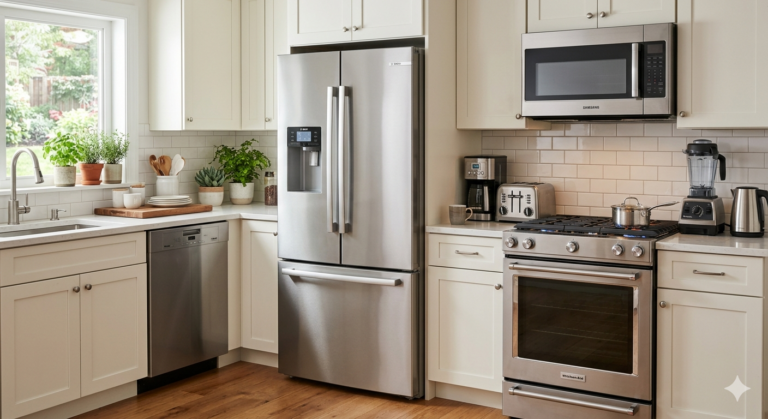
When was the last time you pulled your refrigerator away from the wall? Or looked under your stove? If you are like most homeowners, the honest answer is probably “never” or “I’d rather not think about it.” The space behind and under major appliances is one of the most neglected areas in any home, and what accumulates there over months and years can be surprising, unpleasant, and even dangerous.
Dust, pet hair, food debris, grease, lint, and who knows what else builds up in these hidden spaces. Beyond the obvious hygiene concerns, this buildup can cause real problems: reduced appliance efficiency, higher energy bills, unpleasant odors, pest attraction, and in the case of dryers, a genuine fire hazard.
Cleaning behind and under your major appliances is not glamorous work, but it is one of the most impactful home maintenance tasks you can do. This guide will walk you through each major appliance, explain why cleaning matters, and show you how to do it safely and thoroughly.
Why Cleaning Behind Appliances Matters
Before we get into the how-to, let us look at why this task deserves a spot on your regular maintenance schedule.
Fire Prevention
Lint buildup around dryers is a well-documented fire hazard. According to fire safety statistics, dryer fires account for thousands of residential fires each year in North America, and the leading cause is failure to clean lint from the dryer and the surrounding area. But dryers are not the only concern. Dust accumulation around any appliance with a motor, heating element, or electrical connection increases fire risk.
Energy Efficiency
Dirty condenser coils on your refrigerator force the compressor to work harder, using more electricity to maintain the same temperature. A dryer surrounded by lint takes longer to dry clothes, running extra cycles that add up on your energy bill. A stove with grease buildup underneath can produce smoke and odors when the oven heats up. Clean appliances run more efficiently, last longer, and cost less to operate.
Pest Prevention
Food crumbs, grease, and organic debris behind and under appliances create an ideal environment for pests. Cockroaches, ants, mice, and other unwelcome visitors are attracted to the warmth of appliance motors and the food sources in the hidden debris. In Vancouver, where mild winters mean pest activity continues year-round, keeping these areas clean is an important part of pest prevention.
Indoor Air Quality
Dust and pet hair behind appliances gets stirred up by air circulation from fans, heating vents, and the appliances themselves. This contributes to poor indoor air quality, which can aggravate allergies, asthma, and other respiratory conditions. If you have noticed a dusty smell in your kitchen that you cannot seem to locate, the area behind your appliances may be the source.
Appliance Longevity
Appliances that run clean and unobstructed simply last longer. A refrigerator with clean coils does not overwork its compressor. A dryer with clean surroundings does not overheat. A dishwasher with clear drainage underneath does not develop water damage issues. Regular cleaning behind your appliances is an investment in their longevity.
How to Safely Move Your Appliances
The first challenge is getting to the hidden areas, which means moving heavy appliances. Here is how to do it safely.
General Safety Rules
- Never try to move a large appliance by yourself if you have any concerns about your ability to do so safely. Ask a family member or friend for help.
- Wear closed-toe shoes with good grip. The floor may be slippery from dust or old cleaning products.
- Remove all items from on top of the appliance before moving it.
- Know where the power cord, water lines, and gas connections are before you start pulling. You do not want to yank a power cord out of the wall or snap a water line.
- Place cardboard, old towels, or moving blankets on the floor in front of the appliance to protect the flooring from scratches as you slide it out.
Moving a Refrigerator
Refrigerators are heavy, but most have wheels or rollers on the back legs that make sliding them forward easier than you might expect. Start by gently pulling the refrigerator straight out from the wall. Pull evenly from both sides to prevent it from twisting and damaging the floor. You only need to pull it out far enough to access the back and the floor behind it, usually about two to three feet. Be careful not to pull the water line (if your fridge has an ice maker or water dispenser) too far, as these lines have limited length.
Moving a Stove or Range
Before moving a stove, make sure it is completely cool. If it is an electric stove, unplug it or switch off the breaker. Most stoves have leveling legs on the front and can be carefully slid forward on a protected floor surface. Pull it out just enough to access the floor and wall behind it. Be gentle and go slowly to avoid damaging the flooring.
Accessing Under a Dishwasher
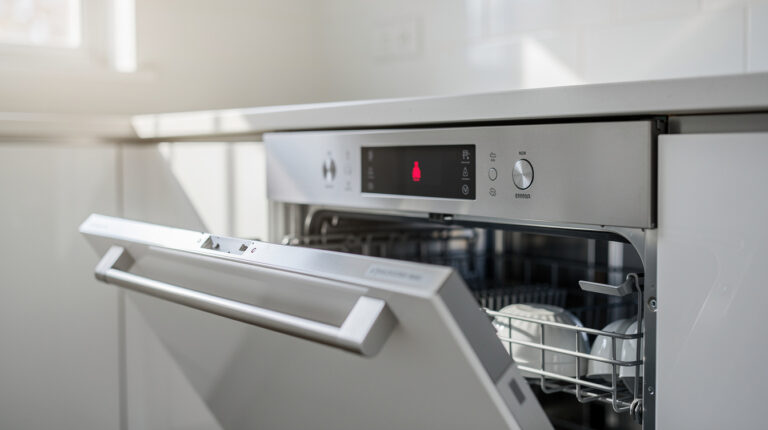
You typically do not need to pull a dishwasher out to clean underneath it. Instead, remove the front kick plate (the panel at the bottom of the dishwasher below the door). This is usually held in place by one or two screws or spring clips. Once removed, you can access the area underneath the dishwasher with a vacuum and cleaning tools.
Moving a Dryer
If you have an electric dryer, unplug it before moving. Disconnect the dryer vent hose from the back of the dryer (it usually slides off or is held with a clamp). Carefully slide the dryer forward, protecting the floor as you go. This gives you access to the floor, the wall, and the vent connection area where lint accumulates.
Moving a Washing Machine
Turn off the water supply valves before moving the washing machine. You do not need to disconnect the hoses unless you are pulling it out very far. Slide it forward carefully, keeping it level. Washing machines can be surprisingly heavy when loaded with residual water, so having a helper is recommended.
Cleaning Behind and Under Each Appliance
Now let us go appliance by appliance with specific cleaning instructions.
Refrigerator
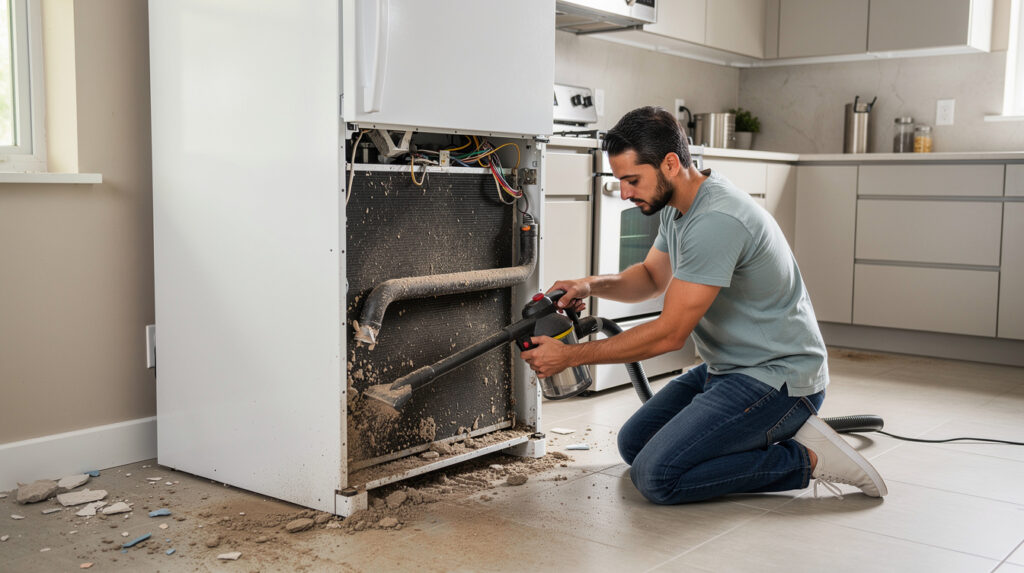
The refrigerator is arguably the most important appliance to clean behind, primarily because of the condenser coils. These coils, located either at the back of the refrigerator or underneath it behind the kick plate, are responsible for dissipating heat as part of the cooling process. When they are coated with dust, pet hair, and kitchen grease, they cannot release heat efficiently, which forces the compressor to run longer and harder.
Start by vacuuming the floor behind and under the refrigerator with a vacuum cleaner and a crevice attachment. Then focus on the condenser coils. If the coils are on the back, use a coil cleaning brush (available at hardware stores for about ten dollars) to gently brush dust and debris off the coils. Follow up with a vacuum. If the coils are underneath (accessible from the front by removing the kick plate), use the same brush and vacuum technique.
Also clean the drain pan, which sits underneath the refrigerator and collects condensation from the defrost cycle. This pan can harbor stagnant water, mold, and unpleasant odors. Remove it carefully (it may slide or pull out from the front), wash it with warm soapy water, dry it, and replace it.
While the fridge is pulled out, wipe down the walls and floor with a general cleaning solution, and check the power cord for any damage or wear.
Stove and Oven
The area behind and under a stove accumulates a surprising amount of food debris, grease, and dust. Crumbs, sauce splatters, and small food items that fall between the counter and the stove end up on the floor underneath, and grease from cooking settles on the wall behind.
Once the stove is pulled out, vacuum the floor thoroughly. Then use a degreasing cleaner or a mixture of warm water and dish soap to scrub the floor, the sides of the cabinets, and the wall behind the stove. Grease buildup on walls can be stubborn, so you may need to let the cleaner sit for a few minutes before scrubbing.
Check the power cord (electric) or the flexible gas connector (gas stoves) for any signs of wear, damage, or pest activity. If you have a gas stove and notice any damage to the gas line, do not use the stove and call a professional immediately.
Clean the sides of the stove as well, as grease and food splatters accumulate on the surfaces that are normally hidden by the countertop.
Dryer
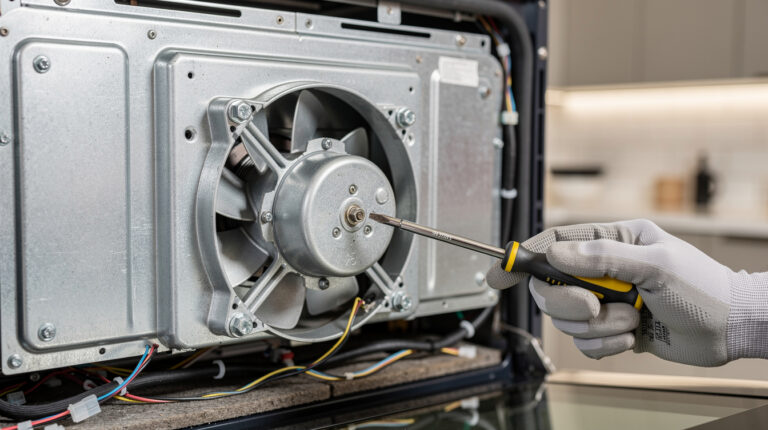
Cleaning behind and around the dryer is primarily about lint, and it is a safety issue. Lint accumulates not just in the lint trap but also inside the dryer cabinet, behind the dryer, around the vent connection, and inside the vent duct that runs from the back of the dryer to the exterior of your home.
Start by vacuuming the floor behind and under the dryer. Pay particular attention to the area around the vent connection at the back of the machine. Use a vacuum crevice tool to get into the vent opening on the dryer itself.
The vent duct should be cleaned at least once a year. You can purchase a dryer vent cleaning kit that includes a long flexible brush designed to snake through the duct and remove lint buildup. If you are not comfortable doing this yourself or if your vent duct has a long or complicated run (common in many Vancouver apartments and condos where the dryer is not against an exterior wall), professional vent cleaning is recommended.
While you have access to the back of the dryer, check that the vent hose is in good condition (not crushed, kinked, or deteriorated) and that all connections are secure.
Washing Machine
Behind the washing machine, you will typically find dust, detergent residue, and possibly water stains from minor leaks. Vacuum the floor and wipe down the wall behind the machine. Inspect the water supply hoses for signs of wear, cracking, or bulging, as we discussed in detail earlier in this series.
Check the drain hose connection and look for any signs of slow leaks or water damage on the floor. If you notice dampness or discoloration on the floor behind the washing machine, investigate the source before pushing the machine back.
Dishwasher
With the kick plate removed, vacuum underneath the dishwasher thoroughly. Look for signs of water leaks, which would show up as water stains, mineral deposits, or mold on the floor. The area under a dishwasher is also a common spot for pest activity, so note any droppings or other signs.
Clean the floor with a damp cloth and a mild cleaning solution. While the kick plate is off, take the opportunity to check the water supply connection and the drain hose connection for any signs of leaking.
How Often Should You Clean Behind Appliances
The ideal frequency depends on your household, but here are general guidelines.
- Refrigerator coils and surrounding area: every six to twelve months. More frequently if you have pets, as pet hair accumulates on coils quickly.
- Stove and oven area: every six to twelve months, or whenever you notice a burning smell when the oven is on that might indicate grease buildup underneath.
- Dryer and vent: at least once a year, more frequently if you do a lot of laundry. The lint trap should be cleaned before every load.
- Washing machine area: once a year, combined with hose inspection.
- Dishwasher underneath: once a year or whenever you suspect a leak.
An easy way to remember is to pick two times a year, such as when the clocks change for daylight saving time, and do a sweep of all your major appliances. This keeps the task manageable and ensures nothing goes too long without attention.
Tools You Will Need
You do not need anything exotic to clean behind your appliances. Here is a basic toolkit.
- Vacuum cleaner with a crevice attachment and a hose extension
- Microfiber cloths or old rags
- Degreasing spray or a mixture of dish soap and warm water
- A coil cleaning brush (for refrigerator coils)
- A dryer vent cleaning brush kit (for the dryer vent duct)
- Cardboard or old towels to protect flooring
- A flashlight to see into dark spaces
- Rubber gloves if you prefer
What to Look for While You Are Back There
While you have your appliances pulled out, take advantage of the access to look for potential problems.
Water Damage
Look for water stains, warped flooring, or mold behind the refrigerator, washing machine, and dishwasher. Catching a slow leak early can save you from expensive damage down the road.
Pest Activity
Check for droppings, nesting material, chewed wires, or dead insects. If you find signs of pest activity, address the issue promptly. Clean the area thoroughly and consider consulting a pest control professional if the evidence suggests an ongoing problem.
Electrical Concerns
Look at power cords for fraying, cracking, or burn marks. Check that outlets are not discolored or warm to the touch. These can be signs of electrical issues that need professional attention.
Wear and Tear
Water hoses, gas lines, vent ducts, and electrical cords all degrade over time. This is your best opportunity to inspect these components and replace anything that looks questionable. If you notice something concerning but are not sure whether it needs attention, the appliance repair professionals at Tech Angels can assess the situation during a routine maintenance visit and advise you on whether repair or replacement is needed.
Tips for Keeping It Cleaner Longer
A few simple habits can reduce the amount of buildup between cleanings.
- Use a gap cover between your stove and countertop to prevent food from falling into the gap. These inexpensive silicone strips are available at most kitchen supply stores.
- Wipe up spills on and around appliances promptly before they drip underneath.
- Keep the area around the dryer lint-free by wiping down surrounding surfaces regularly.
- If you have pets, vacuum the kitchen and laundry room more frequently to reduce the amount of hair that migrates behind appliances.
- Consider appliance casters or sliders that make it easier to pull appliances out for quick cleanings more frequently.
Making This a Routine
The hardest part of cleaning behind appliances is remembering to do it and motivating yourself to start. Once you actually do it, the process is straightforward and usually takes less than an hour for all your major appliances combined. Set a reminder in your phone or calendar, pair it with another seasonal task like changing air filters or testing smoke detectors, and it will become a natural part of your home maintenance routine.
Your appliances will run better, your home will be cleaner and healthier, and you will have the peace of mind that comes from knowing there are no hidden hazards lurking behind the machines you rely on every day. Grab a vacuum and a flashlight this weekend, pull out that refrigerator, and see what has been accumulating out of sight. You might be surprised, but you will definitely be glad you checked.
Related Articles
Explore more appliance care tips from the Tech Angels blog: